Atlantic Council names 5 scenarios for Russia’s future
7 February 2024 13:17
The American think tank Atlantic Council has published a study analysing the 5 most likely scenarios for Russia’s near future.  prepared an overview of this material.
Casey Michel, the author of the study, notes that the West has no vision of what the future of Russia will look like, and therefore no meaningful policy is being formed towards it. The Centre decided to start working in this direction and “sketched out” 5 “most likely” scenarios of what Russia will look like, for example, in 2030.
These scenarios include the following options:
- Continuation of Putin’s rule.
- Putin’s ouster followed by the installation of a far-right nationalist figure or collective.
- Putin’s removal followed by a technocratic, though still largely anti-democratic, regime.
- The removal ofPutin, followed by the rise of a liberal, fully pro-Western government.
- Collapse of theRussian Federation.
Scenario 1. Putin’s Russia survives
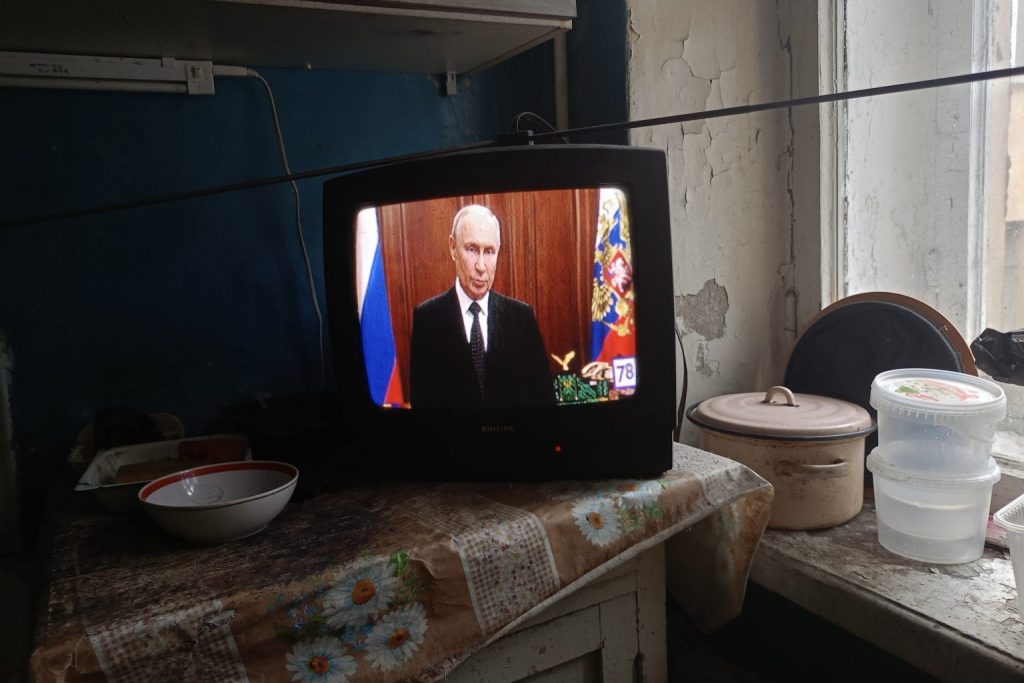
Details. Putin’s unprovoked invasion of Ukraine is, in many ways, the biggest unforced geopolitical mistake Moscow has made in decades – and perhaps ever, according to the Atlantic Council. However, an economy heading towards autarky, a loss of geopolitical influence, and the prospect of general mobilisation – none of these things are upsetting the status quo at home. The population is intimidated and refuses to oppose the regime. The country is rapidly moving towards classical totalitarianism. Putin is betting on the collapse of the Western alliance and has a good chance of success, especially with the prospect of a Trump presidency in the US.
Strategy. Continuation of the current strategy. Tougher sanctions, including increased pressure on countries such as Turkey, India and the UAE; tighter restrictions on the price of Russian hydrocarbons; seizure of frozen assets of the Central Bank of Russia and their use to help Ukraine. For Ukraine, this implies an accelerated path to EU membership, as well as continued expansion and formalisation of security and arms supply partnerships.
Time horizons and probability. This is the most likely scenario for the coming years, barring any excesses with Putin’s health. In this situation, the West must stand against Russia as a monolith. Otherwise, it would mean that any nuclear power could successfully invade, devastate and divide its non-nuclear neighbours.
Putin can still get the “long war” he wanted. But he cannot – and should not – win.
Scenario 2: Nationalist uprising

Details. Prigozhin’s uprising, even if it was fake, showed how few Russians were prepared to stand in his way to the Kremlin. The emperor turned out to be, if not naked, then very lightly clothed. At the same time, there is more and more nationalist rhetoric in society, and there is an electorate that is ready to listen to it. Putin is weak and makes mistakes, Russian nationalists say. But they know how to restore greatness.
Strategic and political recipes. They are the same as in the previous scenario. The peculiarity is that the new nationalist regime may stop the war for a while to “lick its wounds”. They will blame Putin and start preparing for a new “greatness”. During this time, Ukraine must build up its muscles, and the West must strengthen its armaments. The West should also work more actively with Russia’s neighbours, some of whose citizens will be affected by its nationalist rhetoric (Belarus, Georgia, Armenia, Kazakhstan). Sooner or later, this regime will explode again, and the West must be prepared for this. In essence, we are talking about a good old-fashioned containment policy that once served the West well.
Time horizons and probability. After Prigozhin exposed the regime’s weaknesses, a coup is no longer a fantasy scenario. Future kings could conclude that Prigozhin’s mistake was not in the coup, but in not following through with it. This scenario is the second most likely.
As Russia continues to fail in Ukraine, the potential for a “stab in the back” scenario is only growing. And it is this narrative of failure that nationalists would use against Putin as the engine of their potential power for years to come.
Scenario 3: Technocratic reset
Details. Putin is gently ousted by his entourage with guarantees of immunity and a quiet old age in one of his palaces. The new regime establishes contacts with the West. They include the “land for peace” track, where Russia withdraws from everywhere except Crimea. The markets react positively, and the West is also reviving and ready for dialogue. The key word in this scenario is “reset”.
Strategic and political recipes. The strategy is simple: do not trust, but verify. Policy should include the range of deterrence measures mentioned above, not least as a safeguard against a potential return to revanchism by Russia. Dialogue should begin with a clear signal of willingness to address current issues.
Time horizons and probability. In the short term, this scenario is hardly more likely than Putin retaining power or even a right-wing coup with a nationalist regime. However, the likelihood of a reformist technocratic government in Moscow is increasing in the medium term. Indeed, one of the factors that could make this scenario more likely than a nationalist turn in the medium term is the support and encouragement of Western partners.
But Western partners should be careful. In the early 2000s, they were happy to support a new president who declared his willingness to pursue economic and even potentially political liberalisation. Almost a quarter of a century later, that president remains in power and is now the author of the greatest bloodshed Europe has seen since World War II.
Scenario 4: Democratic Russia returns home

Details. The economic and military problems in Russia escalate to the point where it becomes clear to everyone that it is time for something new. For Russia, this is democracy. Imperial dreams are forgotten, troops from neighbouring countries are withdrawn, and the country begins democratic reforms. Everything is happening as fast as in 1991. A post-imperial democratic Russia is emerging.
Strategic and political recipes. This is such a desirable scenario that the West should stimulate it as much as possible, up to the return of the frozen assets of the Central Bank, provided that Moscow pays Kyiv reparations. Full Western support for all democratic aspirations of the new government, including referendums on self-determination of the republics of the Russian Federation. Again: “trust but verify”. The West should not forget that it has to be very careful with Russia.
Time horizons and probabilities. In the short and medium term, this scenario is very unlikely, bordering on illusory. However, over a longer time horizon – perhaps measured in decades rather than years – the likelihood of such an outcome only increases.
The post-imperial trajectories of Portugal, Spain, France and other former European empires took decades to reach their conclusion. There is no reason to think that Russia will not follow a similar trajectory, or that it will not eventually find its way back to its European home.
Scenario 5: Chaos, civil war and colonial independence
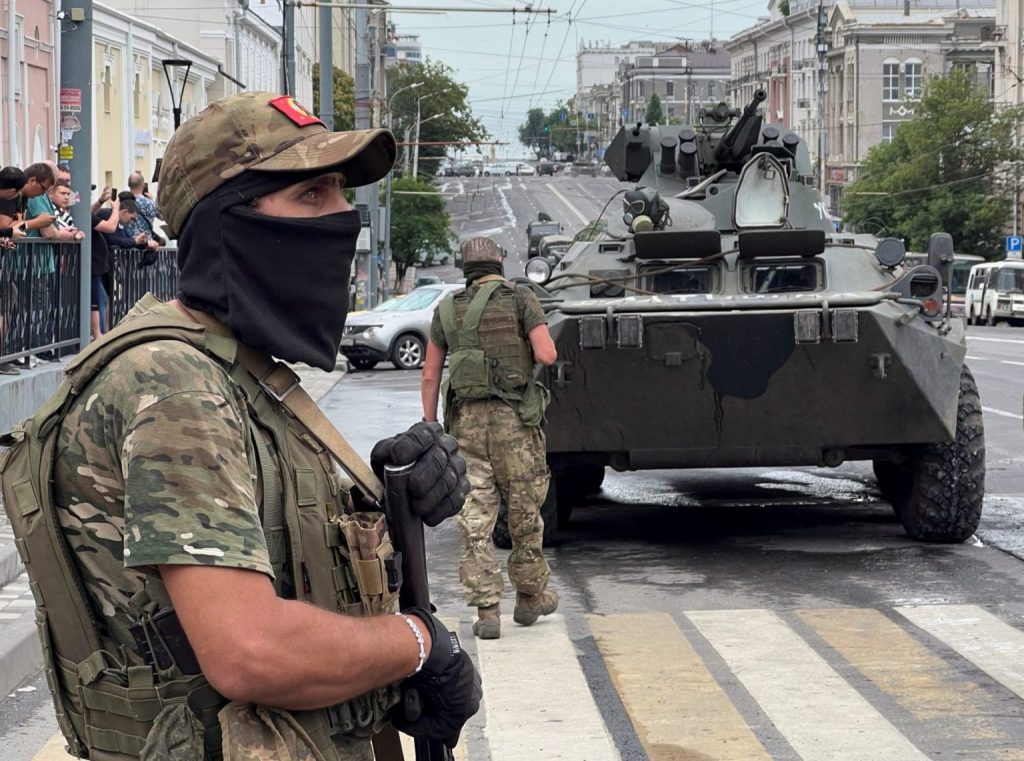
Details. The lack of legitimacy of the central government becomes critical, and the contradictions between the centre and the metropolises become more acute. Chechnya, Tatarstan, Sakha, Bashkortostan, Dagestan, and Buryatia may become critical points. Anything can be a critical event, such as Kadyrov’s death. Moscow traditionally responds to national protests with violence, the country explodes and a bloody meat grinder begins in Russia.
Strategic and political recipes. The West should focus on establishing ties with the national elites of the nations colonised by Russia in order to control the situation with nuclear weapons that remain on their territory. Ukraine after 1991 is a case in point.
In the broadest sense, Western policy should avoid one general strategy: preserving russia as it is now, regardless of the cost… Perhaps most importantly, any attempts to avoid this outcome should not interfere with Western efforts to ensure Putin’s defeat in Ukraine. In other words, the West should not refrain from supporting Ukraine because of excessive fears of Russian instability.
Time horizons and probability. This outcome is unlikely in the short term, but increases over time. Russia’s economy is degrading, and all empires eventually collapse. Such changes usually happen instantaneously, so the West should not dismiss this scenario.