90 days for Ukrainian media and organizations: what happens after the US aid stops and how it will affect the Ukrainian economy
29 January 2025 19:17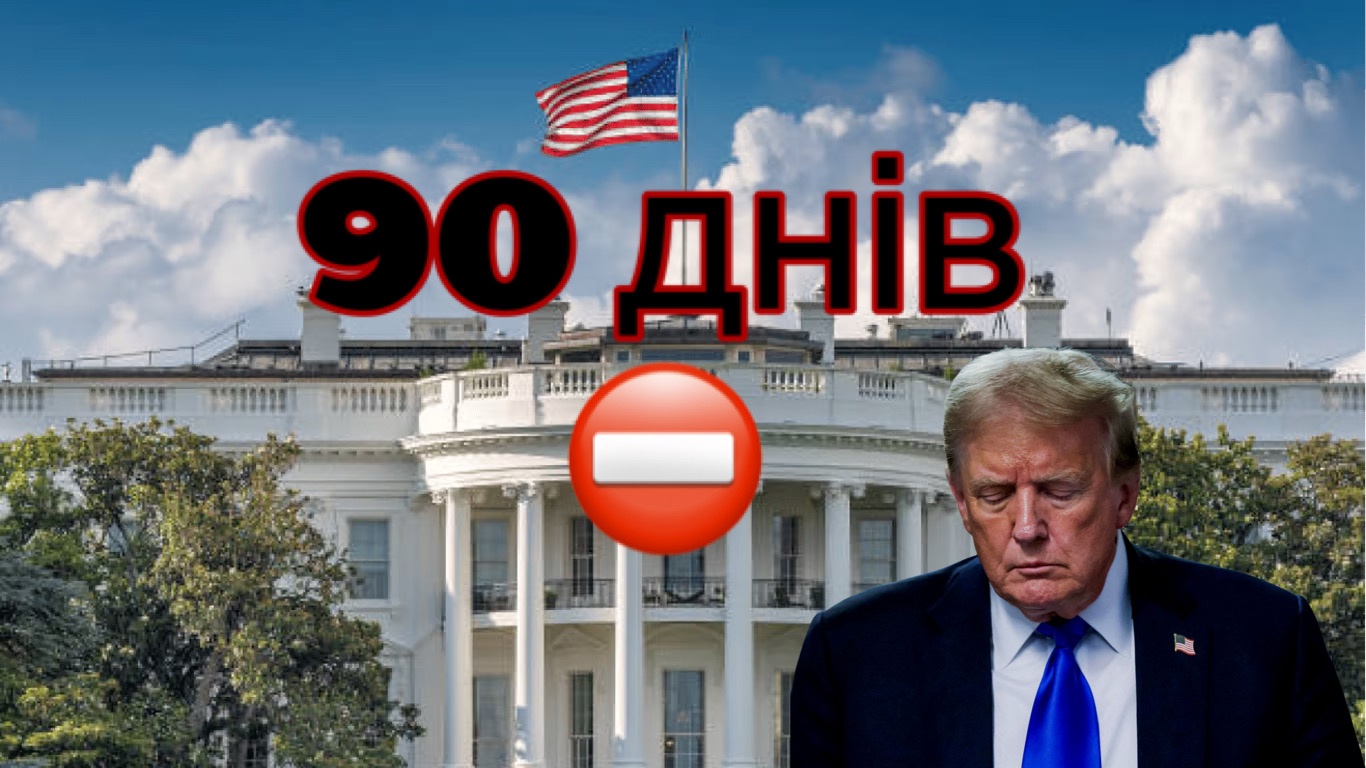
 ANALYSIS
A number of support programs from the US government are under threat. This became known after the White House Administration ordered a temporary suspension of all federal grants and loans. An internal White House memorandum states that the decision also blocks the issuance of new grants.
At the same time, this does not apply to payments under the Social Security or Medicare programs, as well as assistance provided directly to individuals. However, one of the largest donors that supports the development of independent media and civil society organizations, USAID, is under threat.
President of Ukraine Volodymyr Zelenskyy has instructed government officials to analyze US support programs that may now be suspended. Consultations with the United States are also planned. What important programs are already under attack, what consequences for the economy and democratic processes in Ukraine may be caused by the suspension of funding – "Komersant Ukrainian" has analyzed together with leading experts.
Ukraine’s reaction to the Donald Trump administration’s decision to suspend all federal grants and loans was immediate. The President of Ukraine instructed government officials to identify critical programs that need solutions now.
“We can provide part of this funding through our public finances, and we will discuss part of it with the Europeans and Americans,”
– Volodymyr Zelenskyy said.
Deputy Head of the Presidential Office Iryna Vereshchuk, in turn, announced consultations with the United States. Vereshchuk called the White House’s decision “unexpected and unpleasant news.”
She also called on the teams that were implementing USAID-funded projects to “keep the people and the work.” It is known that funding has been suspended for 90 days.
Suspension of US funding: what is at stake?
Since Friday, Ukrainian NGOs and local governments have been receiving notifications about the need to suspend activities funded through USAID or other entities that depend on American funds.
USAID supports projects in more than 100 countries, including Ukraine. In the context of the war, the agency is focused on rebuilding schools, providing healthcare services, and repairing critical energy infrastructure.
Tymofiy Mylovanov, President of the Kyiv School of Economics, Minister of Economic Development (2019-2020 ) in an exclusive commentary
“This will have an indirect impact on Ukraine, as a number of American organizations that cooperate with our country will also face restrictions. Trump is cutting everything he can, stopping and revising. It looks like an attempt to establish control and show who is in charge in the distribution of funding.”
Tymofiy Mylovanov
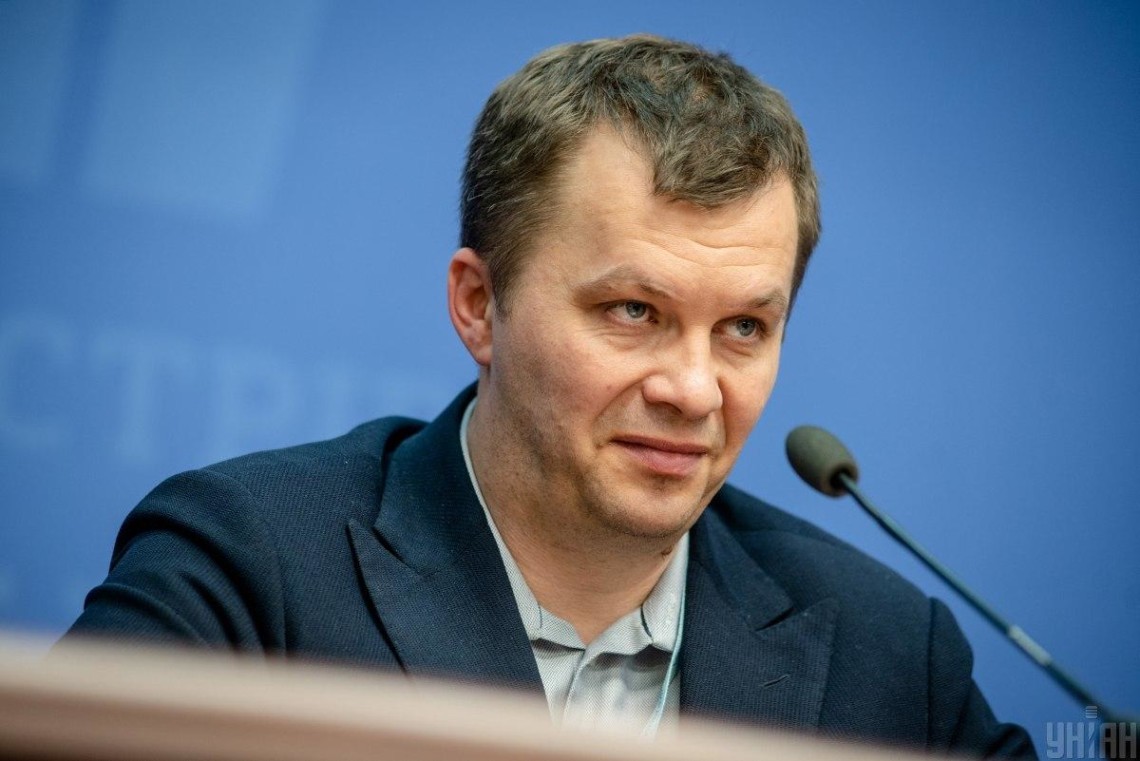
Despite the fact that some people on social media gloat and say that many programs are ineffective, which is indeed the case, a significant part of US financial support is directed to critical infrastructure, Ukraine’s budget, and social initiatives, the president of the Kyiv School of Economics notes. In particular, the budget receives $30 billion in funds through USAID. They cover such areas as:
- support for regional development and decentralization;
- assistance to veterans;
- small business development;
- funding for mental health and suicide prevention programs.
“Many communities are directly dependent on these resources. If they are not available, it will significantly affect economic activity and living standards,”
– warns Tymofiy Mylovanov.
According to him, the consequences could be tangible in many areas: farmers and small businesses will lose the ability to export, the reconstruction of critical infrastructure may stop, and social assistance programs will be left without funding.
Somewhere we will not restore critical infrastructure in time and there will be no electricity. In some places, support for suicide prevention and mental health programs will not work. And people will die because they will commit suicide.”
Timofey Milovanov
It is worth adding that since the beginning of Russia’s full-scale invasion, USAID has allocated $2.6 billion for humanitarian aid, $5 billion for development, and $30 billion in direct budget support to Ukraine.
According to Suspilne. Mykolaiv, the Mykolaiv City Council has received a notice from USAID to stop funding projects in the city. These include dozens of initiatives by the city council and local NGOs related to energy independence, security, and other critical areas.
Financial impact on the economy
Milovanov emphasizes that a reduction in US aid could lead to a significant slowdown in Ukraine’s GDP growth.
“If the forecasted growth was 5%, now it may be only 2%. This means loss of jobs, downsizing of enterprises and a general economic downturn,”
– emphasizes Tymofiy Mylovanov.
The economist compares the situation to a crisis at the company level. “If you don’t pay salaries for three months, the business structure will start to collapse. People will leave, processes will stop, and the recovery will be long and painful, Milovanov notes.
Читайте нас у Telegram: головні новини коротко
Stopping US grants: a threat to Ukraine’s independent media
Due to the suspension of funding for USAID programs, the media movement calls on citizens and businesses to support independent media. The statement was released by the Institute of Mass Information.
The statement says that independent Ukrainian media is an important element that distinguishes Ukraine from Russia.
“Hundreds of communities across Ukraine may be left without access to local and regional news, investigative reporting and quality media. In other words, without a tool that ensures control over the government and strengthens the stability of democratic institutions. Independent media that are not funded by oligarchs, in addition to their direct work, are now engaged in survival,”
– the statement reads
Chairman of the Verkhovna Rada Committee on Freedom of Speech Yaroslav Yurchyshyn in a comment for
“It will be difficult for the media, but the leading media will definitely survive and find opportunities to develop further. The problem is more acute for regional and local media from the frontline areas. They may simply close down due to reduced support. And a person in the frontline de-occupied territories will be left face to face with Russian propaganda, given the constant blackouts and problems with mobile communication. And this is a really big problem,”
– emphasized Yurchyshyn.
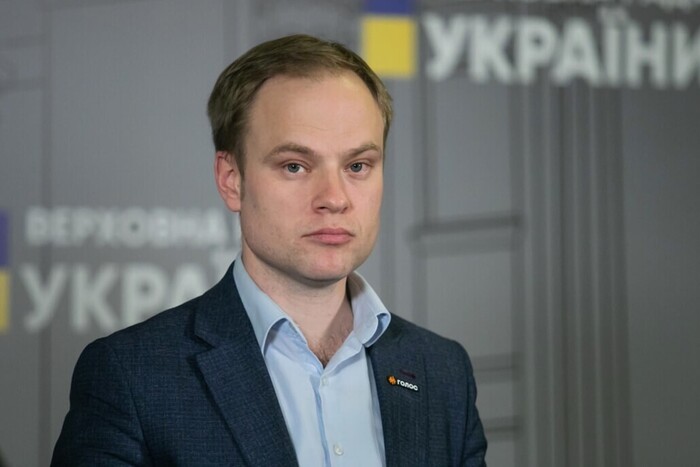
According to him, it is necessary to look for mechanisms to support independent regional media, as they play a key role in providing people with reliable information and counteracting hostile disinformation.
As Detector Media’s editor-in-chief Natalia Lyhachova explains in an exclusive commentary
“90 days of audit, but no one understands what will happen next. “Detector Media was also funded to a very large extent by American grantors. And we feel it on ourselves. However, we are a large organization. We are now re-profiling some of our grants, diversifying, we have non-American grants, trying to fund them with other donors, and it’s a little easier for us.”
Natalia Lygachova
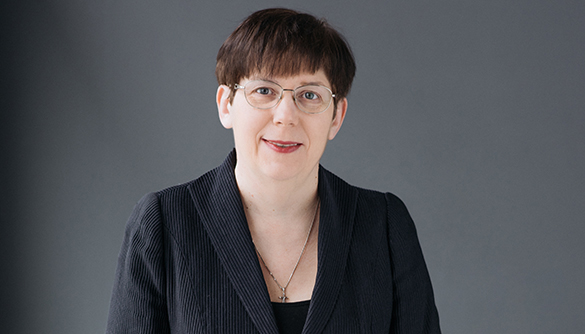
At the same time, Lyhachova expressed concern about the future of small independent media in Ukraine due to the reduction of international financial support.
“Small media that received, for example, one grant – and it was an American grant – are now in a stupor. They realize that they either have to stop operating or work for free. We are ready to work as volunteers or on reduced salaries for some time, but this cannot last,”
– noted Natalia Lygachova.
She emphasized that the situation is complicated by the critical state of the advertising market. At the same time, independent media perform an important function of controlling the use of Western funds in Ukraine – from the army to healthcare, social programs, reconstruction and energy.
“The cessation of funding for independent media is, in fact, a blow to democratic processes in Ukraine during the war. It is also a blow to the media, as well as to the controllers of corruption and democratic processes in various spheres of Ukraine,”
– summarized Natalia Lyhachova.
Support or indifference? How society reacts to the crisis in the media sector due to the reduction of grants
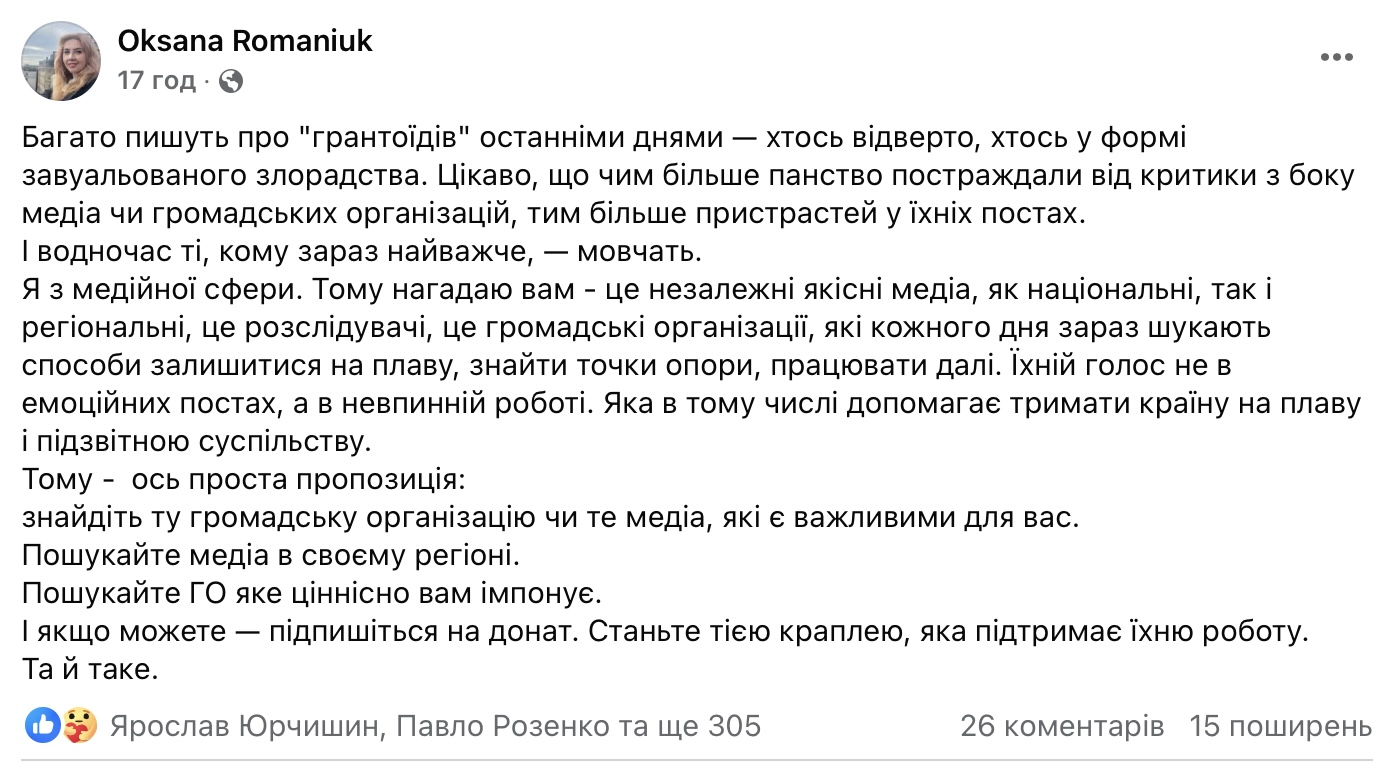
In recent days, social media have been actively discussing the issue of media funding, especially in the context of grant support. Different opinions are being expressed, including suspicion or criticism of the “grantees”. However, as Oksana Romaniuk, director of the Institute of Mass Information, emphasized, an important problem is the silence of those who are facing the greatest difficulties.
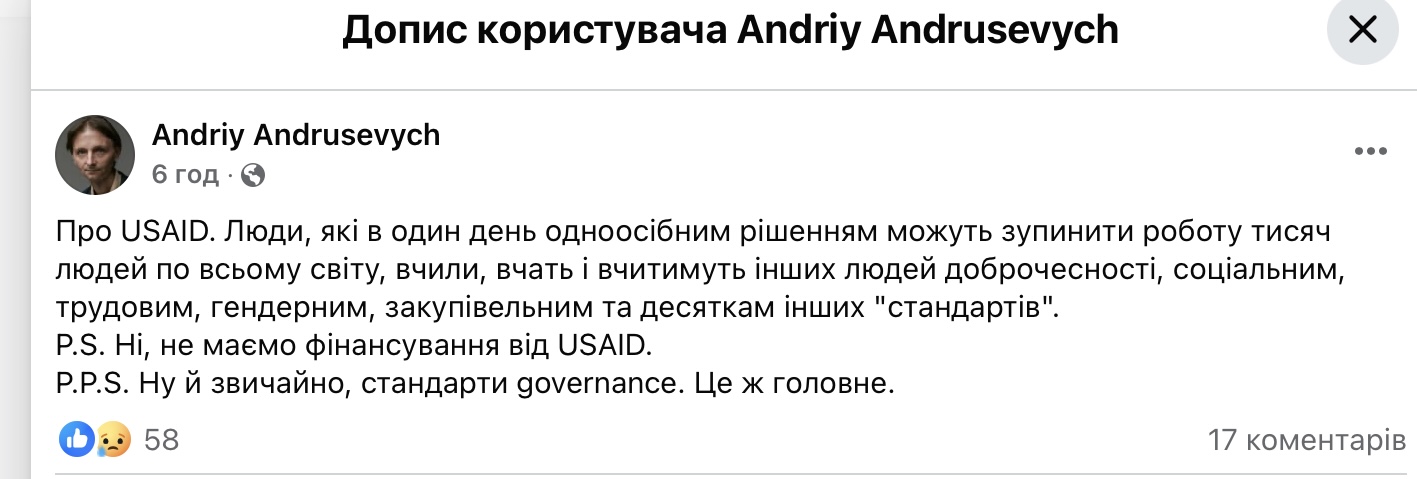
Andriy Andrusevych, senior analyst at the Resource and Analysis Center “Society and Environment,” emphasized the irony of the situation. In his post, he raised the question of how organizations that have the right to unilaterally terminate funding impose standards of integrity in many areas.
The documentary film The Journalist, dedicated to the fallen soldier and journalist Oleksandr Makhov, is under threat. Anastasia Blyshchyk, a journalist and servicewoman in the Armed Forces of Ukraine, wrote about this. The production of the film has been officially stopped due to the termination of funding from USAID.
“I could not imagine that I would have to write this text at all. I realize that in these conditions, in which all Ukrainians live, this is not the worst thing that could have happened. However, for me it is a real loss, because the documentary is an unfulfilled dream of Oleksandr Makhov and a mission that must be fulfilled. […] That is, 1.5 years of work: business trips, trips to the front, the time of Sashko’s brothers-in-arms, the archive that Makhov filmed – may be in vain, because we will not be able to physically release the film on our own so that you can see it.”
Anastasia Blyshchyk
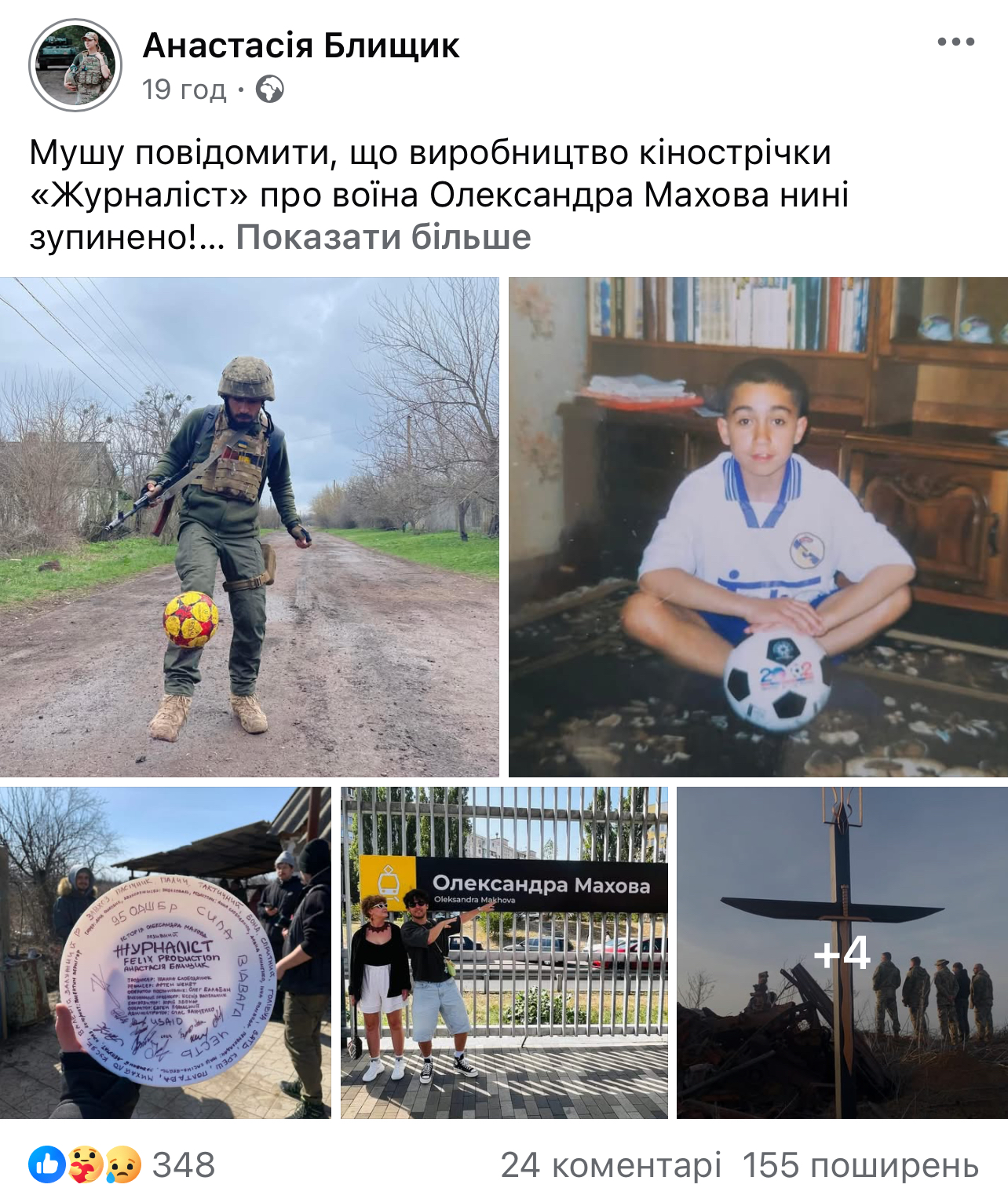
So the servicewoman asks for financial support and promises to acknowledge all the donors in the credits, making this documentary a people’s film.
What do they say in the US?
US Secretary of State Marco Rubio has announced exceptions to the order that suspends international aid for 90 days. According to the Associated Press, this decision concerns important humanitarian initiatives and military aid.
Initially, Rubio exempted only programs that contribute to emergency food needs, as well as military aid to Israel and Egypt, from the funding pause. However, on Tuesday, January 28, the U.S. Secretary of State decided to continue funding humanitarian programs that provide vital medicines, medical services, food, shelter, and living assistance.
Ukraine needs to change its approach to international cooperation
Tymofiy Mylovanov emphasizes that Ukraine needs to change its approach to international cooperation.
“We are used to acting only when there is already a crisis: reforming healthcare when a pandemic comes or strengthening the army after an invasion. But this does not work. We need to build systematic interaction with our American partners in advance,” explains Milovanov.
He also notes that it is important to diversify funding sources, attract support from the UK and the EU, and create a network of lobbyists and communicators in the US.
“This is a real crisis, and we need to work with it. If the suspension of funding lasts for three months, it’s not a disaster yet. But if it lasts for a year or two, the consequences will be felt by everyone,”
– summarized Tymofiy Mylovanov
Thus, the situation with the suspension of US financial assistance is a serious challenge for Ukraine, especially in light of the ongoing war and the need to rebuild infrastructure. Humanitarian aid programs, regional development, and support for independent media are at risk of being cut off, which could have significant economic and social consequences. And, of course, not everyone has 90 days to test the resilience of companies and organizations in the absence of support. This means that much will depend on the authorities’ immediate decisions and communication with the Trump administration.
Читайте нас у Telegram: головні новини коротко