
Ukraine held updated auctions to allocate support quotas for new solar power plants (SPPs) and solar power plants with energy storage systems (SPPs with ESS), a…
Analytics
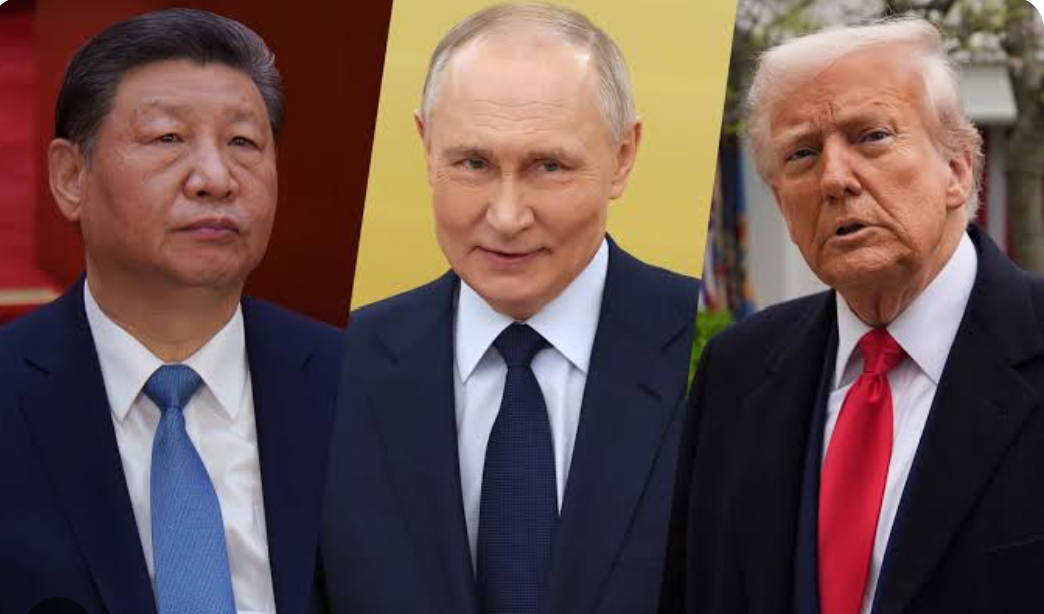 What is known about the idea of a trilateral meeting between Putin, Trump, and Xi Jinping that excludes Ukraine

Ukraine Has Allocated Support Quotas for New Solar Power Generation: How the Country’s Energy Balance Will Change

Why Trump’s Deal with Putin Didn’t Lower Gas Prices—Experts Weigh In
U.S. President Donald Trump announced an agreement with Vladimir Putin on the supply of Russian diesel to the U.S. and global markets. Washington has already au…
Privately produced Ukrainian gas may now be sold abroad: how this will work
The process of partially opening up exports of privately produced Ukrainian natural gas has gotten underway. The relevant government resolution, which approves…

Work.ua: Billions in Revenue and Business Through Cyprus. Who Is Profiting from the Ukrainian Labor Market?
Work Ukraine LLC, which operates under the Work.ua brand, has become a highly profitable business during the years of full-scale war: its revenue grew from 206…

Russians destroyed a Kremenchuk plant with a missile: photos of the location were leaked online by local politicians the day before
On the night of December 7, during an enemy attack on Kremenchuk, the production facilities of a local hydrocarbon processing plant (ALMA Oil Group LLC) were de…

uAH 386 thousand for the head of NABU detectives and UAH 25 thousand for an investigator: what are the salaries of law enforcement officers in Ukraine?
The Ukrainian parliament recently passed the budget for the next year. Among other expenditures, it provides for increased funding for NABU, BES, SBI, and the O…

What is known about three key points from the US: how experts assess the peace plan
The United States has presented Ukraine with a draft of new security guarantees that could form the basis of a future agreement on long-term support. The docume…

Pokrovsk can become a trap for the occupier: officer about the new geometry of war and kill zones
Some of the most intense fighting is taking place in the Pokrovsk area. The Russians have concentrated up to 170,000 troops here, trying to encircle Ukrainian f…

Time is working for the Kremlin: Why the US is still not ready to press the “red button” against Putin
Donald Trump is talking about peace again. This time, however, it is with a tangible note of nostalgia for his "warm relations" with Vladimir Putin. The US pres…
What you need to know
What is the “Analytics” section on Komersant Ukrainian?
“Analytics” is a section in which the editorial team examines in greater depth important political, economic, military, international, and social processes in Ukraine and the world.
Unlike prompt news, analytical material is not limited to reporting an event. It helps readers understand what happened, why it happened, what consequences the event may have, and how it may affect the state, business, and society.
How does analytics differ from news?
News primarily reports a fact or event, while analytics examines it in a broader context.
In Komersant Ukrainian analytical materials, facts and data may be compared, positions of parties considered, reasons for certain decisions examined, possible consequences and further developments assessed.
Therefore, analytics helps readers not only learn what happened but also understand why it matters.
What topics does Komersant Ukrainian analyze?
The topics of analytical materials cover politics, economics, war, international relations, business, public administration, corruption, energy, finance, the defense industry, social processes, and other current topics.
The editorial team selects topics that are of significant public interest or may affect Ukraine’s development, the economy, state policy, business, or the daily lives of citizens.
Where to read political analytics about Ukraine?
The “Analytics” section publishes materials about Ukrainian politics, the activities of authorities, decisions of the Verkhovna Rada and the government, political processes, the impact of individual decisions on the state, and possible scenarios for further developments.
Analytical materials may contain comments from political experts, political scientists, lawyers, representatives of state institutions, and other specialists.
Where to find economic analytics?
Komersant Ukrainian analyzes key trends in the Ukrainian and global economy: inflation, exchange rates, public finances, taxes, the budget, public debt, investments, business, energy, foreign trade, and economic growth.
Such materials help readers understand not only current economic indicators but also the reasons for their changes and possible consequences for business, the state, and the population.
Does Komersant Ukrainian have analytics about war and security?
Yes. The editorial team prepares analytical materials about the Russian-Ukrainian war, the situation at the front, the defense industry, military technologies, international military assistance, sanctions, and security policy.
Such materials pay attention to the broader context of events, official data, positions of the parties, and expert assessments.
At the same time, the editorial team complies with information security requirements and does not publish data whose dissemination could harm Ukraine’s Defense Forces.
Where to read analytics about international relations and world politics?
The “Analytics” section publishes materials about international relations, geopolitics, US and European policy, the activities of the EU and NATO, international negotiations, sanctions, global conflicts, and Ukraine’s relations with other states.
The analytical format allows international events to be considered not in isolation but in the context of state interests, economic factors, and long-term geopolitical trends.
Does Komersant Ukrainian use expert comments in analytical materials?
Yes. Depending on the topic, the editorial team engages economists, political scientists, military experts, lawyers, financial analysts, diplomats, business representatives, and other relevant specialists.
Expert comments help explain complex processes, supplement factual information, and present different professional assessments.
Does analytics contain forecasts and possible scenarios for developments?
Yes, if the nature of the topic allows it. Analytical materials may consider possible scenarios for the development of a situation, potential risks, factors of influence, and prospects for adopting certain decisions.
At the same time, a forecast is separated from an established fact: an expert’s or author’s assessment is not presented as a guaranteed result of future events.
Can the “Analytics” section include analysis of government decisions and their consequences?
Yes. One of the areas of analytics is assessing legislative changes, government decisions, decisions of state bodies, and their possible impact on citizens, business, and the state.
Materials may explain complex regulatory or political decisions in plain language and show their practical impact.
How does Komersant Ukrainian verify data for analytical materials?
When preparing analytics, the editorial team uses official statistics, documents of state bodies, legislation, open state registers, financial statements, data from international organizations, statements by official representatives, and comments from relevant experts.
Factual data and assessments must be distinguished so that readers can understand where a confirmed fact is being discussed and where an expert assessment or forecast is being discussed.
Why read analytics on Komersant Ukrainian?
Komersant Ukrainian uses the analytical format to help readers understand complex events and processes that cannot be fully explained by a short news item.
In the “Analytics” section, readers can find materials about Ukrainian and world politics, economics, war, international relations, business, public administration, and social processes.
Analytical materials combine facts, documents, statistics, context, expert assessments, and analysis of possible consequences. This allows readers to see a broader picture behind an individual news item and better understand how decisions and events may affect Ukraine, business, and society.
The editorial team also explores certain topics in greater depth in video format on the YouTube channel “Komersant Ukrainian”, where journalists discuss current events with politicians, economists, military personnel, entrepreneurs, and other experts.
Latest news
3 November 21:03
For the first time since 2014: The average price of Russian oil has exceeded $100 per barrel
3 November 20:42
Ukraine is changing the rules for taxing income from online services
3 November 20:22
The Kremlin Will Step Up Attacks on Ukraine After the U.S. Election, According to Bloomberg
3 November 19:59
A Russian drone struck a Ukrnafta gas station in the Rivne region: what are the consequences?
3 November 19:58
Trams and trolleybuses are being suspended in Kyiv: Which routes will be replaced by buses?
3 November 19:38
Dnipro Airport Is Being Returned to State Ownership: Court Terminates Privatization Agreement
3 November 19:24
Mendel has been charged with treason
Popular
 Buckwheat bread replaces wheat: what Ukrainians choose
The Cabinet of Ministers of Ukraine has submitted an updated version of the draft law on mobilisation(No. 10449) to parliament, the citing the government's pre…
 “They were killed because they were Poles”: Duda makes another statement about Volyn tragedy
The Cabinet of Ministers of Ukraine has submitted an updated version of the draft law on mobilisation(No. 10449) to parliament, the citing the government's pre…
 A Political Maneuver in Parliament: Why Public Pressure Didn’t Stop 312 Lawmakers from Supporting Khmara, and What Will Happen to Fedorov
The Cabinet of Ministers of Ukraine has submitted an updated version of the draft law on mobilisation(No. 10449) to parliament, the citing the government's pre…
 Global grain importers are looking for alternatives to supplies from Ukraine
The Cabinet of Ministers of Ukraine has submitted an updated version of the draft law on mobilisation(No. 10449) to parliament, the citing the government's pre…
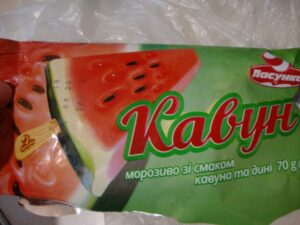 “Lasunka” May Disappear from Stores: Russians Struck the Ice Cream Manufacturer’s Warehouse
The Cabinet of Ministers of Ukraine has submitted an updated version of the draft law on mobilisation(No. 10449) to parliament, the citing the government's pre…
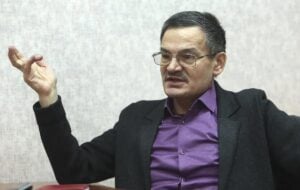 “Tatars have never been enemies of Ukrainians,” Rafis Kashapov, head of the government of Independent Tatarstan in exile
The Cabinet of Ministers of Ukraine has submitted an updated version of the draft law on mobilisation(No. 10449) to parliament, the citing the government's pre…


