What is known about the idea of a trilateral meeting between Putin, Trump, and Xi Jinping that excludes Ukraine
19 October 17:51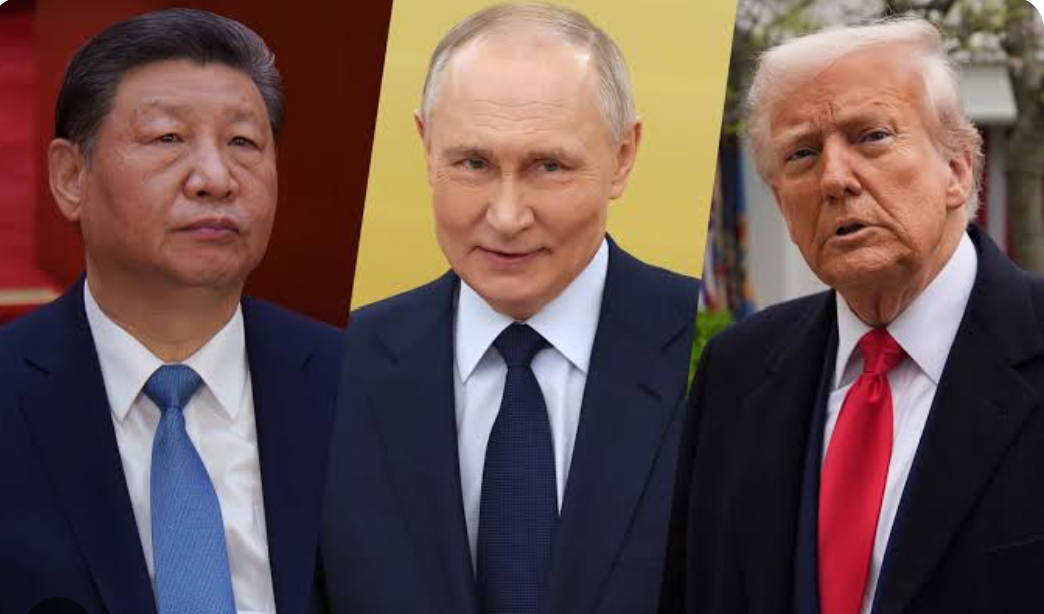
The Kremlin is trying to play its own trump card by floating the idea of holding a trilateral summit in November involving Putin, Donald Trump, and Xi Jinping. This idea involves discussing the war in Ukraine without the participation of the Ukrainian government. And although there are no specifics yet, and Beijing is officially unaware of the talks, the reaction from Ukraine and experts to this potential initiative has already been as harsh as possible. What role is the Kremlin trying to play in this scenario, and why does the proposal for a summit remind experts of the fantasy of a “new Yalta”? Read more in this "Komersant Ukrainian" article
How the idea for the summit arose and what is known about it
Information about possible talks emerged after Vladimir Putin, during a phone call with Donald Trump on October 9, proposed holding a meeting involving the three leaders. The initiative involves organizing the summit on the sidelines of the Asia-Pacific Economic Cooperation (APEC) meeting, scheduled for November 18–19 in Shenzhen, China.
According to The Wall Street Journal, the Kremlin’s goal in this arrangement is clear: to try to negotiate an end to the war on terms that are exclusively favorable to Moscow. Meanwhile, Ukrainian President Volodymyr Zelenskyy has not been included in the negotiation process.
The Kremlin is currently trying to avoid giving too many specifics. In an interview with the American publication, Kremlin spokesperson Dmitry Peskov commented on the prospects of the meeting, noting that no concrete agreements have been reached yet and the agenda remains undefined:
“There is no clear understanding yet regarding the meeting itself or its potential agenda, although all three sides acknowledge the hypothetical possibility of such a meeting,” Peskov said.
Reactions from the U.S. and China
Washington and Beijing are so far holding off on final agreements, but the first official statements have already been made.
U.S. Secretary of State Marco Rubio confirmed that discussions regarding a possible meeting did indeed take place. At the same time, he noted that he had no information on whether it had already been fully agreed upon, but reiterated the White House’s position.
“The [U.S.] President has made it clear that he would like to see an end to the war in Ukraine and Russia,” said Marco Rubio
Meanwhile, officials in Beijing say they have no detailed information regarding the initiative. During a briefing, Chinese Foreign Ministry spokesperson Mao Ning, responding to journalists’ questions about whether the proposal to hold such a summit next month was acceptable to China, replied:
“I don’t have any information on this matter that I can share at this time,” said Mao Ning

Ukraine’s Firm Stance: Why the Format Was Deemed Unacceptable
Official Kyiv reacted extremely sharply to the Kremlin’s idea. Ukrainian Foreign Minister Andriy Sibiga emphasized in his statement that such a negotiation format would only encourage the aggressor to continue the war.
The head of Ukrainian diplomacy stressed that involving Putin in such formats is a misguided move.
“Inviting Putin to such a meeting would only fuel his delusions of grandeur and give him a level of prestige he does not deserve. He is not a world leader, but a war criminal. And Russia is not a world power, but a global problem,” Sibiga emphasized.
The minister also cited telling figures that demonstrate the true state of affairs in Russia. He says its economy is at least 13 times smaller than that of the United States and eight times smaller than China’s, and it is rapidly shrinking along with the standard of living of Russians. In addition, Russia has lost 1.6 million troops—killed or wounded—in a war it is unable to win.
“By any pragmatic or moral standard, Putin has no place at the same table with Presidents Trump and Xi,” the Ukrainian minister concluded.
According to Andriy Sybiga, Putin can earn a seat at the table of genuine negotiations only by taking one serious step toward peace —for example, by agreeing to a ceasefire even before any summits begin. Instead, Moscow continues to escalate its terror and intensify shelling against Ukraine’s civilian population:
“As long as this terror continues, he has no place at any table,” Sibiga added.
Moreover, following reactions from all sides, the Kremlin suddenly distanced itself from negotiations on Ukraine without Ukraine. Putin’s spokesperson stated that a peaceful settlement in Ukraine is impossible without “someone from Kyiv who is ready to take responsibility.” At the same time, Peskov praised the U.S.’s mediation efforts in this process.
Read us on Telegram: important topics – without censorship
Experts’ Reactions
The Kremlin’s proposal to hold a trilateral summit involving Vladimir Putin, Donald Trump, and Xi Jinping sparked not only diplomatic resistance from Ukraine but also sharp criticism from the expert community. Analysts see this not as a desire for peace, but as a dangerous attempt to redraw the world order and exert pressure on Western capitals.
Russian and Israeli public figure Leonid Nevzlin sharply criticized Washington’s position amid yet another massive ballistic missile strike on Kyiv. In his view, attempts to justify the lack of warnings by citing technical problems seem cynical when it comes to the implementation of Putin’s plans.
Nevzlin emphasizes that Putin’s proposal to meet with Trump and Xi Jinping is a direct continuation of this logic.
“If this happens, such a meeting will be only the first step toward realizing Putin’s insane dream of a ‘new Yalta’ and a ‘division of the world into three parts.’ It is the very start of such discussions that will open that Pandora’s box, at the bottom of which lies a full-scale world war,” says Nevzlin
Ukrainian media expert Viktor Shlinchak emphasizes the geopolitical context of such meetings and China’s role. He notes that Xi Jinping seeks to drag out the dialogue with the U.S. leadership under the motto “we’ve agreed to negotiate,” since time is on Beijing’s side.
“Xi will leave the U.S. with a sense of victory. Trump is weakened, and in a month and a half, he’ll be even weaker. Tariffs on Chinese goods have been postponed. Sanctions… against buyers of Russian oil will not be imposed either,”—Viktor Shlinchak
According to Shlinchak, the continuation of the war in Ukraine benefits China as a means of exerting security pressure on the European Union to facilitate its further expansion. At the same time, European capitals still show no willingness to defend their own sovereignty in the face of global challenges, forgetting that true sovereignty is won through the ability to defend oneself.
Thus, the idea of a trilateral summit without Ukraine’s participation, put forward by the Kremlin, is a classic attempt by Moscow to impose its own rules of the game on the world behind Kyiv’s back and to draw key global players into this process.
The full range of reactions—from the Ukrainian Foreign Ministry’s sharp stance to the reservations expressed by independent experts—demonstrates a clear consensus. Such backroom formats are a dangerous illusion of peace that only fuels Russia’s aggression and destroys the last remnants of international law. Against the backdrop of Beijing’s tactical maneuvers, the Western world is facing a profound security crisis, and the only real step toward a resolution can be an end to terror and the use of force—not collusion with war criminals.
Watch us on YouTube: important topics – without censorship