Enrichment in the Shadow of Mobilization
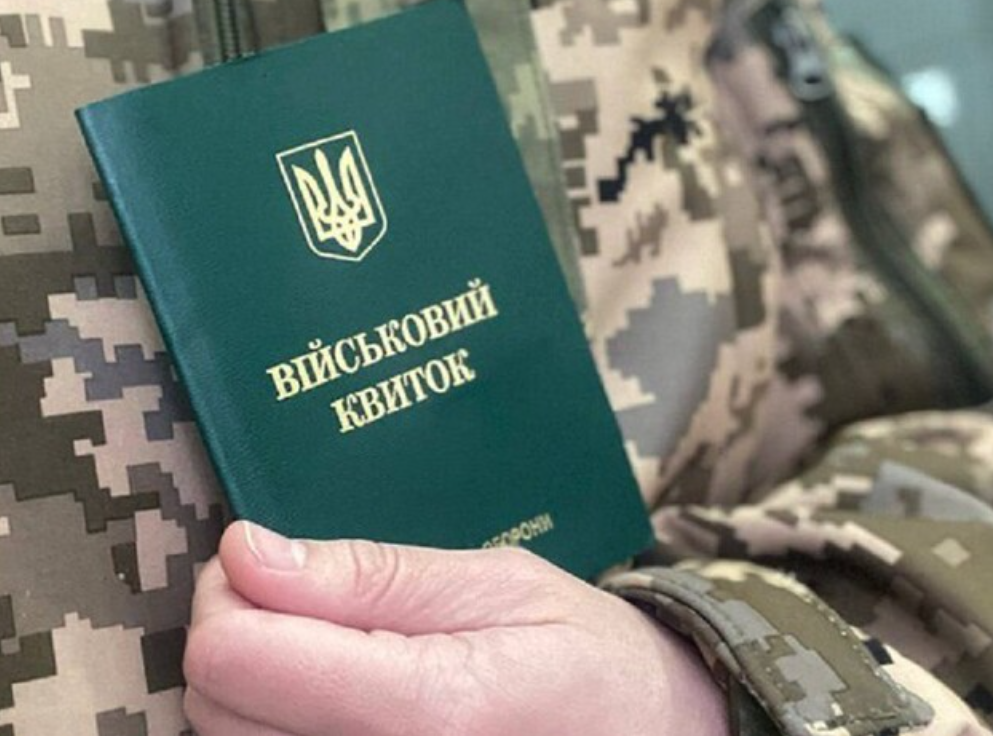
From March 2022 to October 2023, anti-corruption oversight of declarants of trading companies and joint ventures was legally suspended. After the freeze was lifted—36 completed audits, dozens of violations uncovered, and schemes worth millions of hryvnias documented. And not a single civil forfeiture lawsuit filed based on the results of these full audits. This data became public for the first time thanks to a request for access to public information.
A moratorium that went unnoticed
When the first reports appeared in the Ukrainian media about the extravagance in the declarations of TCC officers—their expensive cars, yachts, foreign real estate, and millions in cash—the public outcry was significant. Few people noticed that anti-corruption oversight of these officials had been officially suspended.
On March 3, 2022, the Verkhovna Rada adopted Law No. 2115-IX “On the Protection of the Interests of Entities Submitting Reports and Other Documents During the Period of Martial Law or a State of War.” The provision seemed reasonable; under extraordinary circumstances, audits could wait. But in practice, this meant that the NACP, starting March 7, 2022, and throughout 2023, did not conduct a single full audit of declarations.
The anti-corruption apparatus was paralyzed precisely when it was most needed.
The restoration of its powers occurred only after the adoption of Law No. 3384-IX of September 20, 2023, which took effect on October 12, 2023. Audits of declarations for 2021–2023 effectively began on January 1, 2024, that is, nearly two years after the start of the full-scale invasion.
It was precisely these two years, 2022 and 2023, that turned out to be key gaps in anti-corruption oversight of the agencies that directly influence mobilization, and thus national security.
After the resumption of asset declarations and full verification of these declarations, the Head of the NACP reported certain findings that deserve special attention, particularly regarding the assets declared by the leadership and staff of the TCC.
Every declaration with signs of suspicion
According to the NACP’s official response (Ref. No. 205-02/23865-26 dated April 13, 2026), since 2024 the agency has conducted 36 full audits of declarations submitted by representatives of regional and territorial recruitment and social support centers. Another 7 audits are ongoing.
It is fundamentally important that all these declarations were selected for review because they failed the automated screening in accordance with the risk-based approach approved by NACP Order No. 284/23 dated December 7, 2023. In other words, every declaration reviewed already showed signs of suspicious activity upon submission—and the review confirmed this in virtually every case.
To understand the scale, the number of TCCs in Ukraine exceeds 600 units.
Each has a head, deputies, and department heads, and all are required to file declarations. Out of thousands of potential declarants, only 36 audits have been completed.
Unfortunately, as the response indicates, the software of the Declaration Registry does not allow for the generation of statistical data based on specific criteria; therefore, it does not appear possible to determine the percentage of submitted versus verified declarations by TCC representatives.
The reports received on the results of the full verification of declarations indicate that, for some declarants, two or three declarations covering different periods were verified, and the amounts of the identified inaccurate information were almost identical, which points to signs of a systematic, long-term, and consistent violation of anti-corruption legislation.
Identified violations
Based on the results of 36 full audits, the NACP issued:
- 10 substantiated conclusions regarding signs of a criminal offense under Article 366-2 of the Criminal Code of Ukraine (submission of knowingly inaccurate information in a declaration);
- 1 conclusion under Article 368-5 of the Criminal Code of Ukraine (illegal enrichment);
- 19 reports to the National Police regarding signs of an administrative offense under Part 4 of Article 172-6 of the Code of Administrative Offenses.
An analysis of some of the reports received in response to the request reveals not just numbers, but specific mechanisms for concealing assets.
For example, false information was discovered regarding one of the heads of the regional TCC and SP, with discrepancies totaling nearly 6.3 million.
This declarant has already been served with a notice of suspicion in criminal proceedings on the grounds of a crime under Article 368-5 of the Criminal Code of Ukraine (illegal enrichment). The NACP established that between August 26, 2021, and July 18, 2023, he acquired assets worth 8,835,173.91 UAH, which exceeds his legal income by more than six thousand five hundred non-taxable minimums.
This mechanism is of fundamental importance in light of anti-corruption legislation. The declarant did not purchase the property in his own name. He gave instructions to his father, who purchased two apartments in Dnipro (1,776,000 UAH and 698,950 UAH), a Volkswagen Passat (359,700 UAH), and a Ford Ranger (780,000 UAH)—assets totaling 3,614,650 UAH. Meanwhile, the official income of his father and mother for the entire period from 2018 to 2022 amounted to only 602,772 UAH. According to the NACP, all these purchases were made between June and November 2022.
The difference between the value of the acquired assets and the confirmed amount of the parents’ official income is 3,011,877.73 UAH.
A separate issue involves a “gift” from the father-in-law, who, at the instruction of his son-in-law (the declarant), allegedly gifted $65,000 (equivalent to 2,600,000 UAH) to his daughter. The NACP established that the father-in-law’s total income over 25 years of employment (from 1998 to 2022) amounted to 812,259 UAH. During questioning, the father-in-law himself confirmed that he had accumulated approximately $70,000; however, the financial impossibility of this is documented in official sources. NAZK’s conclusion: “the legality of the sources of funds in the amount of 2,600,000 UAH has not been confirmed.”
This case most fully illustrates the pattern where the actual beneficiary hides assets behind family members, using them as nominal owners, while the legitimate income of these relatives fails even a basic financial review.
Other documented schemes
Another declarant never exercised the right to provide an explanation. The NACP’s request, which was sent by mail, was returned with the notation “Failed delivery attempt.” The declarant also did not view the request in the registry’s online portal. Another declarant found themselves in a similar situation and did not provide explanations.
An analysis of the 2024 declaration of an official from the Zhytomyr Regional Territorial Center for Public Administration reveals a significant discrepancy between the reported income and the family’s actual expenses. With a combined annual income for the couple of 1,159,039 UAH, the total expenses for the same period reached 2,143,343 UAH, which is almost double the official income. The main expense was the purchase of an apartment worth 2,000,000 UAH. Although the declarant’s husband officially received UAH 924,500 from the sale of property, these funds were not properly reflected in the relevant sections of the declaration. Such a discrepancy in financial indicators may indicate the presence of undeclared assets or hidden sources of funds.
In another case documented in the NACP report, undeclared corporate rights abroad are cited. During a comprehensive audit, it was established that the declarant failed to report in the “Corporate Rights” section their ownership interests in two foreign companies (limited liability companies) registered in the Republic of Poland. According to the Polish state register, he held shares of 25% (contribution of 1,300.00 PLN) and 50% (contribution of 2,500.00 PLN). The total amount of discrepancies regarding these corporate rights, calculated at the official NBU exchange rate as of December 31, 2022, amounted to 31,533.92 UAH. The explanations provided during the audit are also telling. The declarant claimed that he did not have complete and official information regarding the size of the shares belonging to him and allegedly could not obtain supporting documents in a timely manner under martial law.
At the same time, the documents he subsequently provided were dated as late as 2024, and prior to the start of the full audit, he had not notified the NACP of his own discovery of inaccurate information in accordance with the procedure prescribed by law. As a result, the NACP did not take these explanations into account, noting a typical pattern of transferring assets into a corporate structure and/or a foreign jurisdiction, followed by the failure to disclose such rights in the declaration.
Why did the confiscation fail?
The most telling conclusion of the NACP’s official response concerns civil forfeiture as a mechanism provided for under Article 290 of the Code of Civil Procedure of Ukraine, which allows for the recovery of assets into state revenue when their lawful origin has not been confirmed.
Following the results of 36 comprehensive audits in which signs of unjustified assets were identified, two cases were referred to the Specialized Anti-Corruption Prosecutor’s Office. In both cases, SAPO prosecutors reported a lack of sufficient grounds to file a lawsuit. Not a single lawsuit was filed!
36 audits. Dozens of violations identified. Not a single civil forfeiture lawsuit filed following the results of full audits.
Instead, the lifestyle monitoring tool proved more effective. From 2022 through April 1, 2026, 139 monitoring cases were initiated regarding employees of the TCC and the SP, of which 136 have been completed. Nine cases were referred to the SAPO, and prosecutors filed five lawsuits with the High Anti-Corruption Court. The High Anti-Corruption Court issued three rulings declaring assets to be unjustified.
This paradox warrants a separate study, as a less formalized tool such as lifestyle monitoring yielded better practical results (3 court rulings) than a formal full audit of declarations, which in no instance led to a lawsuit for confiscation.
Zero international cooperation
One of the key acknowledgments in the NACP’s official response went virtually unnoticed: namely, that the National Agency’s powers do not include sending requests to the competent authorities of foreign states during full audits of declarations. Accordingly, such requests were not sent.
This means that if a TCC officer declared an apartment in Poland, a yacht in Turkey, or an account in a Cypriot bank, the NACP has no legal mechanism to verify this information through official channels. Thus, declaring foreign assets under current legislation is effectively a risk-free practice.
Against the backdrop of numerous reports about TCC officers’ foreign real estate, this gap appears not as a technical flaw but as a systemic vulnerability in the anti-corruption framework.
The Right to Information as an Anti-Corruption Tool
All of the data presented here became public thanks to a request for access to public information submitted via the “ACCESS TO THE TRUTH” platform. The NACP responded on April 13, 2026—in six parts, totaling 368 pages.
The NACP’s response sets an important precedent. The anti-corruption agency is capable of providing detailed, verified information about the results of its work in response to a public request. At the same time, the agency refused to provide substantiated conclusions addressed to law enforcement agencies, as they are classified as official information in accordance with NACP Order No. 131/23 dated June 19, 2023.
TCK Employees’ Assets in the Spotlight of the Parliamentary TSK
The issue of the financial status of TCC and SP employees has moved beyond media scandals and has also become the subject of parliamentary debate.
On April 8, 2026, the issue of the wealth and assets of TCC employees was raised at a meeting of the Verkhovna Rada of Ukraine’s Temporary Investigative Commission on the investigation of possible violations of Ukrainian legislation in the field of defense, Ukrainian anti-corruption legislation, and respect for human rights and freedoms during martial law. This demonstrates that the issue is perceived not as isolated “high-profile cases,” but as an element of systemic risk to trust in mobilization processes.
This context is important for understanding why the data disclosed through a request to the NACP carries public significance. A two-year hiatus in anti-corruption oversight (March 2022–October 2023), the limited number of full audits following the resumption of operations, and the absence of civil forfeiture lawsuits based on their findings have laid the groundwork for a question that has reached the legislative level. Is the state capable of ensuring the inevitability of consequences for unjustified assets within agencies that directly influence mobilization?
Conclusions
The data from the NACP’s official response allow us to draw a number of systemic conclusions:
- The two-year moratorium on audits (March 2022 – October 2023) created an unprecedented “window of unaccountability” in agencies performing a critically important function during wartime. It was during this period that risks accumulated, the consequences of which are now becoming apparent following the resumption of audits.
- The NACP’s risk-based approach demonstrates high accuracy, and virtually every selected declaration contains violations. At the same time, the number of audits remains critically low compared to the scale of the system, which significantly limits the actual impact of anti-corruption oversight.
- The results of the audits indicate not isolated cases, but systemic practices of asset concealment. The use of relatives as nominal owners, fictitious gifts, failure to report actual use of property, or discrepancies between income and expenses are recurring across different regions and at various levels of office. This points to consistent patterns of behavior rather than random violations.
- Despite the detection of discrepancies amounting to millions and signs of unjustified assets, the institution of civil forfeiture based on the results of comprehensive audits is effectively not functioning. The absence of lawsuits creates a situation where the detection of violations does not translate into real legal consequences.
- Taken together, these factors send an alarming signal: in some cases, the activities of certain officials at the TCC and the SP appear to be driven not only by the performance of official duties but also by the accumulation of private assets whose origins cannot be substantiated by legitimate income. This undermines trust in the institution as a whole and creates reputational risks for the mobilization system.
- The lack of international cooperation during the verification of declarations further exacerbates these risks, leaving a significant portion of potential assets outside effective control.
Overall, the published data indicate that the anti-corruption system is capable of detecting violations but currently fails to ensure their full resolution in the form of irreversible legal consequences. Without closing this gap between detection and punishment, any quantitative results of audits will remain of limited effectiveness, and public trust in the state will erode, creating social tension.