Fedorov Issued a Political Challenge to Zelenskyy: Why Did the Former Minister Bring Up Elections During the War?
19 August 15:05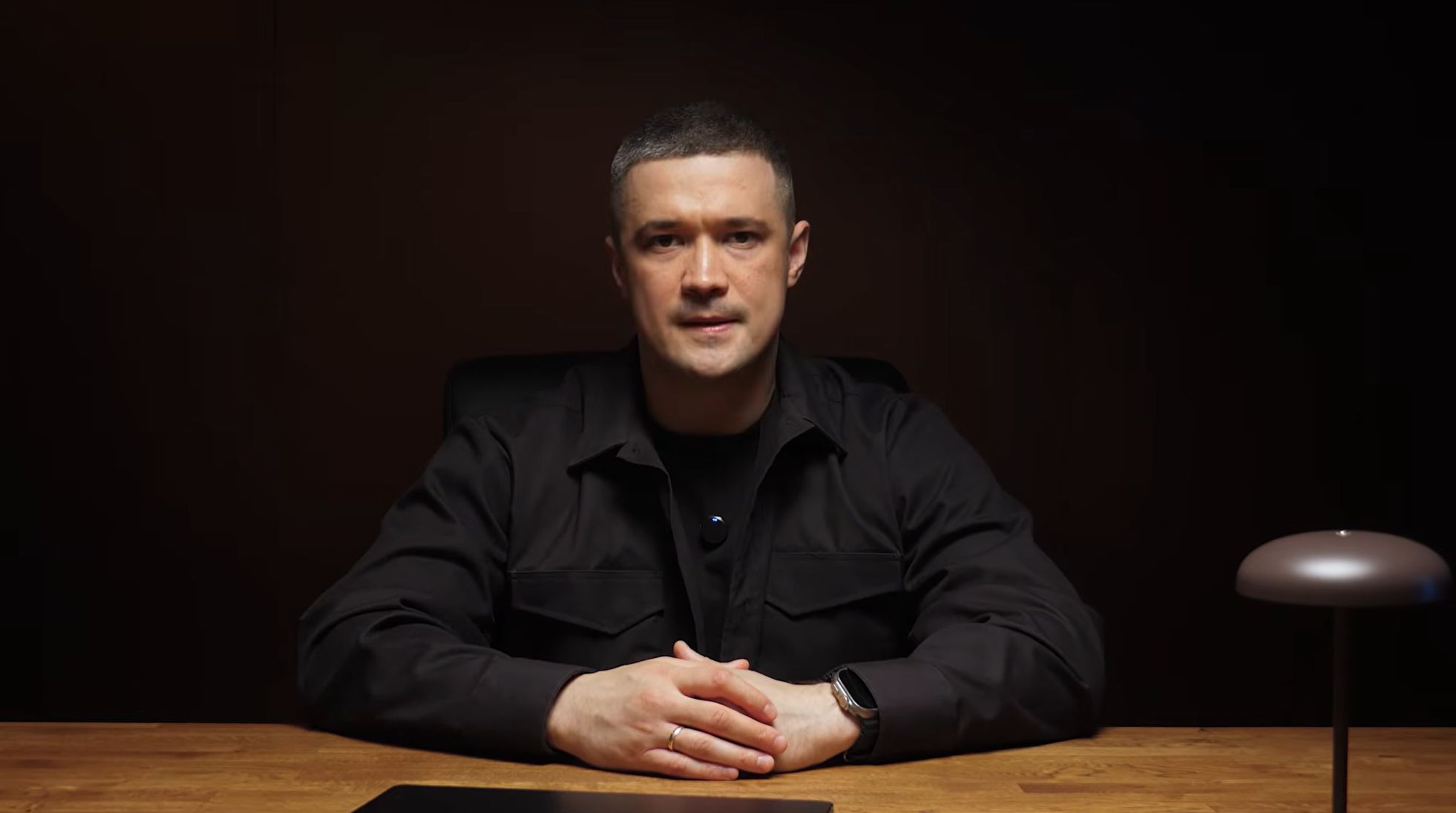 ANALYSIS
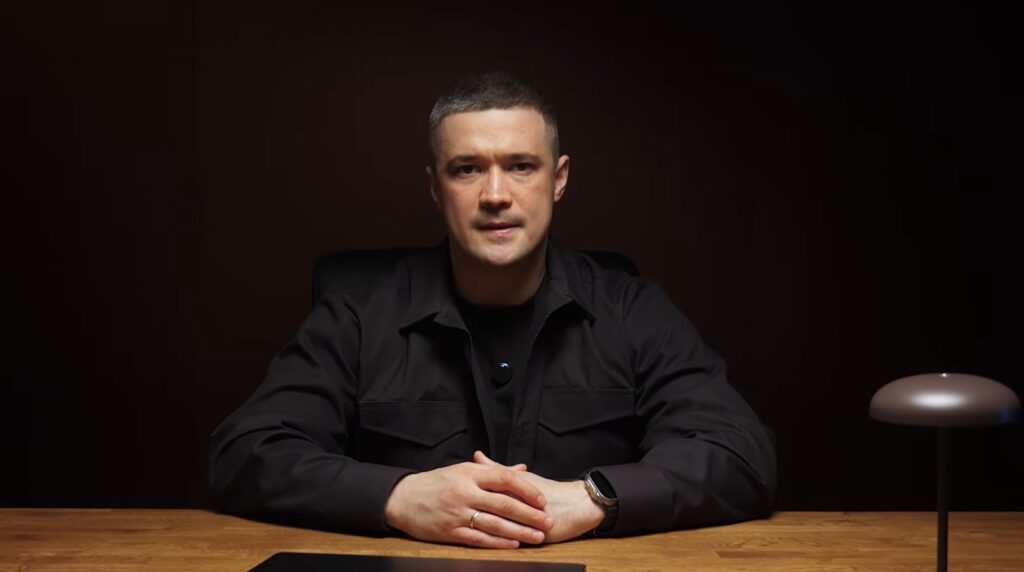
Mykhailo Fedorov’s return to the public eye following his resignation as defense minister came as quite a surprise. On the evening of August 18, the former minister published a nine-minute video address in which he raised the issue of holding elections in Ukraine during the war.
Formally, Fedorov did not call for elections to be scheduled immediately, nor did he demand the early termination of President Volodymyr Zelenskyy’s term. Instead, he suggested that the state begin seeking legal and organizational mechanisms to restore the democratic process right away. However, the political subtext of the statement is obvious: the former minister spoke quite clearly about the need to replace the current government, writes "Komersant Ukrainian".
Why now?
The choice of topic for his first major public address since his resignation is hardly coincidental. Fedorov left the government in July, declined the president’s offer to remain on the team as an advisor or deputy prime minister, and effectively gained the opportunity to forge his own political stance outside the executive branch. At the same time, pollsters have been tracking his political prospects for several weeks now. In a July poll by the “Rating” group, Fedorov ranked third in a hypothetical presidential race with 13.4% of the vote, trailing Volodymyr Zelenskyy and Valery Zaluzhny. His approval rating has also risen significantly in a short period, reaching 65%.
Watch us on YouTube: important topics – without censorship
In other words, at the time of his resignation, Fedorov already had what politicians who leave office usually lack: name recognition, a positive trend in trust, and a ready-made audience. The results of a more recent survey conducted in late July–early August are even more telling. In a simulation of the parliamentary elections, Fedorov’s hypothetical bloc received 17.9% of the vote among those who had made up their minds and planned to vote, trailing only Valery Zaluzhny’s bloc. That is precisely why Fedorov’s remarks about the elections should be viewed as more than just a discussion about democracy. They may be the first element of his future political strategy.
The former minister has chosen a topic that automatically places him on a different political plane from the current government. The current administration has repeatedly emphasized that holding elections during the active phase of the war is impossible. And this has not only political but also direct legal grounds: the law on martial law prohibits the holding of presidential, parliamentary, and local elections while it remains in effect. Martial law in Ukraine has now been extended for another 90 days, starting August 2, 2026.
Therefore, Fedorov is not actually talking about elections that could be held tomorrow, but rather about a shift in the political agenda. He proposes to begin a discussion on what Ukrainian democracy should look like if the war continues for another year, two, or three. This is the main political impact of his statement: the issue of elections is shifting from the category of “after the war ends” to the category of “how to prepare for them if the war drags on.”
Fedorov does not name Zelenskyy, but his rhetoric is directed at Bankova Street
In his address, the former minister does not “attack” the President personally. He does not speak of the need for Zelenskyy’s early resignation, does not declare his intention to run for office, and does not call himself a future candidate. However, the political framing of his statement allows for a broader interpretation. Fedorov addresses a governance crisis, a lack of transparency in decision-making, personnel policy, corruption, and the state’s insufficient accountability to its citizens. All of this effectively amounts to criticism of the system headed by Zelenskyy. That is precisely why his statement can be viewed as an attempt to transition from the role of a former high-ranking official to that of an independent political player.
Political analyst Vadym Denysenko also described the developments surrounding Fedorov on his Facebook page as the beginning of a major political game and suggested that the former minister has a chance to quickly move up to the top tier of Ukrainian politics.
But is it really possible to hold elections during a war? This is precisely where the main contradiction in Fedorov’s statement lies. His argument that Russia should not determine when Ukrainians can elect their government is politically compelling, but legally, the issue is much more complex. Elections during martial law are explicitly prohibited by law, and martial law itself is a consequence of Russian aggression.
Columnist and journalist Vitaly Portnikov noted on his YouTube channel that the problem is not that the president or his team allegedly do not want elections, but that the current legal framework does not allow them to be held. There are also practical security concerns: voting by millions of military personnel, citizens abroad, and residents of frontline territories; the functioning of the electoral infrastructure; and safeguards against Russian interference. Therefore, in his view, Fedorov’s call today is primarily political in nature, rather than practical.
What They’re Saying at Bankova
The initial reaction from the Office of the President was not long in coming. Officials at Bankova Street stated that they are not opposed to elections per se, but there are questions about how to organize them amid Russian missile and drone attacks.
It is too early to call Fedorov’s statement the official launch of a presidential campaign. The politician himself has not announced his intention to run, and any elections remain legally impossible as long as martial law is in effect. However, there are grounds to speak of preparations for a major political run. Even before Fedorov’s resignation, experts had highlighted his potential as a political leader in his own right. Following his dismissal, he garnered additional public attention, and opinion polls have shown that he has his own electoral base.
A “False Start” or a Calculated Political Move
Not all experts viewed this move positively. Former Deputy Minister of Defense Vitaliy Deineha called Fedorov’s statement a premature start to his presidential campaign. This assessment reflects the former minister’s main problem: the public may perceive talk of elections during wartime not as a defense of democracy, but as a premature start to political maneuvering.
Dmytro Koziatynskyi, the coordinator of protests in support of Fedorov, expressed an even harsher view on this topic in an interview with the YouTube channel
“The fact that Fedorov is thinking about elections—that’s all just criticism. I’m very surprised by this rhetoric regarding elections, because we’re in a full-scale war, and, as we know, elections in Ukraine are impossible during wartime. So talking about elections, tallying up some kind of poll numbers, or political campaigning right now… It looks so ridiculous that I can’t imagine how anyone could even think about it right now.”
However, even his critics effectively acknowledge the main point: after his resignation, Fedorov ceases to be merely a former minister and begins to act as a politician with his own stance.
What This Means for Zelenskyy
For Volodymyr Zelenskyy, the emergence of a strong rival from within his former team is a potentially unpleasant scenario. Especially if this rival does not resort to direct personal attacks but instead sets an alternative agenda.
Fedorov is currently doing just that. He isn’t declaring war on Zelenskyy, but he is addressing the areas where the government may be most vulnerable: the quality of governance, personnel decisions, corruption, transparency, and democratic procedures. Therefore, his statements can be interpreted as a political test. Fedorov is gauging how society will react to his new role and how harshly the authorities will respond to criticism.
Read us on Telegram: important topics – without censorship