Why Trump’s Deal with Putin Didn’t Lower Gas Prices—Experts Weigh In
15 October 19:34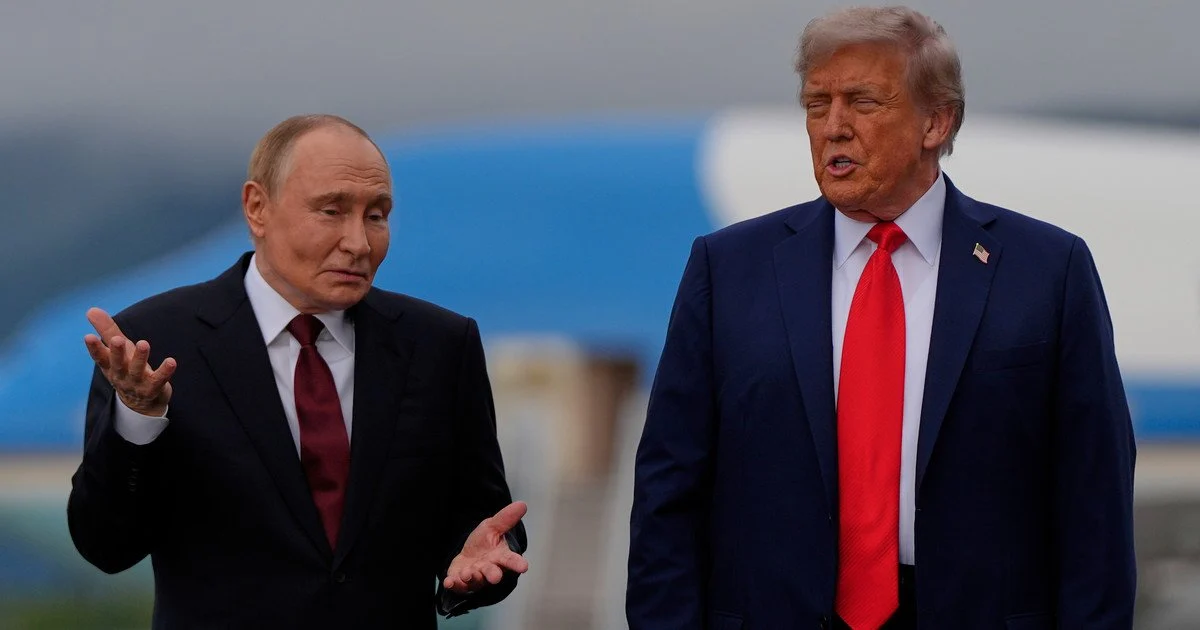 ANALYSIS FROM

U.S. President Donald Trump announced an agreement with Vladimir Putin on the supply of Russian diesel to the U.S. and global markets. Washington has already authorized these transactions, but experts doubt that this will help lower fuel prices.
Will Moscow be able to return to the U.S. market, and will Trump be able to use the agreement to lower diesel prices ahead of the U.S. congressional elections?
According to Trump, Russia must immediately supply more than 300,000 metric tons of diesel, another 500,000 metric tons in November, and subsequently 1 million metric tons. Separately, the U.S. president announced the delivery of another 3 million metric tons of fuel. Trump wrote about the agreement on the social media platform Truth Social, stating that an increase in the supply of Russian diesel would quickly lower prices in the U.S. and around the world. To this end, the U.S. Department of the Treasury, through the Office of Foreign Assets Control (OFAC), issued General License No. 135, which authorizes certain transactions involving the sale, shipment, unloading, and import of diesel fuel of Russian origin.
Why Russian Diesel Cannot Cause Global Prices to Collapse
Experts say that the announced supply volumes do not match the scale of the goal Trump has set. The global market for petroleum products is much larger, and diesel prices depend not only on the amount of available fuel but also on the crude oil market, refinery utilization rates, transportation costs, and the risk of supply disruptions.
Sergey Kuyun, director of the A-95 Consulting Group and an expert on energy and the petroleum products market, said in an exclusive comment
“It is impossible to achieve the stated goal—lowering diesel prices ahead of the election—with such volumes,” the expert explains.
In his assessment, even the first shipment of 300,000 metric tons is insignificant compared to the scale of consumption in the U.S. Furthermore, there is a timing issue: logistically, it would be extremely difficult to deliver Russian fuel to American consumers before the November election. However, the key issue lies not even in the quantity of fuel, but in the economics of its supply. The United States is one of the major exporters of diesel. Therefore, imported fuel that must be transported across the ocean will not necessarily be cheaper than products from American refineries. Freight, insurance, and other logistical costs must be added to the price of Russian diesel.
“Under market conditions, this diesel will be more expensive than American diesel. So how can such an expensive product put out this price fire?” notes Kuyun.
In theory, Russian suppliers could offer American buyers a discount. However, even in that case, the economic impact would depend on the extent to which the discount offsets shipping costs. The ability to profit from reselling a single shipment is not the same as the ability to lower prices across the entire market.
Therefore, the announced agreement guarantees neither an increase in the overall supply of diesel on a scale sufficient to change market conditions nor a reduction in fuel prices at American gas stations.
SEE ALSO: Russia Attacked a Gas Production Facility in Poltava Oblast: Operations Suspended
Global prices have risen despite Trump’s promises
Serhiy Kuyun’s initial market observations do not confirm the expected effect of the agreements between Washington and Moscow. According to the expert, global diesel prices rose after the agreement was announced, even though Trump had positioned it as a tool for quickly lowering energy costs. At the same time, the mere coincidence in timing does not prove that the agreement itself caused the price increase.
Kuyun attributes the pressure on prices primarily to the escalating situation in the Middle East, particularly the risks to shipping in the Strait of Hormuz and threats to the region’s oil infrastructure. Under such circumstances, the market factors the risk of supply disruptions into fuel prices. This is a fundamental difference between political statements and market mechanisms. Even if additional volumes of Russian diesel appear on the market, they will not necessarily offset the risks associated with conflicts in regions that are critical to global trade in oil and petroleum products.
“This is all just pre-election manipulation by the U.S. president,” says Kuyun, assessing Trump’s attempt to link the price drop to agreements regarding Russian fuel.
In his view, the situation also demonstrates the U.S. president’s limited ability to instantly influence retail prices. There is a time lag between a political decision, the signing of contracts, the physical movement of cargo, and a change in fuel prices at gas stations. Furthermore, the price depends on finished product inventories, trade conditions, and delivery costs.
Will the Ukrainian market feel the effects of these agreements?
For Ukraine, the key question is whether legalizing transactions involving Russian diesel bound for the U.S. could affect purchase prices and fuel costs on the domestic market.
This agreement does not establish a direct mechanism that would automatically lower the price of diesel in Ukraine. Ukrainian prices depend on the cost of imported shipments, European market prices, transportation costs, exchange rates, supply availability, and competition among suppliers.
At the same time, the Ukrainian market is not isolated from global market conditions. If tensions in the Middle East and risks to maritime transport continue to prop up prices for petroleum products, this could put additional pressure on the cost of imported diesel for Ukraine. Conversely, a sustained increase in supply on foreign markets, coupled with favorable logistical conditions, could potentially ease price pressure.
However, Trump’s statement alone regarding future shipments is not grounds for predicting lower fuel prices at Ukrainian gas stations. To reach such a conclusion, data is needed on actual shipment volumes, their destinations, changes in market quotes, and the purchase prices paid by Ukrainian importers.
SEE ALSO: Gas Station Prices Are Rising Again: Diesel Has Surpassed 100 UAH/L
Can Russia Return to the U.S. Petroleum Products Market?
A separate aspect of the agreements is the possibility of restoring Russia’s presence in the U.S. market. However, experts doubt that Trump’s political decision alone will return Russian producers to their pre-war trade model.
Taras Zagorodniy, an economist and managing partner at the National Anti-Crisis Group, believes that Russia is unlikely to regain its former position, as U.S. companies have already filled some of the market niches during the period of restrictions.
“There’s no economic sense in this. Russia won’t be able to return because American oil companies have taken its place,” Zagorodniy notes.
This assessment highlights an important feature of energy markets: political decisions can change the legal conditions of trade, but they do not override companies’ commercial interests. If American producers are already meeting domestic demand and have access to export markets, they will not give up their positions in favor of purchasing Russian diesel. Furthermore, it is important to distinguish between authorization for transactions involving a specific commodity and Russia’s full return to the pre-war energy trade system. General License No. 135 pertains to specific transactions involving diesel fuel of Russian origin. It does not, in and of itself, signify the lifting of all sanctions against the Russian energy sector or the restoration of all former trade ties.
According to Kuyun’s assessment, Moscow may have gained additional sales opportunities from this situation without having to seek a large-scale revision of sanctions policy. The expert notes that Russia itself had restricted exports of light petroleum products due to domestic shortages, and the term of those restrictions was set to expire in October.
Read us on Telegram: important topics – without censorship
If Russian restrictions on diesel exports were to be eased or lifted starting in November, Moscow could resume some shipments even without a separate political agreement with Washington. In that case, the agreement with Trump gives the Kremlin an opportunity to present the change in trade policy as the result of negotiations with the U.S. president. At the same time, the new authorization could create conditions for companies that were previously unable to conduct such transactions legally to participate in trade. However, the extent of this effect will depend on demand, license conditions, logistics, and further decisions by the U.S. administration.
Even if Russian diesel gains an additional sales channel, this will not necessarily mean a return to Russian dominance in the U.S. market. Most likely, it will involve the possibility of conducting individual commercial transactions, rather than a return to the pre-war model of energy cooperation.
U.S. Senators Demand the Agreement with Putin Be Scrapped
It is worth noting that political opposition to the agreement has already gone beyond mere criticism from Democrats. Twelve U.S. senators—six Democrats and six Republicans—have called on Trump to rescind the agreement allowing Russian diesel fuel onto global markets.
This is stated in a post on the website of Democratic Senator Richard Blumenthal.
“Allowing Moscow to freely sell Russian diesel fuel on global markets harms U.S. security interests and is a betrayal of the Ukrainian people,” the senators stated in a joint letter.
They called on the U.S. president to revoke General License No. 135 and instead exercise the sanctioning powers provided for in the Lindsey Graham Russia and Iran Sanctions Act of 2026. Separately, the senators emphasized the need for economic pressure on Russia and the states that are helping it wage war against Ukraine.
The fuel issue has also become part of a broader political conflict surrounding Russia’s war against Ukraine. After announcing the agreements with Putin, Trump accused Ukrainian President Volodymyr Zelenskyy of allowing Ukrainian strikes on Russian oil refineries to allegedly exacerbate global diesel fuel shortages.
Speaking to reporters near the White House, the U.S. president stated that Ukraine could end the war sooner and suggested that Ukrainians elect a new leader capable of striking a deal with Russia. He also claimed that attacks on Russian oil refineries are creating problems for the global market and American consumers.
Taras Zagorodniy interprets Trump’s statements primarily as part of an election strategy. In his view, the U.S. president is trying to explain rising fuel prices to voters and distance himself from responsibility for the economic consequences of the war.
The economist also does not rule out that Washington may reconsider its position on Russian diesel or use sanctions to pressure other countries, particularly India, which is a major destination for Russian oil exports.
“I don’t rule out that Trump might reverse course,” Zagorodniy notes, emphasizing the political volatility of the current situation.
At the same time, the expert does not expect a significant market reaction based solely on the U.S. president’s statements. In his assessment, the volumes Trump is referring to are insufficient to have a significant impact on prices, and the economic interests of American producers limit the prospects for Russian suppliers’ return.
Will Putin Gain Economically from the Deal?
In the short term, the agreement could yield a political payoff for the Kremlin: Russia will have the opportunity to present itself as a negotiating partner capable of influencing the global energy supply, while Trump will be able to demonstrate to voters an effort to solve the problem of high fuel prices. However, the commercial outcome is not yet clear. The announced volumes do not guarantee a significant drop in global prices, and for American buyers, Russian diesel will have to compete with products from local manufacturers, taking transportation costs into account. Moreover, political resistance in the U.S. creates the risk of further revisions to trade rules.
It is also important for Ukraine that granting Russian petroleum products access to additional markets could make it easier for Moscow to find buyers and sustain revenue from energy exports. However, the extent of this effect depends on actual shipments, price discounts, payment terms, and Russia’s ability to ramp up production.
Watch us on YouTube: important topics – without censorship