Starlink alternative for Russia: what is known about the occupiers’ new terminals
10 February 05:08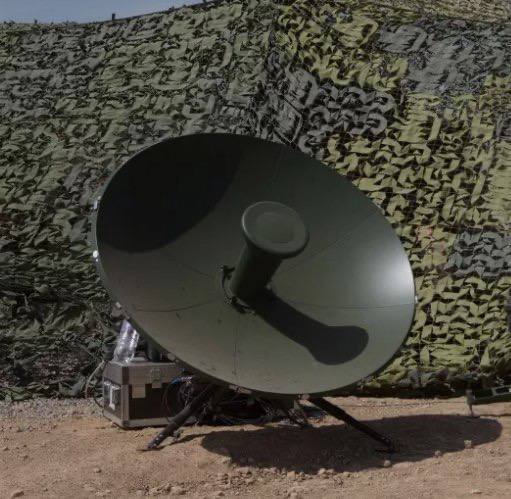
After the Starlink terminals illegally used by Russian troops were blocked, information appeared about the urgent delivery of other satellite equipment to the occupiers. This was reported by Sergei Beskrestnov, an advisor to the Minister of Defense of Ukraine, an expert and consultant in the field of military radio technologies, known by the call sign Flash, according to "Komersant Ukrainian".
According to him, new high-speed satellite internet terminals began to arrive at the front in an accelerated manner, which Russian units are trying to use as a replacement for Starlink.
What are the characteristics of the occupiers’ new terminals?
Sergey Beskrestnov recalled that Russia has several high-speed satellite Internet providers based on the Yamal and Express satellites. He listed the characteristic visual features of the equipment that distinguish it from Starlink terminals:
- all antennas look like satellite TV dishes with a diameter of 60–120 cm, oval or round in shape;
- the dishes are oriented to the southeast or south (azimuth 110-180 degrees);
- the antennas are visually open — protective covers similar to Starlink would interfere with operation at these frequencies;
- The equipment can be placed deep in positions, connecting advanced units via Wi-Fi bridges.
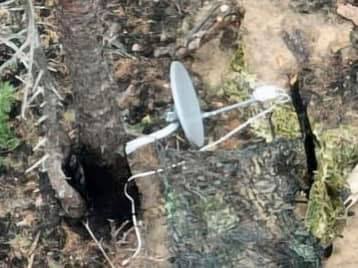




The expert emphasized that the appearance of such terminals is a direct response to restrictions on Russian troops’ access to Starlink.
Why Russia lost access to Starlink
The reports appeared against the backdrop of a decision to verify Starlink terminals in Ukraine, adopted after the discovery of illegal use of these systems by Russian units, in particular for controlling drones.
After unregistered terminals were blocked, Russian units on a number of front lines faced communication disruptions and an acute need for additional radio and satellite equipment.
What analysts and Russian military bloggers are saying
According to the Institute for the Study of War, Russia currently has no full-fledged technological replacement for Starlink. Analysts note that the loss of access to satellite internet is already complicating combat operations by Russian troops.
Russian military bloggers also acknowledge communication problems in certain areas of the front. One of them called the blocking of Starlink “an extremely unsuccessful decision,” while acknowledging that ground-based communication channels are not able to fully compensate for the loss of satellite internet.
Analysts emphasize that after SpaceX, in coordination with the Ukrainian side, restricted the use of Starlink in the occupied territories on February 5, complaints about problems with unit management and tactical strikes in Russian sources have increased significantly.
“It will be difficult for Russian forces to maintain the previous level of combat intensity if they cannot find workarounds or adapt new technologies to replace Starlink,” the analysts concluded.