Asteroid the size of a skyscraper is approaching the Earth: live broadcast
6 June 2025 02:20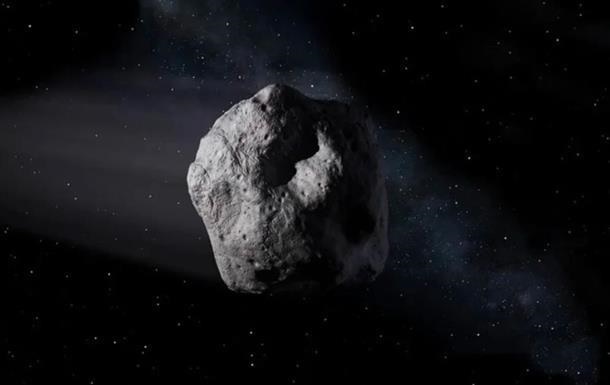
This night, the giant asteroid 2008 DG5, the size of which is comparable to a huge skyscraper, will approach the Earth. This is one of the most record-breaking approaches in recent years, and it will be possible to watch it online, "Komersant Ukrainian" reports, citing data from NASA and Space.com.
According to scientists, the length of this celestial body is 421 meters, and the closest distance to Earth during the passage will be 3,492,789 kilometers.
Although there is currently no threat of collision, scientists continue to monitor the asteroid’s movement as part of the Space Threat Early Warning System.
When will the record-breaking asteroid approach the Earth?
According to NASA’s Center for Near-Earth Object Studies (CNEOS), the maximum approach of the asteroid 2008 DG5 is expected on June 5 at 23:59 GMT ( 2:59 am on June 6 in Kyiv). The asteroid will pass at a distance of 3,492,789 kilometers, which is about 9 times the average distance to the Moon.
According to Space.com, the record approach of the asteroid 2008 DG5 to the Earth is expected on June 5 at 23:59 GMT (2:59 am June 6, Kyiv time).
What is the danger of asteroid 2008 DG5 and why scientists are watching it
According to NASA classification, objects are considered potentially dangerous if:
- their diameter exceeds 150 meters;
- and they approach the Earth at less than 7.5 million kilometers.
Asteroid 2008 DG5 meets both criteria: according to preliminary estimates, its size is between 320 and 700 meters – that is, it is larger than two Eiffel Towers stacked on top of each other or The Shard skyscraper in London.
Although there is currently no risk of collision, scientists are closely monitoring its trajectory as part of the Space Threat Early Warning System.
How to watch the passage of asteroid 2008 DG5 online
Despite its impressive size, the asteroid will look like a bright moving dot through a telescope. However, everyone will be able to see it in real time thanks to an online broadcast organized by astronomical centers and YouTube channels associated with NASA.