Frenzy at the border: State Border Guard Service cites reason for queues at Ukraine’s entry points
29 March 18:16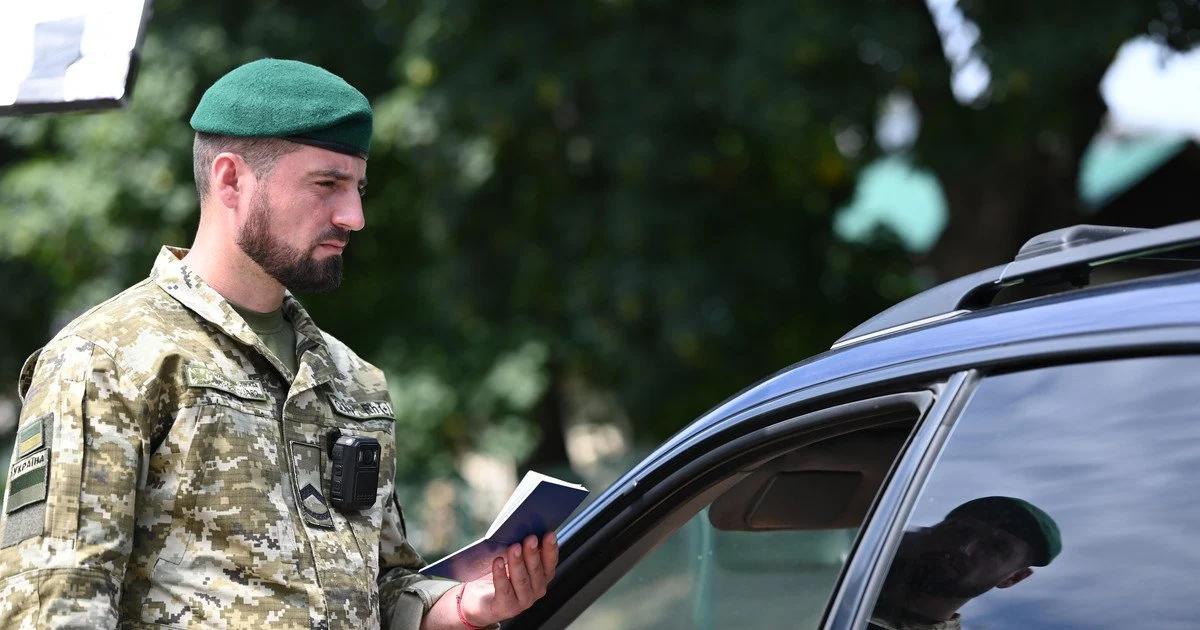
Videos showing long lines at the border crossing into Ukraine are circulating on social media, but the State Border Guard Service emphasizes that this does not reflect the overall situation at the border. The heaviest traffic is currently concentrated mainly at two checkpoints on the border with Poland, while there are no significant traffic jams at other border crossings.
This was reported by RBC-Ukraine, citing a comment by Andriy Demchenko, spokesperson for the State Border Guard Service of Ukraine, as reported by "Komersant Ukrainian".
Demchenko noted that the increase in passenger traffic began last Saturday, when spring break started for schoolchildren. At that time, the majority of traffic was outbound from Ukraine, and on weekdays, traffic intensity decreased slightly, although it remained higher than before the start of spring break.
According to the State Border Guard Service, nearly 90,000 people crossed the border on Friday, March 27, and 107,000 over the past 24 hours. While the flows of people entering and leaving were roughly equal on Friday, by Saturday the trend had shifted in favor of those returning to Ukraine: there were 12,000 more such citizens.
What caused the increase in passenger traffic
“And right now, passenger traffic for both yesterday and today is actually influenced by several factors. It’s traditionally the weekend—Saturday and Sunday—when passenger traffic generally increases. It’s the end of spring break, when mothers with children are returning to Ukraine because they need to be back in school tomorrow. And we also can’t rule out that some Ukrainians are returning for the Easter holidays,” explained the Border Guard Service spokesperson.
At the same time, he emphasized that it would be incorrect to speak of a mass return of Ukrainians specifically due to Easter. According to him, some people may indeed be traveling due to the holiday period in European countries, where Catholics celebrate Easter earlier, but this is only one of the factors.
Where exactly are the longest lines
“Traditionally, the largest passenger flow—50% of the total—occurs at the border with Poland. The videos currently circulating online were filmed at this very section. But it’s important to understand that, according to information from our Polish colleagues, among all the border crossings on the Polish border, the most people are passing through “Shehyni” and “Krakivets,” Demchenko added.
As of now, there are about 200 vehicles in line in each direction. Just yesterday, the line was around 150 vehicles. At the same time, the situation at other border crossings is much calmer.
“So I would still advise people to check the traffic conditions at the border crossings; perhaps the other side also publishes this information, as the Ukrainian side does, regarding the direction of travel, so that people can see where the traffic is lighter and head there,” noted the State Border Guard Service spokesperson.
What is happening at the “Medika-Shehyni” pedestrian crossing
Separately, the State Border Guard Service commented on a video showing a large crowd at the “Medika-Shehyni” pedestrian crossing.
Demchenko emphasized that this is the only pedestrian crossing point on the border with Poland, so local crowds are possible there. At the same time, 1,800 people crossed into Ukraine in this direction on Friday, and 2,100 yesterday—meaning no significant spike was recorded.
“But of course, when people are standing in lines, they take videos, and then the situation—let’s say—is exaggerated, suggesting that the lines are too long. The line also forms because people arrive at a particular crossing point all at once, and consequently, the time required to process such a large number of citizens increases,” the spokesperson noted.
What border guards advise
Border guards advise checking the congestion at border crossings before traveling and, if possible, choosing less crowded routes. According to Demchenko, Ukrainians shouldn’t focus solely on the most popular crossings, as this further increases the lines there.
“Traditionally, the most popular ones people choose are ‘Shehyni,’ ‘Krakivets,’ and often ‘Rava-Ruska’ as well. But recalling, for example, the summer period, when passenger traffic was again quite high, queues were observed at all border crossings, especially on peak days. So now we see that people are still mostly choosing two—”Shehyni” and “Krakivets,”” he said.
Demchenko concluded that at the remaining border crossings, the queues either consist of a few dozen vehicles or, as of now, are completely absent on the Polish side heading toward Ukraine.