Air defense troops found a mammoth bone: the discovery could redraw the map of archaeology near Kyiv
31 March 21:26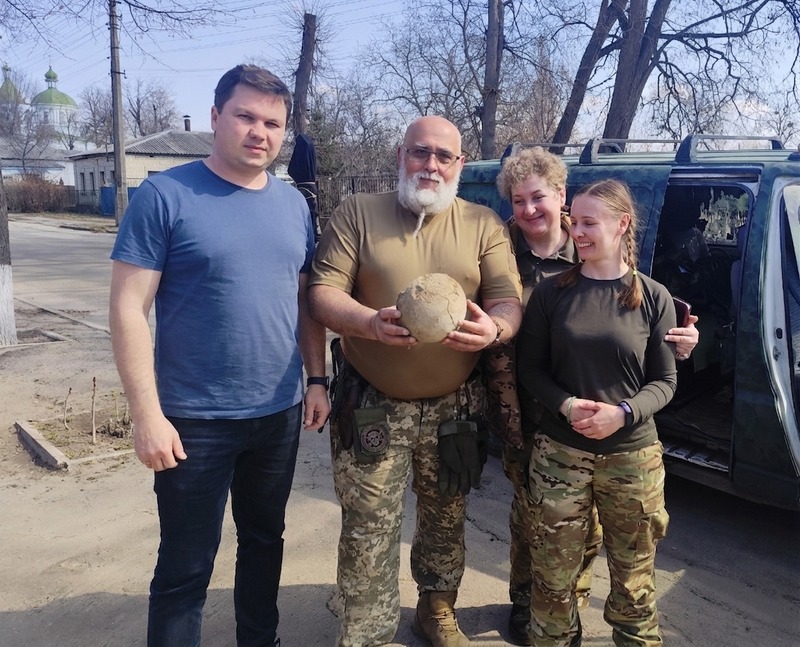
On the outskirts of Pereyaslav, members of a mobile firefighting unit came across a mammoth bone estimated to be about 25,000 years old. This was reported by the Pereyaslav National Historical and Ethnographic Reserve, according to "Komersant Ukrainian".
The find was handed over to the Pereyaslav National Historical and Ethnographic Reserve, where it will be studied by scientists.
Experts do not rule out that this may indicate a previously unknown Paleolithic archaeological site.
How the mammoth remains were found
The bone was discovered by fighters from the mobile fire group of a volunteer unit of the local community.
It is the epiphysis of the hip joint—a part of the mammoth’s femur.
The discovery was made by military personnel from
DFTG-2 “Pereyaslav,” who handed it over to the reserve’s specialists for:
- scientific research;
- preservation;
- future display.
Why this find may be important
Scientists at the “Pereyaslav” National Historical and Ethnographic Reserve note that the site of the discovery had already attracted the attention of archaeologists.
In 2021, the following were discovered at this site:
- fossil remains of ancient animals;
- a flint arrowhead from the
Paleolithic era.
Therefore, the new discovery may indicate the existence of a previously unknown ancient human settlement.
What the reserve says
The reserve emphasizes that the find now has significantly greater scientific value.
“Now it is not just a random bone, but part of a potential archaeological site.”
Experts plan further research of the area, which may help determine whether a Paleolithic human settlement truly existed here alongside mammoth habitats.
What will happen to the mammoth bone
After examination, the find may be included in the exhibition
the Pereyaslav National Historical and Ethnographic Reserve.
Thus, this artifact, tens of thousands of years old, could become a new museum exhibit and the basis for further archaeological research in the Kyiv region.