Silent migration of young people: a problem that is not justified by war alone
Lately, I have been hearing the same question more and more often-from parents, educators, politicians, and sometimes from students themselves: “Why are they leaving?”
I am talking, of course, about Ukrainian graduates – those who have graduated from school, sometimes from university, and have gone to other countries in search of education, security, and a future. And while this used to be the exception, it is now the rule. These are no longer isolated stories, but a real wave. Quiet but powerful at the same time.
We are used to measuring such things by numbers. According to UNESCO statistics, the number of Ukrainian students abroad is growing every year. In 2014, there were just over 60,000, in 2016 – almost 80,000, and after the start of the full-scale invasion, according to the Ministry of Education and Science, there were over 600,000.
But these are not just statistics..
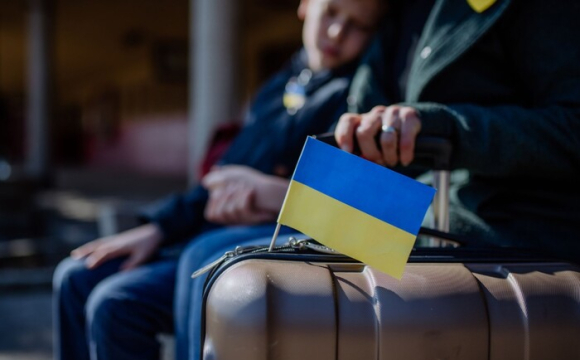
When I talk to young Ukrainian women and men in Berlin, Warsaw, or Brussels, I hear the same thing every time: “I wasn’t planning to stay. But now, when the war is ongoing and I have only one life, returning has become a less obvious option.”
These words hurt. Not because they betray anyone – no. But because they speak so sincerely about what Ukrainians are forced to seek: security, stability, and certainty of future prospects.
The war has undoubtedly become the primary cause of youth migration. And since students are children first and foremost, parents naturally want their children to be safe. At the beginning of the war, many people left in an emergency, chaotically, with just one backpack. But now we are dealing with a quiet and deliberate, planned migration.
And that is why its causes, apart from the war, are broader and more systemic.
For example, the quality of education in Ukraine and the accessibility of this education. In this area, after a bunch of reforms for the sake of reforms, frankly, we have more problems than achievements. In addition to the devastation of the war, we have artificially reduced the number of universities, artificially blocked the opportunity to study at home due to an ill-conceived and unadapted system of admission. Then there is the lack of practical value of many diplomas. And it is high time to recognize this problem.
Today’s young people want real knowledge and opportunities. They want to study not for the sake of a piece of paper, but with a clear understanding that their time and efforts have meaning, value, and perspective.
As the mother of a teenager, I personally understand these children perfectly.
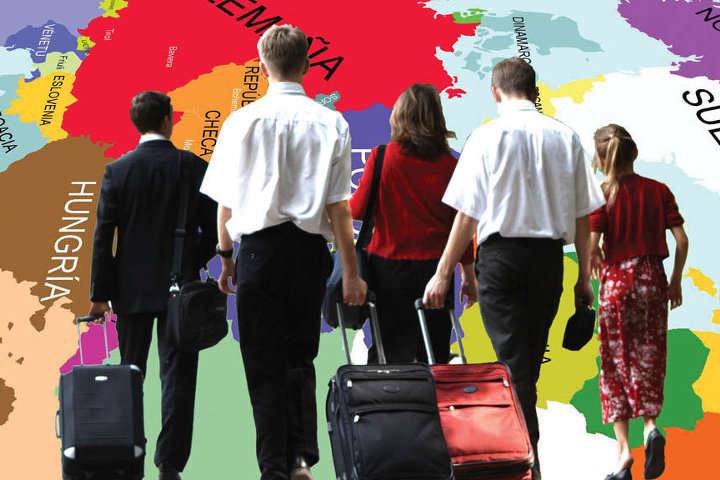
In Poland, for example, today you can study for free. In Germany, you can receive a scholarship and work officially. In the Czech Republic, you can live in a comfortable dormitory and have free access to innovative laboratories and libraries. European universities do not just teach, they prepare for life.
According to Eurostat, Poland accepts about 30% of Ukrainian students, Germany – 18%, and the Czech Republic – 12%.
The conclusion is self-evident: we have no right to justify the loss of the younger generation, future professionals, entrepreneurs and scientists solely by the war.
Moreover, we have to fight for those who are already studying abroad but continue to maintain ties with Ukraine through family and friends. For each of them, Ukraine remains home. And many of them are hurting for Ukraine.
What we have to change:
First of all, we need to stop looking at young people as statistics and start treating them as future partners.
When a university is not a place to get a diploma, but a space for development. When access to it does not limit the circle of potential students at the stage of ill-conceived tests developed for an unclear purpose.
When education is not an abstraction, but the first step in the infrastructure of a person’s future professional development.
When the first job or internship is guaranteed and is a logical continuation of the student’s efforts and the state educational policy in general.
When business is integrated into the life of campuses and involved in the implementation of educational programs, as it is a future employer.
One more thing: in no case should we try to ban young people from leaving. This is a path to nowhere and can only lead to the opposite effect.
Secondly, the young people who are leaving now should not be condemned, bullied, or worse, divided into patriots and unpatriots.
The world is globalizing, its borders have long been conditional. And this is good. Because if we make Ukraine a country that people want to return to, we will win twice. Today’s students will return as specialists with European education.
The outflow of young people is actually a mirror that shows what is wrong with us today and what we have serious problems with. It is from this angle that the state should look at the quiet migration of entrants today. And I urge literally every Ukrainian official to do so.
A country that can return its own people is stronger than one that can only keep them. Therefore, the main thing we can do now is to recognize the problems, draw the right conclusions, and make the necessary decisions. Already.