Bolivia breaks with tradition: military coup fails ignominiously
27 June 2024 11:17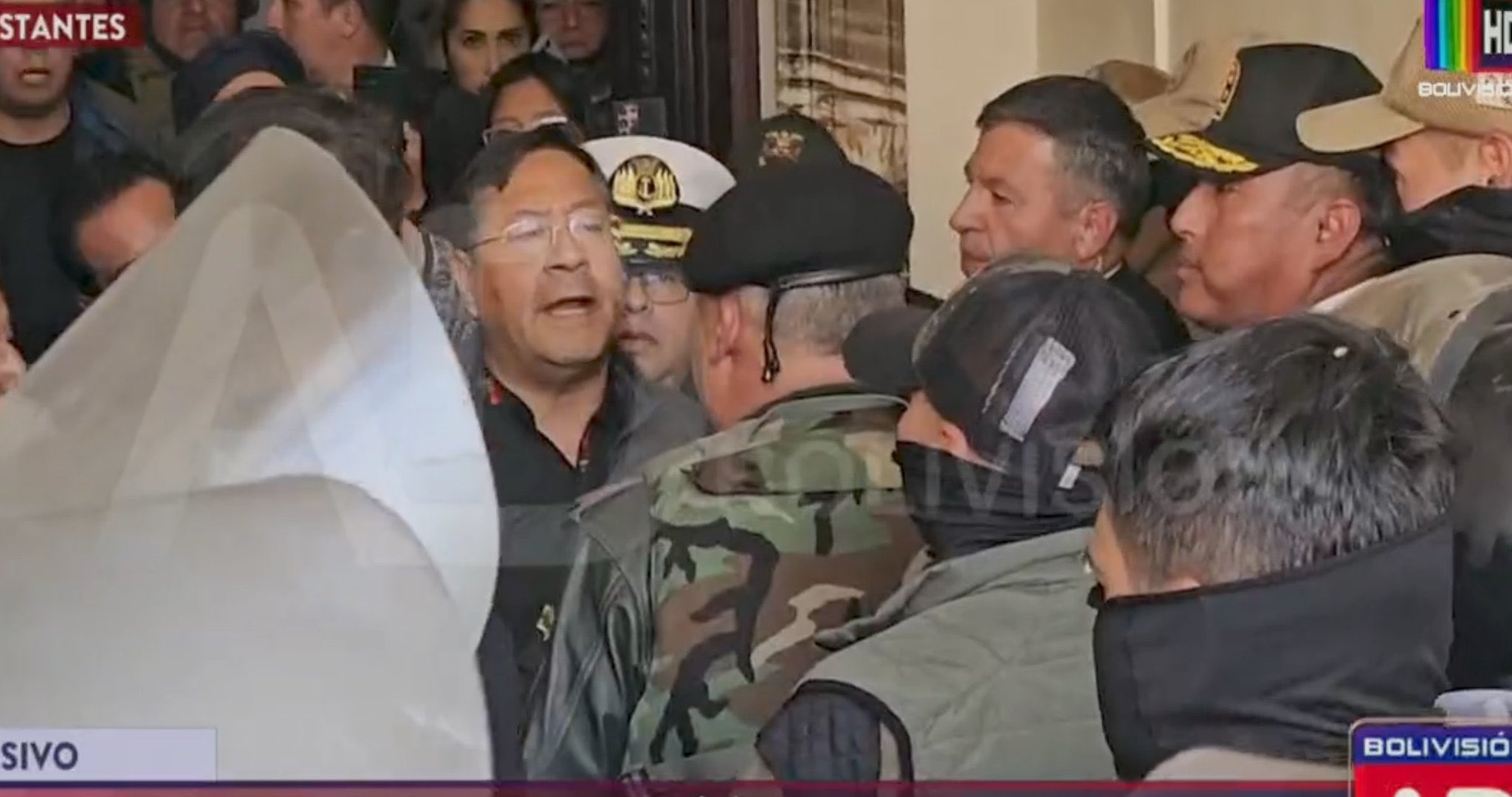
On Wednesday evening, Bolivian armed forces retreated from the presidential palace in La Paz, and rebel general Juan Jose Zuniga was arrested after President Luis Arce condemned the attempted “coup” against the government and called for international support. This was reported by "Komersant Ukrainian" reports with reference to Reuters.
Earlier in the day, military units led by General Juan Jose Zuniga, who was recently stripped of his military command, gathered in the central Murillo Square, where the presidential palace and Congress are located. An armoured vehicle rammed through the doors of the presidential palace, and soldiers stormed in.
“Today the country is facing an attempted coup d’état. Today the country is once again facing interests that seek to interrupt democracy in Bolivia. We need the Bolivian people to organise and mobilise against the coup d’état and in defence of democracy,”
– arce said from the presidential palace, in front of which armed soldiers stood.
A few hours later, the soldiers retreated from the square and police took control. Bolivian authorities arrested Zuniga and took him away, although his destination remained unclear.
At the presidential palace, Arce swore in Jose Wilson Sanchez as the new military commander to replace Zuniga. He called for calm and the restoration of order.
“I order all personnel mobilised in the streets to return to their units. We ask that the blood of our soldiers is not spilled,”
– sanchez said.
The United States said it was closely monitoring the situation and called for calm and restraint.
Tensions in Bolivia are rising ahead of the 2025 general election, in which leftist former president Evo Morales plans to run against his former ally Arce, creating a major rift in the ruling Socialist party and wider political uncertainty.

Bolivia – the birthplace of coups
Bolivia’s history is rich in political upheavals and the overthrow of governments, which has largely shaped the development of this South American country. Even before the arrival of Europeans, there were advanced Indian civilisations on the territory of modern Bolivia, including the Tiwanaku state. In the 15th century, these lands were conquered by the Incas, and in the 1530s, the territory was captured by the Spanish conquistadors.
The period of Spanish colonial rule lasted for almost three centuries, until 1825, when Bolivia’s independence was declared. However, independence did not bring stability to the country. Throughout the 19th century, Bolivia experienced numerous coups d’état, which became a characteristic feature of its political life.
the 20th century continued this trend. In the 1920s and 1930s, the country experienced a series of military coups. The period after the Chaco War of 1932-1935 was particularly unstable. In 1943, Gualberto Villaroel came to power and was overthrown and killed in a popular uprising in 1946.
An important milestone in Bolivia’s history was the Bolivian National Revolution of 1952, which brought the National Revolutionary Movement party to power. However, this period ended with a military coup in 1964. The following years were characterised by frequent changes of government and military coups.
The period of 1978-1982 was particularly unstable, when the country saw several presidents, most of whom came to power through coups. In 1980, General Luis Mesa Tejada seized power, establishing a harsh dictatorship, but was overthrown the following year.
In 1982, a civilian government returned to power, but political instability persisted. In the 2000s, Bolivia experienced a new wave of political crises. In 2003, under the pressure of mass protests, President Gonzalo Sánchez de Lozada resigned. His successor, Carlos Mesa, was also forced to leave office in 2005 due to mass demonstrations.
In 2006, Evo Morales became president, who was able to stay in power longer than his predecessors, but his rule ended under the pressure of protests in 2019. This event once again underlined that political instability and the propensity for coups remain characteristic features of the Bolivian political system.