Borjomi without IDS Ukraine: how sanctions, change of ownership and a new importer reshaped the bottled water market
5 November 2025 20:28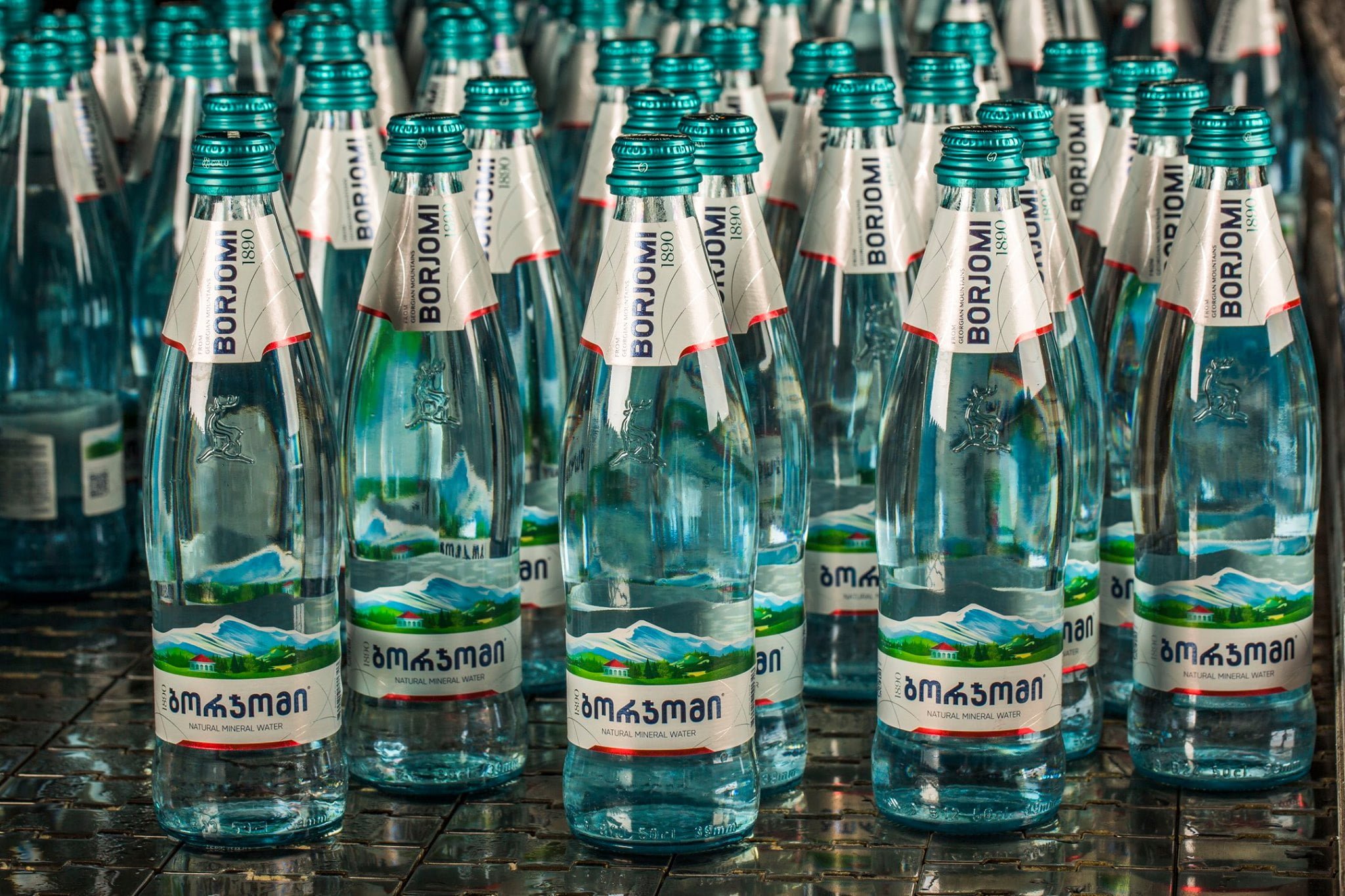
Borjomi has changed its distributor in Ukraine. In 2023, IDS Ukraine, the largest player in the Ukrainian bottled water market, stopped selling the legendary Georgian mineral water, "Komersant Ukrainian" reports, citing Forbes Ukraine.
This is a significant shift for the company: in 2003-2022, it was the exclusive importer of Georgian mineral water, and in 2021 Borjomi accounted for about 7% of its sales. Despite the pause on the part of IDS Ukraine, the brand itself has not disappeared from Ukraine: in 2023, Borjomi accounted for 74% of all water imports to our market, or $17.6 million in money (Pro-Consulting).
Why the Borjomi brand disappeared from the IDS Ukraine portfolio
The root of the changes is sanctions and shareholder shuffling around IDS Group, which includes the Borjomi producer in Georgia and its Ukrainian subsidiary.
Before the “great war”, the Russian consortium Alfa Group of Mikhail Fridman and partners held a controlling stake (55.8%), while 44.2% belonged to the heirs of Badri Patarkatsishvili. Following personal sanctions against Friedman in the EU and the UK, in June 2022, IDS’s corporate rights were seized in Ukraine and transferred to the management of the ARMA. A chain of failures followed: in the spring of 2022, the Georgian plant was temporarily shut down, and sellers in the Baltic states recorded interruptions.
New “schedule” of owners and restart of production
To unfreeze the financial transactions, the Georgian government offered the Russian shareholders to give their stake to the state for free. As a result, the state received 7.73% of IDS Borjomi International.
Therefore, the current structure is as follows:
- 49.99% – Alfa Group (Erasmony Limited);
- 38.48% – Black Waters Limited (heirs of Patarkatsishvili);
- 7.73% – the state of Georgia;
- 3.79% – former employees and minority shareholders.
After the restructuring, the group’s revenue in 2023 increased to $436 million ($21 million, according to Ipres.ge, citing a report by Rissa Investments).
The geography of sales is illustrative:
- Russia – $300.7 million;
- Georgia – $34.8 million;
- Kazakhstan – $33.5 million;
- Belarus – $19.2 million,
- Ukraine – $13.9 million.
In September 2025, the company opened a new plant in Kvibisi, Georgia, for $120 million with a design capacity of 750 million bottles per year and 600 jobs.
Borjomi is a natural sodium bicarbonate mineral water with a mineralization of 5.5-7.5 g/l. It is extracted in Georgia in the Borjomi Valley, located in the Borjomi-Kharagauli National Park.
This is a mineral water of volcanic origin, which is more than 1500 years old by natural standards. It comes to the surface of the earth from a depth of 8-10 km, pushed out by natural carbon dioxide. Unlike most other sodium bicarbonate mineral waters, Borjomi does not have time to cool underground and comes to the surface warm (38-41 °C), enriched with a composition of sixty different minerals found in the rocks of the Caucasus Mountains.
Who now imports Borjomi in Ukraine
The importer has been replaced: since 2023, Trans Aqua has been supplying and STV Group has been distributing it.
What is known about Trans Aqua?
“Trans Aqua was established in 2015 and showed zero revenues until 2022 (Opendatabot), but in 2023 it recorded UAH 625.3 million in revenue and UAH 60.6 million in profit, and in 2024 – UAH 1.3 billion in revenue and UAH 20.6 million in profit.
- According to the latest available information, the authorized capital is UAH 24 thousand.
- The main activity is wholesale trade in food, beverages, and tobacco products. In particular, imports of Borjomi, as well as Georgian brands Old Kahetti and Galaktioni wines.
- The owner in 2023 is Yaroslav Byazichev, and the CEO is Vadym Kovaluk.
Vacancies published by the company indicate that it has a staff of 100 to 250 employees (as of the announcement). The company is looking for sales representatives, regional managers, and specialists in the HoReCa segment, in particular for the Borjomi brand.
It should be noted that some auditors believe that it is worth paying attention to details when evaluating a company or potential partnership. “Red flags in the case of Trans Aqua include a very small authorized capital, the use of a mass registration address, and changes in import/distribution channels.
What you need to know about STV Group
STV Group is a Ukrainian distributor company operating at the national level, with a large logistics potential, a portfolio of more than 50 brands and promises full logistics coverage across the country.
It was formed as a result of the merger of 4 large regional distribution companies into a single holding. This step is intended to ensure competitiveness, expand the range of products, and introduce innovations.
According to YouControl, the legal name is STV GROUP UKRAINE LLC, EDRPOU code 44341366, registered on 04/28/2021. The authorized capital is UAH 15 million.
STV Group currently serves both retail chains and the HoReCa segment (hotels, restaurants, cafes).
Read also: Svishchov and Fiala expand business: new permit for mineral water extraction in Lviv region
IDS Ukraine status and legal nuances of the brand
IDS Ukraine is in an uncertain status: its corporate rights are under the management of the ARMA, and the HACCU is still considering the claim of the Ministry of Justice on the nationalization of assets. Formally, IDS Ukraine and IDS Borjomi Georgia are part of the same group, but, according to the IDS Ukraine press service, there is no contact with the Georgian side. The rights to the Borjomi trademarks are owned by the Georgian Glass and Mineral Water Association and IDS Borjomi Beverages Co. N.V. In 2021, IDS Ukraine applied only for a trademark for advertising, but they were not registered; in fact, it worked as a licensee, explains lawyer Nazar Kostenko.
How the commercial strategy in Ukraine has been reformatted
To cover the loss of the premium imported brand, IDS Ukraine began to develop new categories – energy drinks and juice drinks. But the channel’s economics changed not in its favor. According to Serhiy Ustenko, owner of Carpathian Mineral Waters, it is more profitable for distributors to make money on expensive imports: a liter of Borjomi in PET costs about UAH 80, compared to about UAH 20 for Morshynska. Retailers and distributors were eager to pick up a strong international brand with a visible marketing presence.
Marketing and demand: why Borjomi has remained prominent
Demand for the brand is supported by investments in communications. In 2024, Borjomi’s advertising budget in Ukraine was estimated at UAH 36-37 million (TV, OOH, radio, digital), second only to Morshynska (UAH 44-46 million), which is part of IDS Ukraine. According to Pro-Consulting, Borjomi’s recognition is high in all age groups, which explains the market’s reluctance to “let go” of the brand despite corporate conflicts on the Ukrainian side.
Watch us on YouTube: important topics – without censorship
New importer and old demand: what has changed for Borjomi in Ukraine
The first conclusion is that the import channel has been switched from a leading holding company to a specialized importer plus a large distributor without losing the brand’s presence on the shelf.
The second is that sanctions and corporate risks can instantly change the configuration even in mature FMCG categories.
The third is that the premium segment is ready to pay for a “heavy” brand: Borjomi’s share of imports in 2023 reached 74% despite the turmoil. For IDS Ukraine, this means the need to scale alternative products faster and maintain the marketing weight of Morshynska, while for competitors it means the opportunity to win back share in mid-priced and functional lines. For retailers, it means a stable source of margin due to the premium check and strong traffic generating power of the brand.
Read us on Telegram: important topics – without censorship