UAVs for export: why Ukrainian manufacturers are so eager to enter foreign markets
9 September 2025 14:38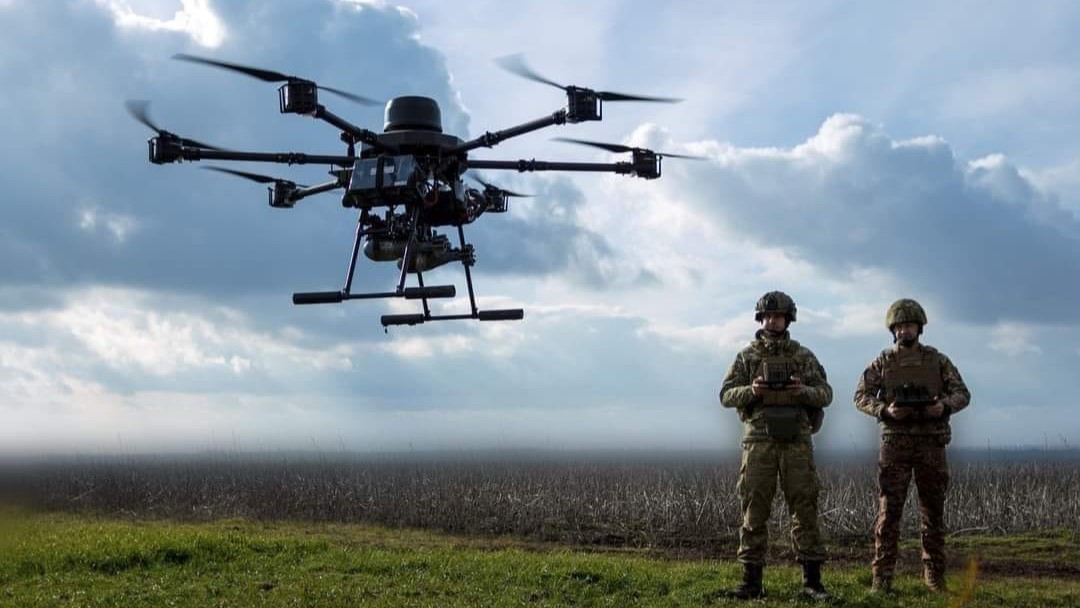
Ukrainian UAVs are not just an effective weapon that helps Ukrainian soldiers destroy the enemy at the front, but also a competitive product that has already been duly appreciated abroad. And it will be even more appreciated if Ukraine starts exporting weapons. Why do the vast majority of Ukrainian manufacturers support this decision?
“Game changer: how the opening of exports will affect Ukrainian UAV manufacturers” is the title of a study conducted by DataDriven. The study analyzes not only the benefits and risks of opening exports for Ukrainian UAV manufacturers, but also presents the potential of the industry, which has shown the highest growth over the past two years.
It is about the capabilities of Ukrainian manufacturers, both those that have already been embodied in specific UAV models and those that can be realized through the opening of exports
– The title of your research begins with the words Game changer – this is in the context of how the opening of exports will affect Ukrainian UAV manufacturers. What kind of rules are you talking about changing and for whom, first of all?
A game changer in this context is a change in the rules and model in which the domestic UAV industry has been operating since the full-scale Russian invasion. The status quo is that the main buyer in the sector is the “state” in a broad sense, i.e. the Defense Procurement Agency of the Ministry of Defense, military units, and municipalities. Even volunteer foundations also purchase UAVs to eventually transfer them to specific brigades or military units. In the current “closed export” model, manufacturers cannot scale up or expand outside the country, and therefore foreign buyers (private or public) are not available to them: in this context, changing the rules of the game means expanding the range of potential buyers.
Much has been done, but more can be done
During the period of full-scale invasion, as of the end of 2024, UAV production capacity in Ukraine increased 800 times. There are now more than 500 active drone manufacturers in the industry.
During the full-scale invasion, more than 1,000 UAV models appeared. 96% of all UAVs purchased by Ukraine are domestically produced. This is the data from the study “Game changer: how the opening of exports will affect Ukrainian UAV manufacturers”.
Source
– Mr. Karvatskyi, I propose to evaluate the potential of the UAV production industry in Ukraine in dynamics. How has this production increased during the years of full-scale war?
In 2022, Ukraine produced about 5,000 UAVs, and in 2023, the figure increased 60 times to 300,000. In 2024, production capacity increased another 13 times to about 4 million units.
– Sometimes there is a dissonance in the public space: on the home front, government officials talk about a multiple increase in UAV production, while at the same time military units report a shortage. It’s a problem of logistics or local requests: some are available, and some are not. How is the supply of UAVs to the military organized? Is the growth of direct purchases from units a solution?
The dissonance between statements about a large-scale increase in UAV production and reports from the frontline about the shortage is primarily due not to a lack of drones as such, but to the complexity of logistics, different supply channels, and uneven requests from units. Some drones are supplied centrally through government procurement and funds, while others are supplied directly by volunteers or local initiatives, so some brigades have a stockpile, while other needs remain unmet.
It should also be borne in mind that the situation differs depending on the type of UAV: cheaper FPV or multicopters arrive much faster and in larger quantities, while more sophisticated reconnaissance or strike systems experience more significant delays. Direct procurement from units can partially solve the problem, as it better takes into account their specific needs and operational efficiency, but without a coordinated accounting and distribution system, it will not eliminate the imbalance in general.
– Another problem often mentioned is the lack of localization of production. To what extent is the industry currently import-dependent?
According to our observations and information from market participants, the industry is still heavily import-dependent, primarily on supplies from China. The share of imported components can reach up to 70%, and although it can be reduced to about 30% in reality, it will be extremely difficult to find a full-fledged alternative outside of China in a number of categories, such as stacks, cameras, VTX (video transmitters for FPV drones), batteries, and power supplies. At least in the short term.
–What’s better – a lot of models and a lot of private manufacturers. Or concentration of production in the hands of the state?
The best solution is an open and mature market of producers in partnership with the state. We are already seeing a trend towards consolidation and separation of key players. Private companies are more flexible and mobile, while the state is more powerful in terms of scale. A mature market with several established private heavyweights provides the best balance.
– It has long been said that production is underutilized. What is actually missing to fully utilize the potential of producers?
The main thing, in my opinion, that is lacking in certain items is demand. If we assume that demand is now largely driven by the state, then there is a lack of demand from the state. There is a lack of demand for objective reasons. The state cannot absorb all the capacity of producers. In addition, the demand picture is changing, and if at the beginning of the invasion some solutions were needed, now new needs arise due to the changing nature and types of UAVs (for example, fiber-optic drones). The opening of exports creates an opportunity to increase demand, and this is one of the options that would help to load production.
The solution that gunsmiths are waiting for and still do not have.
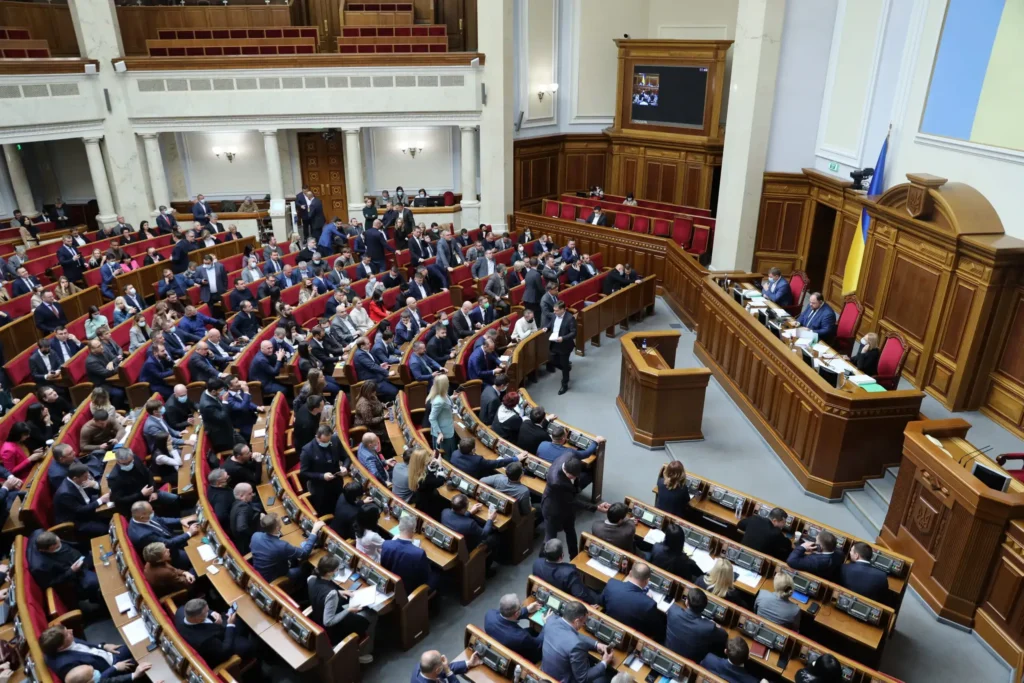
In early May, Ukrainian media mysteriously reported that the Cabinet of Ministers was ready to allow controlled exports of Ukrainian-made defense products. This decision was allegedly already approved by President Volodymyr Zelenskyy and its details were being discussed. In fact, this discussion is still ongoing.
In mid-August, the government’s position was outlined by the new Defense Minister Denys Shmyhal, who said that Ukraine would not open direct arms exports because there were unmet needs of the Ukrainian Armed Forces. But, as the minister promised, manufacturers should be given the opportunity to “quasi-export” – this is when, together with foreign partners, production using Ukrainian technology is set up in a secure area, and Ukraine will receive the bulk of the products. In other words, we are talking about “technology exports.” The possibility of implementing such an idea was announced by President of Ukraine Volodymyr Zelenskyy in late June. At that time, he shared his plans to sign relevant agreements in the summer to start exporting Ukrainian technologies abroad in the format of opening production lines in Europe. He clarified that it was only about drones of various types, missiles, and possibly artillery.
Instead, according to an analytical report by the Technological Forces of Ukraine and the BRDO, 97% of private arms and military equipment manufacturers expect restrictions on arms exports to be lifted.
Moreover, the opening of UAV exports can benefit not only domestic producers but also the state as a whole in the form of, for example, an increase in foreign currency inflows to the country and tax revenues from defense exports. For manufacturers, cooperation with foreign partners promises to diversify sales, reduce dependence on government contracts, and thus ensure stability and profitability, as well as expand access to advanced components, which will lead to higher product quality.
The benefits and risks of opening exports are analyzed in the study “Game changer: how opening exports will affect Ukrainian UAV manufacturers”, prepared by the consulting firm DataDriven. Viktor Karvatskyi, the Head of Defense and Mine Action practice of the firm, is the interlocutor of the publication
– Mr. Karvatskyi, the refusal to open exports is explained by the need to supply the Ukrainian army. That is, no exports until we provide them. Question: Can and how can the opening of exports improve the supply of Ukrainian troops in the combat zone?
It can, but it is not an immediate effect. Exports will allow companies to work with a wider range of partners in the West, attract investment and technology. In the medium term, this means more technical developments and increased production capacity. In other words, the army will win, but not immediately.
– Is there still a risk that the opening of exports will negatively affect the supply of UAVs to combat units? What are the possible safeguards?
There are risks, so exports should be controlled and foreseen:
1. Export authorization only for surplus production: meeting the needs of the Armed Forces of Ukraine should remain the top priority.
2. Strict export controls: A robust export control mechanism should prevent illegal re-exports to third countries, protect unique technologies, and ensure that products do not end up in Russia, its strategic partners, or countries involved in terrorism.
3. Customization of exported products: exported UAVs should be customized to exclude the use of sensitive technologies, ensuring national security while maintaining competitiveness in global markets.
4. Prioritize partner countries: export opportunities should be focused primarily on countries that supported Ukraine during the war, including NATO member states and countries with which Ukraine has signed security agreements.
– The discussion about opening up exports has been going on for quite some time, and it sometimes resembles the well-known thesis: one step forward, two steps back. That is, we seem to be getting closer to a positive decision, even some government officials announce it, and then “something goes wrong” again.
I think we are now moving in the right direction. The new Defense Minister, for example, has recently spoken about a “quasi-export” model. There are prospects within the framework of a possible agreement with the United States, as well as promised exemptions for Defence City enterprises. This is a gradual process that will eventually lead to a solution.
– In your opinion, what are the main competitive advantages of Ukrainian UAV manufacturers in the foreign market?
First of all, it is the experience of using UAVs in real combat conditions of modern warfare. The second advantage is the lower final price and production costs compared to their counterparts. Some foreign partners have already appreciated the benefits of cooperation with Ukrainian arms manufacturers. I am convinced that the main breakthrough stories are yet to come. But there is an example of a good start. This is the investment of German Quantum Systems in the drone manufacturer Frontline. This cooperation will allow the Ukrainian startup to increase production, replace Chinese components, and enter the European market. Quantum Systems received a 10% stake with a possible option to increase it to 25% within a year. We expect similar examples in the UAV market in the near future.
As a reminder, one of the promising projects is a large-scale agreement that can be implemented in cooperation with the United States. It is expected that American partners will sign a $50 billion deal with Ukrainian companies to produce drones. At the end of August, the President of Ukraine announced that he had reached an agreement with the President of the United States on the purchase of Ukrainian drones. And more such deals can be expected if Ukraine opens arms exports.
Author: Sergiy Vasilevich