Brussels prepares trade strike on Ukraine under pressure from Poland and EU farm lobby – FT
14 May 2025 11:30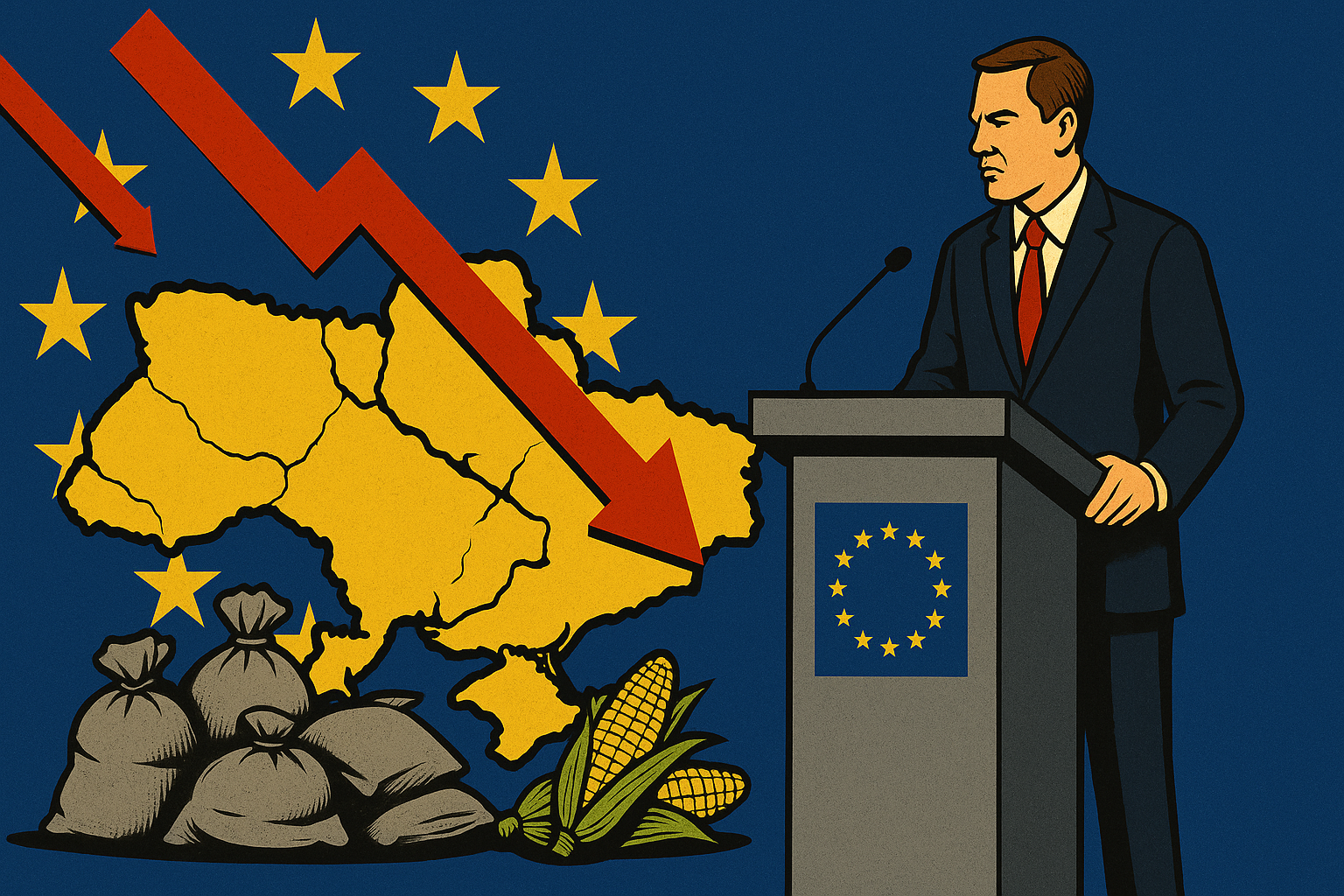
In the coming weeks, the European Union plans to significantly reduce trade preferences for Ukraine, which could be a serious economic challenge for the country in the face of Russian aggression. This was reported by the Financial Times, citing diplomatic sources, "Komersant Ukrainian" reports.
The center of the discussion was the fate of the duty-free regime introduced in 2022 as a gesture of economic solidarity after the start of Russia’s full-scale invasion. These preferences are set to expire on June 6, and instead of simply extending them, Brussels is leaning toward imposing severe restrictions.
Just a few weeks ago, Ukraine was promised that“the new trade parameters will be better than those that were in effect until 2022.” However, this statement by European Commission President Ursula von der Leyn may not be true. According to the FT, during this time, the EU’s position has changed not in favor of Ukraine.
Poland is a friend of Ukraine
The key role in changing the course was played by the pressure of the Polish government, which actively advocates for the protection of the interests of European farmers. Representatives of the agricultural sector in Poland, France, and other EU countries have repeatedly expressed dissatisfaction with the fact that Ukrainian exports allegedly cause a drop in prices on the EU’s internal market.
The political context of this decision is particularly noteworthy. According to diplomats, Warsaw deliberately sought to postpone trade talks with Kyiv before the presidential election in order to weaken the position of the opposition nationalist candidate Karol Navrotsky. This indicates that trade with Ukraine has become a hot-button domestic political issue in the EU.
Читайте нас у Telegram: головні новини коротко
New conditions
The “transitional measures” proposed by the European Commission include not just a return to normal trade conditions, but the introduction of a system of monthly quotas instead of annual quotas, which will significantly complicate export planning for Ukrainian producers. The most dramatic reduction will be in corn – from 4.7 million tons to only 650 thousand tons of annual duty-free exports, a decrease of more than 85%. Exporters of sugar (reduction from 109 to 40.7 thousand tons) and poultry (from 57.1 to 40 thousand tons) will also suffer significantly.
Bernd Lange, chairman of the European Parliament’s trade committee, does not hide his concern, calling the decision “a very bad signal for Ukraine.” His reaction indicates that there are disagreements within the European institutions about the appropriateness of such drastic restrictions.
A representative of the European Commission, commenting on the situation for the Financial Times, confirmed that the current trade preferences will not be extended in their current form, as the basic free trade agreement between the EU and Ukraine is being revised. He also mentioned “possible transitional measures” if an updated agreement cannot be agreed by June 6.
This change in EU trade policy comes at a critical time for Ukraine, when its economy continues to feel the effects of military aggression and the destruction of production facilities. Reduced export opportunities could significantly affect the country’s budget revenues and the financial stability of the Ukrainian agricultural sector, which is one of the key sources of foreign exchange earnings.
The preferential trade regime and its enemies
The decision to allow the free import of Ukrainian goods into the EU was made by the EU at the beginning of the full-scale Russian invasion as a gesture of support for the Ukrainian economy and in response to the Russian naval blockade of Ukrainian ports. During the two years of its operation, the simplified regime has gained a lot of opponents in the European Union. In particular, the governments of Bulgaria, Poland, Hungary, Romania, and Slovakia demanded that imports of Ukrainian products be restricted (later France joined this position). They claimed that cheap agricultural products from Ukraine were swallowing up their markets.
Six major European farmers’ associations also protested strongly against Ukrainian products. Polish farmers even organized a border blockade, not only with Ukraine but also with Germany.
Nevertheless, after fierce debate, the simplified trade regime with Ukraine was extended until June 5, 2025. However, at the request of these countries, it was severely restricted.
Thus, the provisions on duty-free trade were amended to include new “safeguards” to protect European producers.
In particular, the European Commission may take any measures it deems necessary if imports from Ukraine cause “significant disturbances” on the EU market or the markets of one or more EU Member States. In such a case, the European Commission may launch an “emergency brake” for particularly sensitive agricultural products. This list includes the following products:
- poultry
- eggs
- sugar
- oats
- cereals
- corn;
- honey.
However, the European Commission has not only options but also responsibilities. If imports of these goods exceed the average import volumes recorded in the second half of 2021 and for the entirety of 2022 and 2023, customs tariffs must be restored within 14 days.
Thus, the EU has effectively returned import quotas for many Ukrainian goods, albeit at a rather high level.
This agreement expires on June 6. The next one is likely to be much worse.
How the EU is “helping” Ukraine
At the Munich Security Conference, the United States made it clear to the European Union that Europe’s security is its own problem. After that, the rhetoric of European officials for several days was filled with loud statements that it was time for Europe to wake up and finally start taking care of its own security.
In the context of the Russian-Ukrainian war, European leaders were racing to generate ideas about how they would support Ukraine and how they would help it achieve a just peace. They talked about peacekeepers (who would be in the rear), about closing the skies over Ukraine with British aircraft, about Taurus missiles, and even about the fact that a significant part of the planned 800 billion-dollar EU defense package would go to Ukraine.
A common position on peacekeepers was not reached, talks about Taurus missiles stopped, and meanwhile the EU is making decisions and taking actions that can hardly be called helping Ukraine defend Europe.
Just a few days after the Munich conference, it turned out that Belgium would hand over 30 F-16s to Ukraine not by the end of 2025, as planned and promised, but by the end of 2028. The reason was announced: The United States is delaying the delivery of F-35s, which are supposed to replace the F-16s in the Belgian military fleet. 30 F-16s are a significant number, and they could significantly improve Ukraine’s position in the sky, including a very significant boost to its air defense system. Now Ukraine cannot count on these aircraft until 2028.
Later, it turned out that the approved 800 billion euro defense package for Ukraine did not include anything special. It only mentions that Ukrainian defense companies are part of the same “pool” as European ones, and therefore the purchase of weapons from them is a priority along with EU companies.
At the same time, it turned out that during the third year of the full-scale Russian-Ukrainian war, the EU spent more money on Russian fossil fuels than on financial assistance to Ukraine. During this time, the EU bought 21.9 billion euros worth of Russian oil and gas. This amount is one-sixth higher than the 18.7 billion euros that the EU has allocated to Ukraine as financial aid in 2024.
Now the EU is putting the final nails in the coffin of free trade with Ukraine.
Читайте нас у Telegram: головні новини коротко