“The Burevestnik and the Diplomacy of Fear: Russia is trying to force the US and NATO to negotiate
27 October 2025 19:59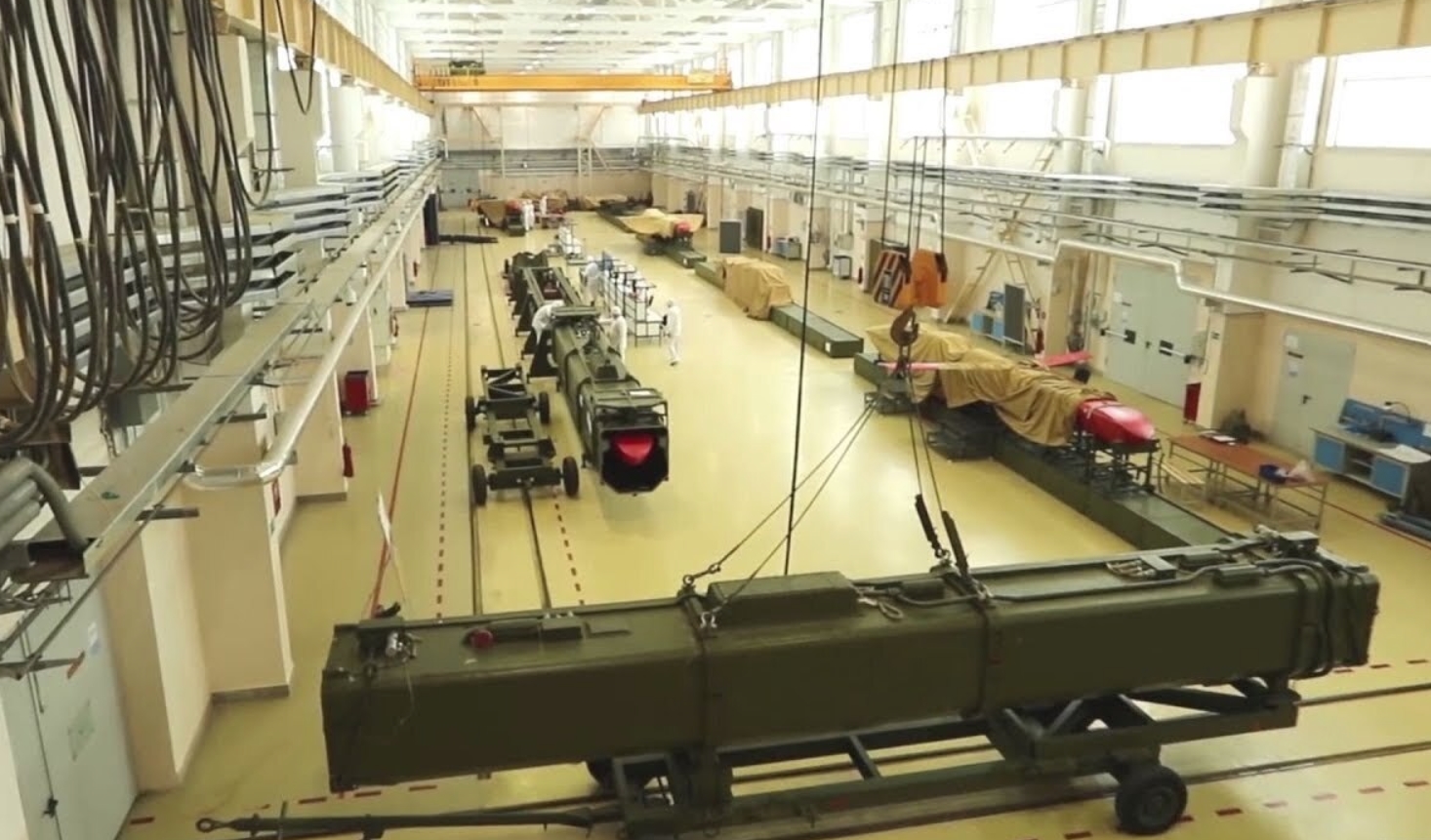 ANALYSIS FROM
Russia has tested its cruise missile, dubbed an “unlimited range missile,” with President Vladimir Putin in attendance. Putin characterized it as a “unique product” and ordered to prepare the infrastructure for its use.
This was reported by Defense Express.
Russian General Staff Chief Valery Gerasimov said that the test took place on October 21: the flight lasted 15 hours, the missile flew about 14 thousand kilometers at a speed of about 933 km/h. These data have not yet been confirmed by independent sources – there are only statements by Russian officials and propaganda. It is known that preparatory work for the Burevestnik tests was recorded back in August of this year.
The publication reminds that the 9M730 Burevestnik, which the Kremlin positions as an “unlimited range weapon,” has actually been under development for almost a quarter of a century. Work with the Novator Design Bureau began in December 2001, and the project was officially launched only in 2018.
According to Western researchers, Russia has conducted several dozen tests of the Burevestnik, but only one or two are considered successful. The most high-profile incident occurred on August 8, 2019, at a test site in the Arkhangelsk region, when an experimental nuclear-powered sample exploded; five scientists died in the accident, and an increase in radiation levels was temporarily recorded within a 30 km radius.
Is Russia changing its warfare tactics?
Recently, the American Institute for the Study of War (ISW) stated in its report that Russia has allegedly moved to the “first phase of preparation” for a larger war.
At the same time, the ISW itself clarified that there is no evidence that the Kremlin has made a decision to start this phase or defined its timing. This contradiction looks illogical – analysts are simultaneously talking about escalation and denying it. This indicates a superficial and unprofessional approach to assessing the situation.
In fact, Russia is only creating the appearance of readiness for a conflict with NATO by demonstratively increasing tensions, but at the same time sending signals of an alleged desire to negotiate.
The visit to the United States by the head of the Russian Direct Investment Fund, Kirill Dmitriev, for “official” talks is indicative. This step is particularly noteworthy because it took place just a few days after US President Donald Trump announced new sanctions against Russia.
Additional context is provided by the White House’s statements of disappointment with the Kremlin’s position, which refuses to stop the war against Ukraine. Moreover, the visit of the Russian representative coincided with the cancellation of the planned summit between the American president and the Russian dictator.
Not surprisingly, the Kremlin’s special envoy then claimed that Russia, the United States, and Ukraine were “close” to a diplomatic settlement that could end the Russian-Ukrainian war.
The Kremlin’s double game
This is the Russians’ game on two fronts. This was stated by Dmitry Snegirev, a military analyst and co-chairman of the civil initiative “Pravaya Sprava” in an exclusive commentary for "Komersant Ukrainian".
“On the one hand, the Kremlin is demonstrating military activity – testing the Burevestnik cruise missile, maneuvers in international waters near NATO borders, violations of the airspace of Poland, Estonia, Germany, and Denmark by unknown drones, sabotage at military-industrial enterprises in the UK. On the other hand, Putin talks about his alleged “readiness for peace.”
According to the expert, this strategy has one goal: to force the West to agree to Russian conditions for ending the war in Ukraine.
The Kremlin shows that if there is no agreement, “we are ready for escalation.” If they agree, “we are ready to remove the nuclear threat from the agenda.”
The analyst emphasized that Russia continues to escalate near strategic sites, in particular, near the Swedish island of Gotland, which is important for shipping in the Baltic Sea.
Russia has repeatedly hinted at the possibility of seizing it. At the same time, the deployment of military infrastructure near the borders of Finland continues – the construction of new bases near Petrozavodsk and the formation of brigades in the northern direction,” Snegirev said.
The military analyst sharply criticized the statement that Russia is allegedly entering the “zero phase” of a major war.
” Talking about any ‘zero phase’ of the war is just ignorance. Russia is not preparing for a large-scale offensive. It demonstrates readiness only to its domestic audience to show that “they are still worth something.” Because all these public statements and demonstrative actions have no impact on the external audience.
NATO assessment: Kremlin’s resources are running out
Snegiryov drew attention to recent statements by NATO Secretary General Mark Rutte, who confirmed the decline in Russia’s military capabilities.
Rutte said that the Russian dictator is running out of resources to continue the war against Ukraine. The situation on the frontline shows the ineffectiveness of Russia’s strategy and the huge price Moscow pays for minor advances,” the analyst noted.
Dmytro Snegiryov emphasized that NATO partners clearly understand the situation and do not succumb to the Kremlin’s manipulations.
These statements show that they understand the problems facing the NATO bloc, and that the West is really aware of the challenges that may arise in the event of intensified hostilities or the transfer of the war to the territory of European countries, the expert concluded.
What they say in the United States
US President Donald Trump has denied reports of Russia’s allegedly successful test of a nuclear-powered cruise missile, the Burevestnik. The American leader sharply criticized Vladimir Putin for his self-congratulatory use of new weapons amid the ongoing war against Ukraine and emphasized the military superiority of the United States, in particular its powerful nuclear potential.
Trump said this during a conversation with journalists aboard the presidential Air Force One aircraft.
The American president expressed surprise that the Russian dictator continues to publicly boast about missile developments while the fighting in Ukraine continues unabated.
The day before, Putin visited one of the command posts of the joint force grouping, where, according to Russian media reports, he was presented with a report on the allegedly successful test of the Burevestnik nuclear missile.
Technical characteristics of the Burevestnik
“The Burevestnik is positioned as an intercontinental cruise missile with a global range; the Kremlin claims that it can hit targets anywhere in the world. The key feature of the project is a nuclear power plant that heats air to very high temperatures to create thrust; a classic solid-fuel accelerator is used for launch.
Other technical characteristics are classified. All that is known is that the fuselage is about 12 meters long (about 9 meters after the accelerator is separated), and the speed is estimated to be in the range of 850 to 1300 km/h. These figures indicate that Russian propaganda claims of “impossibility of interception” look exaggerated, although high maneuverability does make it difficult to destroy.
Another concern is Russia’s assertion that the Burevestnik can stay in the air for months, which allegedly increases the risk of surprise strikes; at the same time, the long flight makes the missile more vulnerable to fighter aircraft.
As of now, the 9M730 Burevestnik is not in service with the Russian army; according to open sources, the Kremlin plans to put it on combat duty no earlier than 2027.
Read us on Telegram: important topics – without censorship