Why Ukraine should not lose the opportunity to build new power units at Khmelnytskyi NPP
20 June 2024 08:33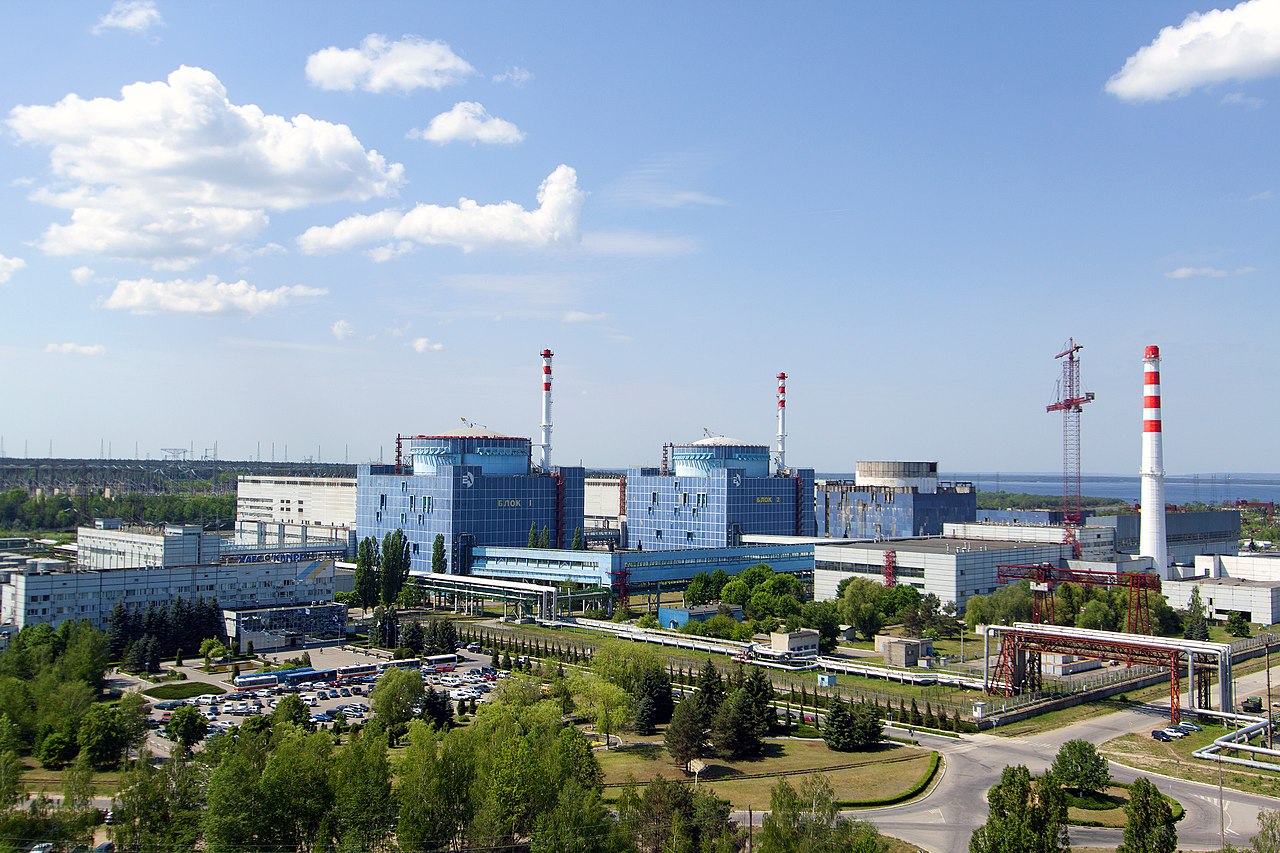
Author: Yevhen Malyi, PhD in Physics and Mathematics, nuclear energy expert
There is no time to delay the construction of new nuclear power units, as the nuclear industry is of strategic importance for Ukraine. First and foremost, it is necessary to replace facilities that have already exceeded their design life and those that will be gradually decommissioned after 2030, and it is difficult to predict the future of other types of generation given the ongoing military actions of Russia against Ukraine.
The construction of new power units at existing NPPs in Ukraine and the creation of new sites were included in the Nuclear Energy Development Strategy of Ukraine before the full-scale Russian invasion. These provisions were updated in the adopted Energy Strategy of Ukraine until 2050. Ukraine, despite the destruction of its industry by the Russian occupiers, remains a developed industrial state that consumes significant amounts of electricity. This is especially true now, when, as a result of Russian shelling of energy facilities, the amount of generation has significantly decreased and we are all witnessing a shortage of capacity. Moreover, I have forecasts for an increase in electricity consumption in the near future, given the prospects for post-war recovery and the development of the military-industrial complex. And in the long term, we can talk about electricity exports if this plan is implemented.
Ukraine is currently one of the world’s leading nuclear power producers, with a strong infrastructure, considerable experience and a high level of safe operation of nuclear reactors. Before the full-scale war, the nuclear industry of our country had more than 34,000 specialists, and NNEGC Energoatom was among the top 5 largest nuclear power plant operators in the world. By February 2022, 15 nuclear power units with a total installed capacity of 13.8 GW were in operation, of which three – ZNPP-6, KhNPP-2, RNPP-4 – were completed during the years of independence. In 2021, nuclear generation totalled 86.2 billion kWh.
The strategic importance of nuclear energy was confirmed by the realities of the full-scale invasion, when 9 units of nuclear power plants controlled by Ukraine became the most reliable source of energy supply. All experts unanimously say that the shortage of electricity due to possible further destruction of thermal and hydroelectric power plants by Russian terrorists will only increase in the future, and renewable energy sources are not able to meet the current consumption volumes. Therefore, there are no other options, and the Ukrainian nuclear industry must develop, even though nuclear facilities are potentially under threat of missile attacks in a time of war, and Europe’s largest nuclear power plant, Zaporizhzhya NPP, is occupied by the aggressor. In addition, nuclear power is a low-carbon source, and all developed democracies are striving to reduce carbon emissions as part of the fight against climate change.
It is good that despite the war, someone is thinking about the future and, according to my information, NNEGC Energoatom has no intention of abandoning its intention to increase nuclear generation. We need to start building new nuclear power units now. In fact, this issue has been on the agenda since our first power unit (RNPP-1) completed its design life of 30 years back in 2010. Today, 12 out of 15 power units in Ukraine have their maintenance service life extended (80%). And there are already those that have been operating for more than 40 years: RNPP-1, 2 (20-year lifetime extension) and South-Ukraine NPP-1 (10-year lifetime extension).
Of course, the problem of expiration of the beyond-design lifetime and replacement of capacities is relevant not only for Ukraine, but also for all other countries operating NPPs. As of 2022, 300 nuclear power units (68%) out of 442 worldwide have exceeded the 30-year lifetime, and in some countries – 40 years. It is believed that the lifetime of nuclear power units can be extended up to 60-70 years, provided that all the requirements of the regulator and other regulatory authorities are met and the equipment, primarily the reactor vessel, is in satisfactory condition (thorough inspection of the reactor unit, main equipment; preparation of documentation for expert review, etc.) But this still cannot be done indefinitely, because any equipment, even with timely reconstruction and modernisation, even with successful expert examinations and professional opinions on its performance, will sooner or later exhaust its service life and must be replaced. Therefore, over time, each power unit currently in operation at Ukrainian NPPs will be subject to a decision to shut down. And we must all be prepared for this in advance, so new power units must be built and commissioned in advance.

Government officials emphasise that in the near future, the Ukrainian economy will rely on several sectors, among which the defence industry will play an important role. The military-industrial complex is already developing at a frantic pace and has a constant government order. In this context, the two new KhNPP power units will increase generation and contribute to the economic growth of the industry. Thus, in just one day, the VVER-1000 power unit produces electricity worth UAH 30 million (EUR 750 thousand) at the market price. Therefore, the construction of nuclear power units is an absolute necessity, both in terms of Ukraine’s energy independence and in the light of the country’s economic development.
What is the current status of KhNPP-3 and KhNPP-4?
Construction of KhNPP-3 and KhNPP-4, each with a capacity of 1,100 MW, began in 1985. The construction stopped in 1990 due to a political decision – a moratorium on the construction of new power units was adopted after the Chornobyl accident. This decision was implemented just when KhNPP-3 was 75% complete and KhNPP-4 was 28% complete, and the units have been mothballed ever since. From time to time, the issue of continuing construction, in which the state has invested substantial funds, is raised at various levels, and in recent years this topic has increasingly been the focus of increased attention of politicians and government officials. According to the results of the inspection of the unfinished structures of KhNPP units 3 and 4, the construction site is suitable for installation, commissioning and testing. It is also worth noting that the necessary NPP infrastructure is already in place.
The draft law on the construction of KhNPP-3 and KhNPP-4 has already been considered by the relevant Committee of the Verkhovna Rada of Ukraine; it is expected to be considered in the first reading in Parliament soon. As of now, preliminary preparations for the completion of these power units are underway, and the installation of equipment will begin immediately after the adoption of the Law by the Verkhovna Rada.
So in the end, what will the construction and commissioning of KhNPP-3, KhNPP-4 and new power units bring to Ukraine? The main thing is to plan the development of nuclear energy with a view to replacing reactor units that will sooner or later expire. This means expanding generation and, accordingly, increasing electricity production by 14 billion 500 million kWh, which is important to overcome the problem of energy shortages caused by Russian attacks on critical infrastructure. This includes support for industry (for example, through orders for equipment production, etc.), new jobs, and most importantly, electricity and heat in Ukrainian homes.
It is important that Ukraine has the potential to increase nuclear generation – many years of experience in operating nuclear power plants, a scientific and technical base and highly qualified specialists in operation, engineering, repair and maintenance. This is the basis for Ukraine’s energy independence and low-carbon future.