Why Ukraine wants to ban the unnecessary disposal of food products, and who will benefit from this and how
25 March 15:05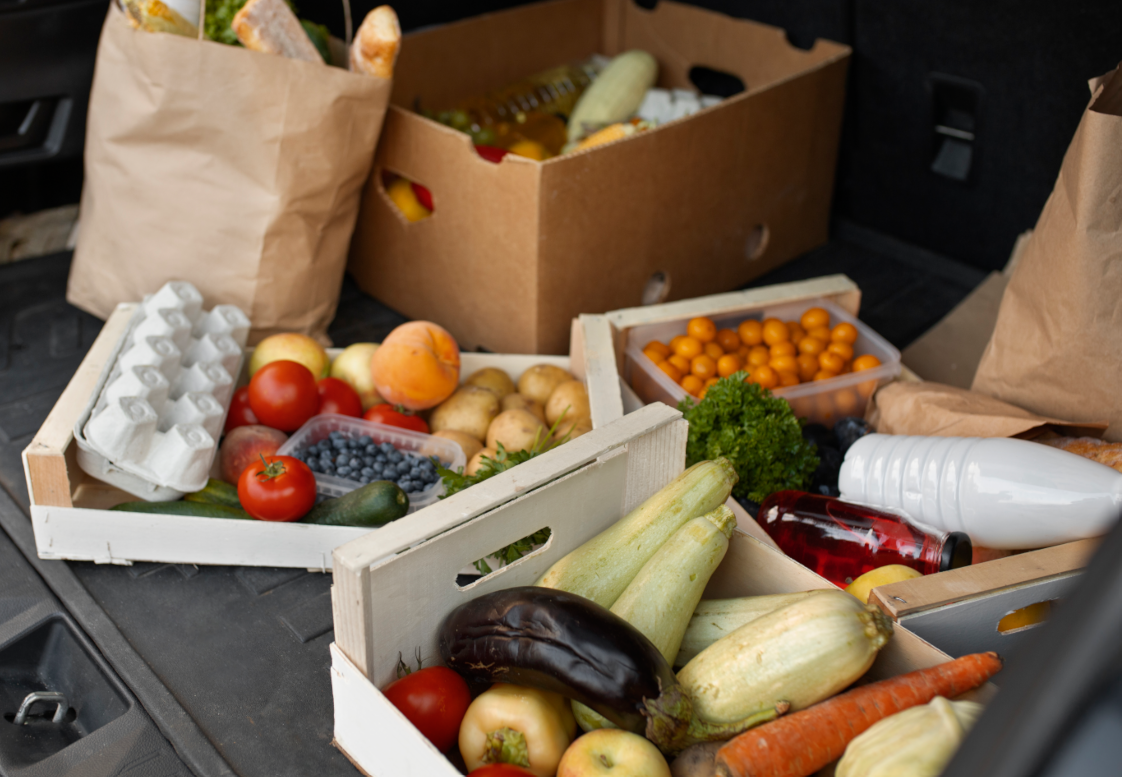 ANALYSIS FROM
A comprehensive, well-developed system of food banks is set to emerge in Ukraine. "Komersant Ukrainian" investigated how it will work, for whom, thanks to whom, and why.
12.7 million people, or nearly 36% of Ukraine’s population—that is how many Ukrainians, according to the UN Office for the Coordination of Humanitarian Affairs, will require humanitarian aid by 2025. At the same time, according to the UN Environment Programme, approximately 2.75 million tons of food waste are generated in Ukraine each year, a significant portion of which could be saved from disposal. The goal of establishing a food bank system in Ukraine is to minimize food loss and maximize the number of people who could receive assistance. This intention was formalized in a Memorandum of Cooperation between the Ministry of Economy, Environment, and Agriculture of Ukraine and the Ukrainian Federation of Food Banks.
The Reality in Ukraine
Currently, the network of the Ukrainian Federation of Food Banks includes 5 regional food banks—in the Kyiv, Chernihiv, Sumy, Kharkiv, and Odesa regions. However, aid provision is not limited to these regions. According to the Federation, together with 48 partner civil society organizations and more than 1,000 volunteers, they are able to cover virtually all regions not occupied by the enemy. The main activities focus on frontline and de-occupied territories. Take Kharkiv Oblast, for example. The Kharkiv Oblast Food Bank is headed by Natalia Rarina. She described how the food distribution efforts are organized:
“Recently, we visited the Bezlyudivka community in Kharkiv Oblast; we had four locations: the village of Vasyshcheve, and the villages of Lyzogubivka, Bezlyudivka, and Khorosheve. We visited low-income families with children. We arrived, talked with them, and distributed aid—about 200 children received it. This included baby food, dry breakfasts that kids love, as well as fruit and children’s juices. The families confirmed receipt with their signatures, and we also compiled corresponding photo and video reports. That’s how everything works for us. We make several such trips a month.”
In total, according to the Ukrainian Federation of Food Banks, between 2022 and January 2026, over 720 tons of food products were delivered to the Kharkiv region, providing aid to more than 310,000 people. In total, since the Ukrainian Federation of Food Banks began its work, over 4,613 tons of food have been distributed, and nearly 2 million Ukrainians have received aid.
However, Ukrainians’ needs for food aid far exceed the organization’s capacity. Therefore, scaling up the existing network is one of the main goals for developing the food bank system in Ukraine. And this is not the only goal. Dmytro Shkrabatovsky, Chairman of the Board of the Ukrainian Federation of Food Banks, explains using examples from his own experience.
“The process of providing humanitarian aid requires a systematic approach. The most recent case in Lviv was this: a truck arrived with humanitarian aid. A civil society organization was distributing this aid. I cannot say, for example, that the people who received the aid did not need it. But then European donors call and complain that ‘we sent the aid, but there’s no accountability,’ and ask, ‘do I know of such an organization?’ I reply: I don’t know what happened. All these questions need to be addressed before providing humanitarian aid,” the official notes.
There are plenty of other situations caused by the unique circumstances in which Ukrainians currently have to live and work—situations that could have been avoided by creating a comprehensive system where systematic relationships are established between food banks and food suppliers. Dmytro Shkrabatovsky continues.
“During blackouts, when refrigerators weren’t working at many businesses due to power outages, what did entrepreneurs often do? They simply buried the spoiled food. But there’s another example of working under blackout conditions. Our “Food Truck” project has been running for a year now. It’s a mobile kitchen that travels to regions where there is the greatest need to feed people in emergency situations. The Food Truck has operated in the Kharkiv and Sumy regions. For the past two months, it has been in the Kyiv region. “The Food Truck can prepare up to 17,000 meals daily. So, on the one hand, someone was burying tons of meat because they didn’t know what to do with it, and on the other hand, there’s the Food Truck, which makes it possible to prepare and quickly distribute thousands of meals every day,” the expert notes.
The combination of available resources and proper organization is also a path to reducing the amount of unused food and increasing the number of people who can receive it.
The Ukrainian Perspective
What will the Ukrainian food bank system look like? According to the Ukrainian Federation of Food Banks, it will consist of three organizational levels:
– a coordinating organization that will ensure strategic management of the system at the national level, establish operational standards, and coordinate cooperation with the government, businesses, and international partners;
– regional food banks—one in each region of Ukraine—that is, logistics and warehousing centers that will collect products from producers and retail chains, sort them, and distribute them;
– a network of partner organizations—charitable and civic organizations—that will directly distribute food to individuals and social institutions.
The main sources for stocking food banks may include: surplus production from food companies, unsold products from retail chains, products with short shelf lives, goods with altered packaging or labeling, humanitarian aid, and donations from companies, restaurants, and agricultural producers.
It is important that the entire system will operate in accordance with European Union practices and the recommendations of the European Federation of Food Banks. It is telling that when describing what the Ukrainian food bank system should look like, Dmytro Shkrabatovsky, Chairman of the Board of the Ukrainian Federation of Food Banks, consistently cited examples from European practice. And here we are talking not only about the number of such food banks, but also about the quality and organization of their work.
“In Europe, food banks must meet certain criteria: there must be a warehouse with proper equipment, and there must be a cold storage room to receive food products. There must be vehicles and other equipment that meet established requirements. In other words, there is a system developed by the European Federation of Food Banks,” states Dmytro Shkrabatovsky.
And an important prerequisite for the development of the food bank system in Ukraine is the implementation into Ukrainian national legislation of European Union standards regarding the reduction of food loss/waste and food safety. In particular, this involves the introduction of mechanisms to combat food waste. For example, it is proposed to ban the disposal of food suitable for consumption if there is a possibility of donating it to charity. Similar mechanisms are already in place in EU countries. Dmytro Shkrabatovsky explains.
“In Europe, everything is geared toward minimizing food disposal. A telling example is dairy products, which are more expensive to dispose of than to produce. And there is also accountability for disposal—fines,” the expert emphasizes.
In this regard, one can mention at least Spain, where the maximum fine for unjustified food disposal can reach up to 500,000 euros. And Ukraine, which is approaching EU accession, must be prepared for European requirements. Dmytro Shkrabatovsky continues.
“When the Czech Republic joined the European Union and signed all the agreements with the EU—which included hefty fines for disposal—and then when the relevant law came into effect, the producers themselves came to the Ministry of Agrarian Policy and said: ‘This is all great, but where are the food banks? At that time, they had three food banks, and within a year they established 15 food banks under this program. We don’t have that yet. But we must prepare. We are now moving into the implementation of clusters for EU accession. So, the fourth and fifth clusters are about the environment and food products. European Union legislation includes the obligation to cooperate with food banks. If we don’t have them, the EU will ask: ‘How do you prevent food waste? How are you implementing this?’” notes Dmytro Shkrabatovsky.
In fact, the fourth negotiation cluster is called “Green Agenda and Sustainable Transport,” and the fifth is “Resources, Agriculture, and Cohesion Policy.” And just last week, Ukraine and the European Union informally opened negotiations on these clusters at the expert level.
Another innovation that could be adopted in Ukraine as the food bank system is established is the obligation for large supermarkets to cooperate with food banks. At least in a number of European countries, large retail chains are required to donate unsold food to charitable organizations. In particular, in the Czech Republic, supermarkets larger than 400 m² are legally required to donate unsold food to food banks.
Ukrainian food suppliers for the new food bank system will also be able to experience and evaluate new methods of working with them. At the very least, the principle of voluntariness could be supplemented with incentives and mandatory requirements. Dmytro Shkrabatovsky explains.
“Suppliers’ interest in donating products to charity should be supported by tax incentives. For example, regarding VAT: when products are donated to food banks, they won’t have to pay this tax—precisely because there is no added value. Furthermore, producers should have an incentive not to spend extra money on disposing of products. In fact, it’s beneficial for them: you make a call, they come to you, everything is documented, the products are transferred, the business owner writes it off, and continues with their operations. “This has been working in the U.S. since 1964,” the expert notes.
Regarding quality control for products that will replenish food banks, the focus is also on European norms and international standards. In particular, HACCP (Hazard Analysis Critical Control Points) standards. This system of hazard analysis and control at critical points is an internationally recognized method for identifying and managing risks related to food safety. It is also proposed to introduce two expiration dates for products. Dmytro Shkrabatovsky, Chairman of the Board of the Ukrainian Federation of Food Banks, explains.
“Legislation should require that products display two dates: a ‘sell by’ date—the date by which the product can be sold in a store—and a ‘best before’ or ‘use by’ date—the date by which the product remains safe for consumption. After the sell-by date expires, the products can be donated to food banks instead of being disposed of,” notes Dmytro Shkrabatovsky.
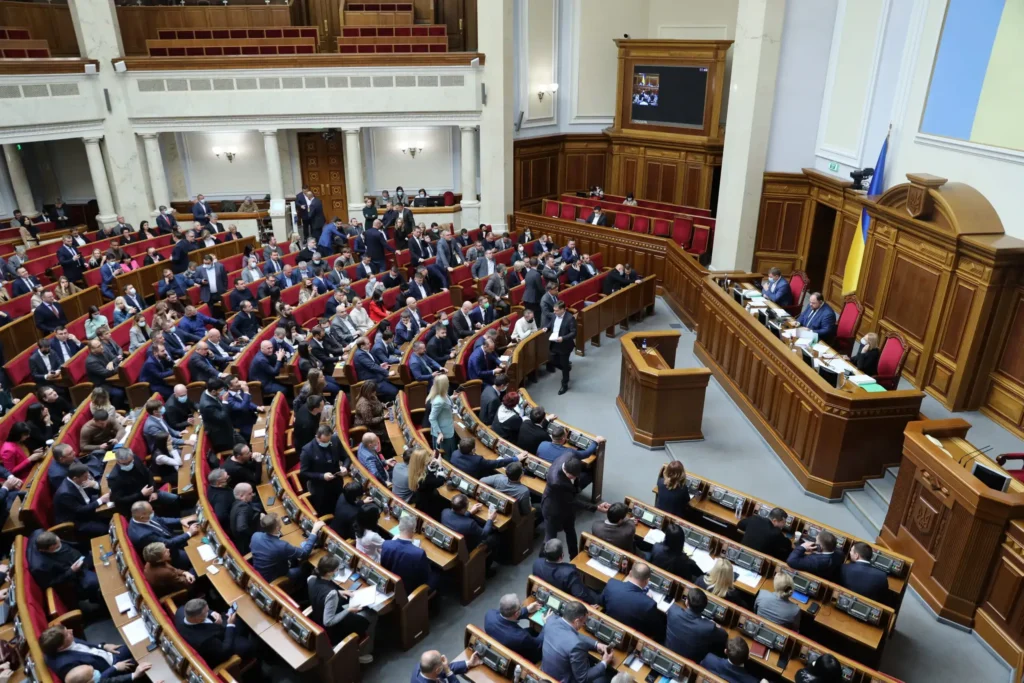
All of the above-mentioned provisions, which concern the legal status of food banks, the introduction of mechanisms to combat food waste, the creation of tax incentives for donating food to charity, and liability for the disposal of edible products, and the introduction of two types of expiration dates for food products—are defined in the draft law “On Food Banks” developed by the Ukrainian Federation of Food Banks. It is clear that it aligns with European practices and the recommendations of the European Federation of Food Banks (FEBA). And the adoption of this law should be key to establishing a fully-fledged food bank system in Ukraine.
Author: Serhiy Vasylevych