Why Vučić claimed there was a threat of an attack by Croatia, Albania, and Kosovo: the essence of the conflict
15 March 21:18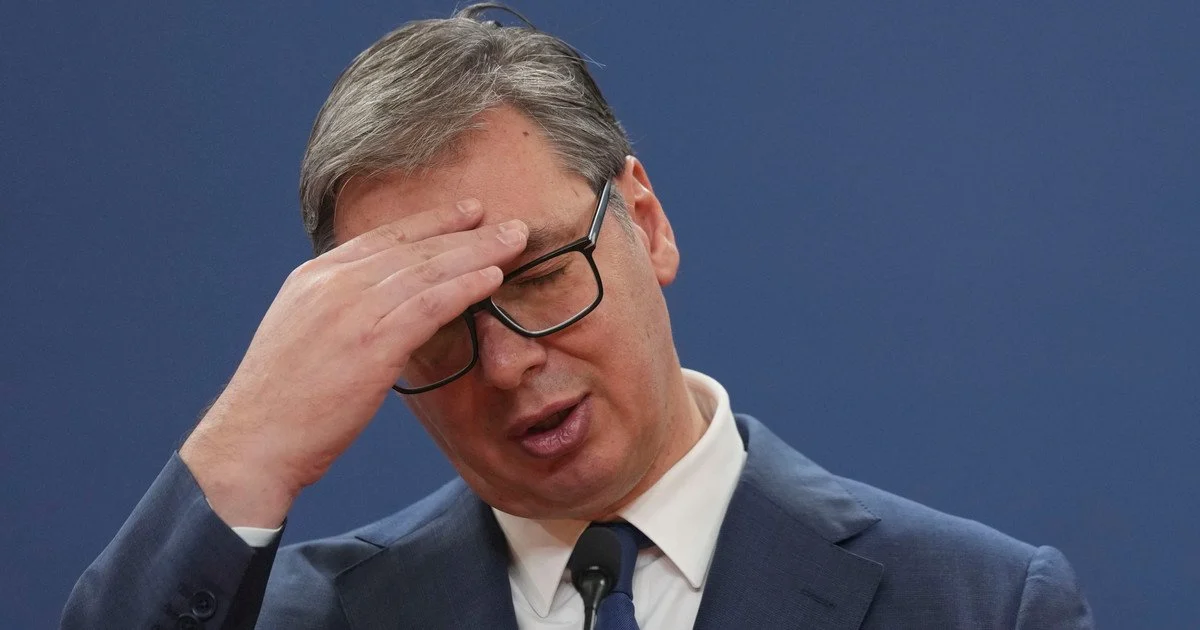 ANALYSIS FROM
Yesterday, March 14, Serbian President Aleksandar Vučić stated that the country is preparing for a possible attack by Croatia, Albania, and Kosovo.
The nature of the conflict and the reasons for such statements appear to be linked to a trilateral declaration on defense cooperation signed by Croatia, Albania, and Kosovo on March 18, 2025.
The pact between these countries provides for the creation of a regional defense alliance to strengthen security and jointly counter potential threats. The countries agreed to coordinate weapons procurement (particularly of American systems) to reduce costs and expedite deliveries.
In addition, the agreement calls for joint military exercises, the exchange of expertise, and joint training of personnel at military academies.
Croatia and Albania (as NATO members) have also committed, under the agreement, to supporting Kosovo on its path toward full integration into regional and European security structures.
The security declaration of these countries is not a closed club—the participants stated that other states in the region may join it. For example, Bulgaria has received an invitation.
Although Croatia and Albania are NATO members, Vučić officially states that Serbia maintains “good relations” with the Alliance, though it continues to adhere to a policy of military neutrality and refuses to join the bloc.
Instead, Serbia accuses Croatia of attempting to destabilize the internal situation in the country and of interfering in its affairs over the past year.
At the same time, Vučić points out that Serbia possesses modern weapon systems, including Chinese hypersonic missiles.
As of March 15, 2026, the reaction of NATO and Croatia to Aleksandar Vučić’s statements has been largely restrained. Both sides reject accusations of preparing an attack and call them a tool of Serbia’s domestic politics.
Official Zagreb categorically denies any aggressive intentions and calls Vučić’s statements a fabrication.
In particular, Croatian Prime Minister Andrej Plenković stated that the claim of an attack is “completely fabricated” to support a narrative within Serbia itself about an external threat.
Croatia also expressed concern over the appearance of Chinese hypersonic missiles in Serbia, calling them offensive weapons, and promised to discuss the issue with its NATO allies.
In response, NATO Secretary General Mark Rutte confirmed that the Alliance remains committed to peace in the Balkans, and that the KFOR mission in Kosovo continues to fulfill its mandate to ensure security.
NATO also reiterated that Croatia and Albania are reliable allies that contribute to stability and peace in the region, and that membership in the Alliance does not prevent these countries from having additional defense agreements with third parties (such as the declaration with Kosovo).
Alliance officials emphasize that disputes must be resolved politically, not militarily, and urge the parties to accelerate dialogue. NATO remains focused on preventing escalation while intensifying monitoring due to the potential militarization of the region.