Where is the limit of compromise: what conditions of peace cause resistance among Ukrainians
3 December 2025 15:58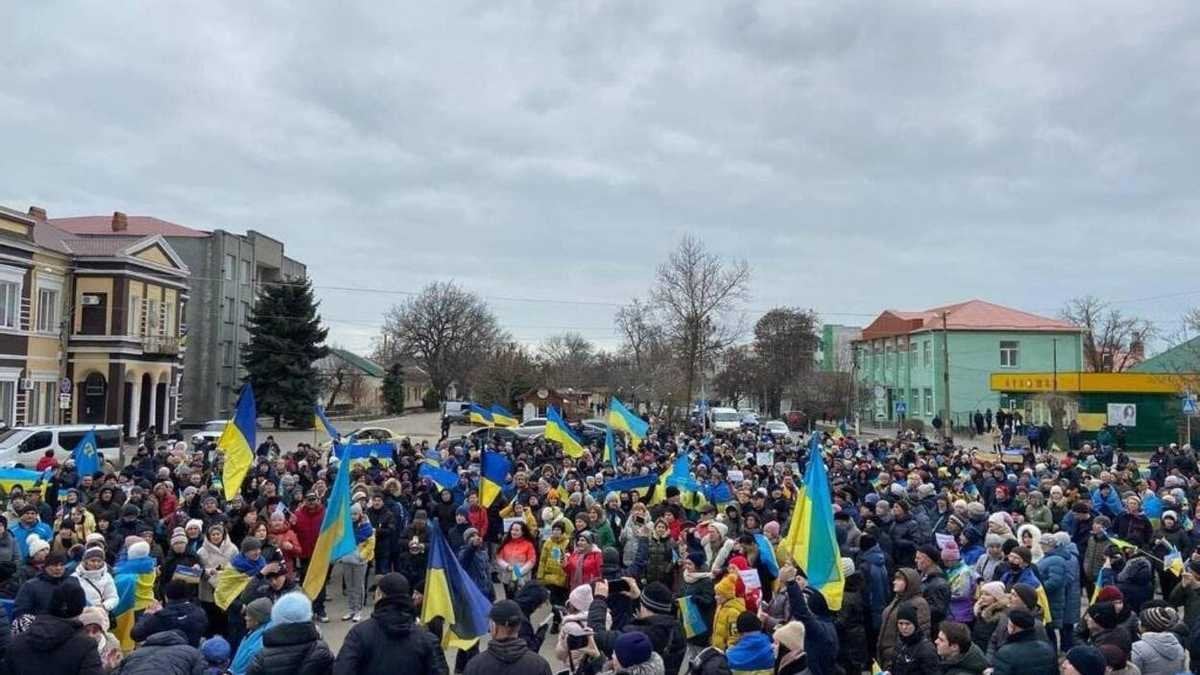
51.4% of Ukrainians said they are ready to take to the streets if the government agrees to unacceptable compromises during negotiations with Russia. This is according to a new Info Sapiens poll commissioned by the New Europe Center.
“Nuclear guarantee: distrust of external promises is growing
For the second year in a row, Ukrainians have called the development of their own nuclear weapons the best guarantee of security. This is the opinion of 31.1% of respondents, almost as many as in 2024 (31.3%).
This consistently high figure indicates two key trends:
- Disillusionment with international support and external guarantees – society does not believe that international agreements can deter Russia.
- Awareness of the asymmetry of threats – Ukrainians see that it is the presence of nuclear weapons that allows Russia to play on Western fears and slow down decision-making on military assistance.
A similar logic is evident in other responses. Support for joining NATO has fallen by 10%, from 29.3% to 19.4%, demonstrating a crisis of confidence in classical models of international security.
Other options are much less supported:
- a defense alliance with the United States – 10.2%,
- a UN peacekeeping mission – 6.4%,
- nuclear defense of another state – 7.8%.

On the other hand, the demand for the presence of European troops in Ukraine has increased from 6.4% to 11.7%.
As a result, Ukrainians are seeking self-sufficiency and the most reliable defense mechanisms, with their own army in the first place.
Negotiations without guarantees: society does not believe in “peace at any cost”
Ukrainians’ views on negotiations with Russia remain unchanged. 64.9% of respondents believe that Ukraine should not start negotiations without receiving reliable security guarantees from its Western partners.
This figure is almost identical to the data from 2024 (64.1%), which indicates the stability of the public position.
At the same time, 30.7% of Ukrainians are ready to support negotiations even without guarantees – this segment has grown slightly, but still does not affect the dominant trend.
In general, the mood shows that the idea of “negotiations for the sake of negotiations” does not work in society.

Frontline freeze: most believe Russia will attack again
The vast majority of Ukrainians do not believe in the possibility of a long-term pause in the event of a conflict freeze.
86.7% of respondents predict that after a short break, Russia will attack Ukraine again.
Only 9.5% believe that a conditional “freeze” would give a chance for a longer-lasting peace.
Thus, the freezing of the front line is not seen by the public as a realistic scenario for ending the war.
Compromises that Ukrainians will not accept
The indicators of unacceptability of key Russian demands remain naturally high. Ukrainians reject the following concessions the most:
- recognizing the occupied territories as Russian – 84.5%,
- reduction of the Armed Forces of Ukraine – 83.3%,
- granting Russian the status of the state language – 78.4%.
Despite a certain softening of views over the past few years, the general logic remains the same: compromises that undermine sovereignty or defense capabilities are unacceptable to Ukrainians.

Every second Ukrainian is ready to protest
The most revealing indicator is the protest potential.
51.4% of respondents said they were ready to protest if the government agreed to compromises that society considered unacceptable.
This is one of the highest figures for the years of the great war and a signal of a clear line that Ukrainians will not allow to be crossed.

“Ukrainians do not want compromises that will make the country dependent”
Director of the Institute of Sociology of the National Academy of Sciences of Ukraine, Professor and Doctor of Philosophy Yevhen Holovakha in an exclusive commentary
Commenting on the results of the latest poll, Golovakha emphasized that public sentiment in Ukraine remains very clear: citizens do not support compromises that could jeopardize the independence or sovereignty of the state.
“These figures show that public opinion is such that Ukrainians do not want to make compromises that will make Ukraine dependent. And Russia will achieve its goal. This iswhere 51% is quite a lot,” the sociologist explains.
51% is a protest potential that is difficult to ignore
According to Golovakha, more than half of the population is ready to protest in case of unacceptable decisions of the authorities – this is a very high figure for any country.
“This does not mean that they will all come out, of course, but it means that there is such a sentiment against undesirable compromises in society,” he notes.
The sociologist emphasizes that even a declarative readiness for protests sends a strong political signal to the authorities and international partners about the boundaries that Ukrainian society is not ready to cross.
“Ukrainians do not accept the Russian version of reconciliation”
Golovakha reminds that the results of various studies in recent years have demonstrated a stable position of Ukrainians regarding the conditions for possible reconciliation.
“There were many polls that showed that Ukrainians do not accept the Russian version of reconciliation. The overwhelming majority. According to our data, only 16% would be ready to accept Russian conditions. This is an indication that there is an atmosphere of rejection of Russian whims in society. And whether or not they will protest is another matter,“ he says.
Such a low level of support for Russian proposals indicates that the atmosphere of rejection of Russian demands and whims persists in society.
Verbal and real behavior: an important difference
The sociologist notes that the declared readiness for action does not always translate into actual mass protests. This is a natural effect that has been repeatedly confirmed by research.
“There is a significant difference between the so-called verbal behavior and the real behavior when people act. We have seen this many times,” explains Holovakha.
However, he emphasizes that when it comes to public opinion, it is important not only how many people will actually take to the streets, but also that they are ready to voice their protest.
“For protests, it’s a lot”
Summing up, Golovakha emphasizes that 51% of those ready to protest is a critically high level of protest sentiment.
“Of course, it’s a lot. It’s not just that they are satisfied or dissatisfied. They say they want to protest. This is a lot. As far as protest moods go, it’s a lot,” the expert summarizes.
Read us on Telegram: important topics – without censorship