Denys Marchuk on the EU’s duty-free trade with Ukraine with fuses: no one knows how it will work
14 May 2024 12:10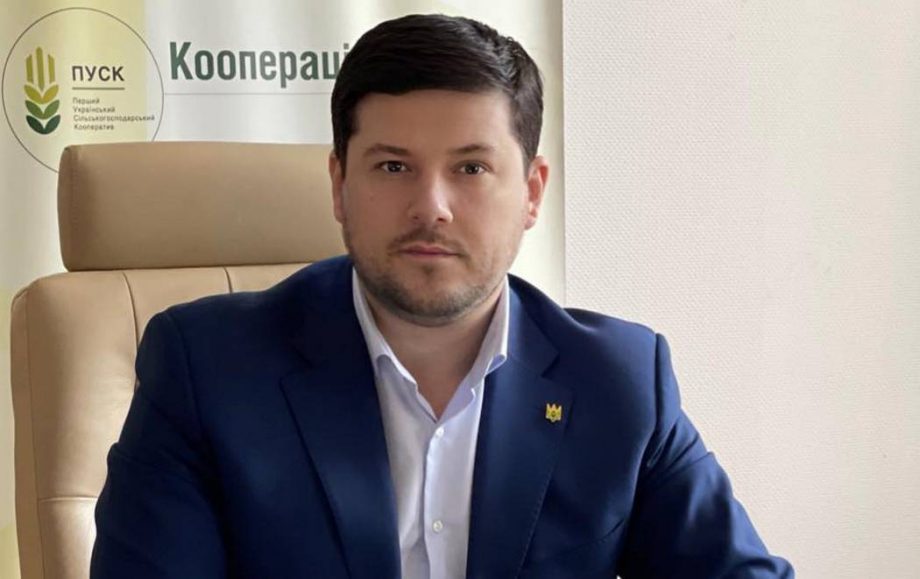 БЛІЦ
БЛІЦ
The abolition of duties on exports of goods from Ukraine to the EU has been extended for a year following a decision by the EU Council and the European Parliament. These so-called Autonomous Trade Measures are effective from June 2022 and are a key component of the EU’s support for Ukraine. They are aimed at ensuring vital access to the EU market. "Komersant Ukrainian" asked Denys Marchuk, Deputy Chairman of the All-Ukrainian Agrarian Council, how important the cancellation of duties is for Ukraine’s economy and what kind of agrarian riots can be expected from the EU countries in the near future against us.
It is worth noting that the EU’s autonomous trade measures against Ukraine will remain in force until 5 June 2025.
The decision provides for two safeguard mechanisms to protect the EU market:
- an enhanced version of the existing safeguard mechanism, which will be applied on the basis of regular monitoring, allowing the European Commission to introduce any measure if certain conditions are met;
- a new, automatic safeguard mechanism that will oblige the European Commission to re-impose quotas if imports of poultry, eggs, sugar, oats, corn, cereals and honey exceed the arithmetic average of imports in the second half of 2021, 2022 and 2023.
The abolition of duties on exports of goods from Ukraine to the EU has been extended for a year. How important is the cancellation of duties for Ukraine’s economy?
In fact, it is very important. We have been pushing for this in the context of all the negotiations that have been going on at the level of both the relevant ministries and the government, the parliament and the European Commission. Because if you look at the analogues of financing, that is, the proceeds from trade with the EU, they account for almost 50% of what we trade in the agricultural sector.
That is why these moments with the export of Ukrainian products to the EU market without duties and quotas in the context of military operations are very important for obtaining funds that we will use for the defence of our country
Won’t we make new enemies like the Poles, who will be offended by Ukraine because of special benefits for it?
Listen, what should we be afraid of? There is no war in Poland. The war is in Ukraine, so we have to take care of our country and our economy. Moreover, Poles are always receiving certain preferences and subventions. Now the protests they have been holding have led to their government sponsoring them. But we should not think about what the Poles will do.
We should, of course, act as partners, we are not, for example, opposing Polish products, which are plentiful on the Ukrainian market. We understand that there are partnerships and they need to be fulfilled, especially since it is not just a relationship – it is stipulated by the terms of trade relations that we have within the EU-Ukraine framework. And the fact that Polish carriers or the producer itself take such actions is primarily harmful to Poland itself, because it may then be subject to certain actions by the EU.
The actions they have taken are recorded, and I think that if they continue to do such things, the EU may impose sanctions on them directly. So, of course, in these circumstances, we need to say in Europe that Ukraine is a partner in this context.
On the other hand, why should we pay attention to the Poles if, for example, the Germans are buying, the Netherlands are buying, Spain is buying, are they somehow worse than the Poles? They want to have relations with Ukraine.
What kind of agrarian revolts can we expect from the EU countries in the near future in relation to us? Where else can we cross their path with our goods?
I don’t think this is relevant. We have more questions about the EU’s agricultural policy itself, which, as we see it, needs to be changed. Because the things that the French, Italians, Belgians, Romanians, and Poles are protesting about are more about the complaints of Europeans about the way the European Parliament and the EU are dealing with agrarian issues within Europe. So I don’t think the issue is more about Ukraine.
We need to do our own thing, especially since this extension will now be accompanied by an emergency slowdown. Nobody knows how this will work yet. I think the Europeans themselves don’t know either, because this is the first time this will be applied to a number of products. It will probably affect sugar and chicken. I don’t think it will affect corn very much. For example, we sell quite large volumes of corn to European processing companies that specialise in livestock farming, which is very profitable for the countries, and they then make money from it.
Therefore, there is no need to predict any protests by EU farmers against Ukraine. If such things do happen, they will be more focused on the issues of European agricultural policy in Europe.
And if they take place before the European Parliament elections, they will be more likely to be political in nature, in order to show a certain force that protects and supports national producers there and to gain preferences from the electorate.
The author: Iryna Shevchenko