MPs propose to punish public figures for facilitating fraud
11 July 2025 18:47
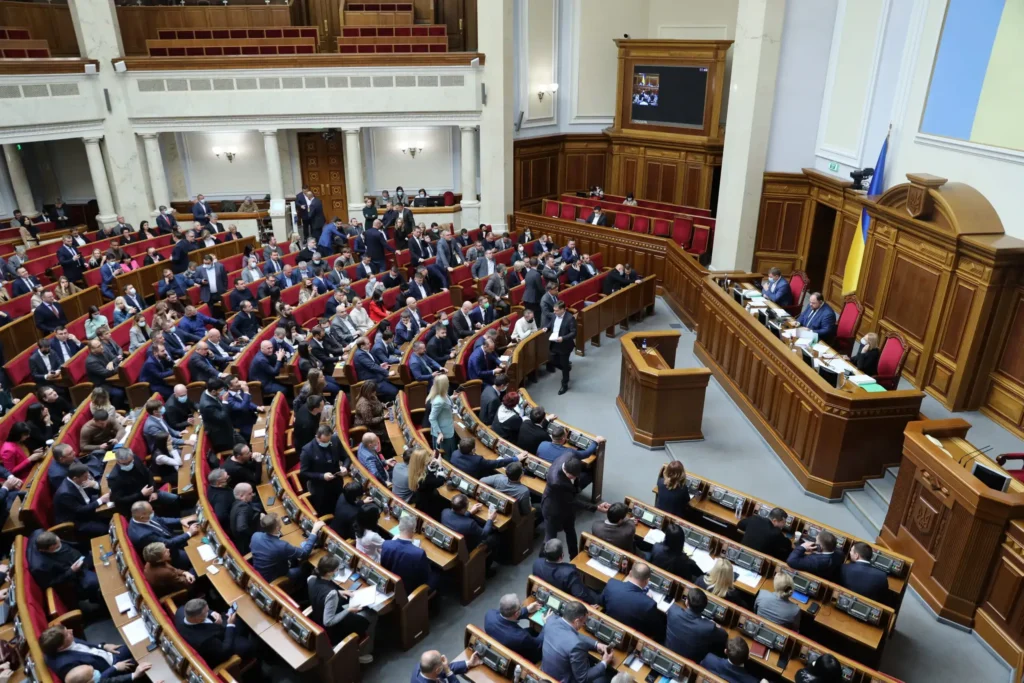
MPs are proposing to strengthen the fight against fraudsters and have introduced a bill that criminalizes information facilitation of fraud and provides for liability of public figures and media who use their platforms to campaign in favor of dubious schemes. In addition, it obliges the media and public figures to more closely scrutinize the information they disseminate in the public space.
Komersant analyzed the details.
The author of the draft law, MP Serhiy Vlasenko, notes that in recent years, Ukraine has seen a steady trend of using the media influence of well-known public figures, opinion leaders, bloggers, journalists and media to popularize activities that, unfortunately, turn out to be fraudulent. This includes fictitious charity fundraisers, pseudo-investment projects, the sale of non-existent goods, get-rich-quick schemes, etc.
“Public figures often act as ‘trusted persons’ in such campaigns, either knowingly or with a disregard for the duty to verify information, in particular in advertisements, TV shows, blogs, interviews, or social media posts. This leads to the fact that citizens, trusting the authority of a public figure or the media, transfer money or enter into other legal relations without realizing their fraudulent nature,” the author writes.
The case of Nazariy Gusakov, who organized a public fundraiser allegedly for his treatment, became a resonant one. Famous people were actively involved in the fundraising, and the campaign was disseminated on social media and in the media without verification.
Several well-known Ukrainian platforms published announcements without checking documents or sources confirming the need for treatment. When it later turned out that the campaign was fraudulent, none of the publications admitted their guilt, stated that they had made a mistake, or apologized to the victims.
“All this is because the Criminal Code of Ukraine does not currently provide for liability for participation in the dissemination of fraudulent appeals if a person is not formally the organizer of the crime. This lacuna allows public figures involved in fraudulent information campaigns to avoid any punishment, even if their participation was crucial for influencing the mass audience,” Vlasenko said.
The draft law proposes to add a new Article 1901 to the Criminal Code of Ukraine “Promoting fraud through information dissemination”:
- Participation in advertising, public appeals or agitation (fundraising, investment, sales, etc.), which is later recognized as fraud, is punishable by a fine of 1,000 to 1,500 NMDG (UAH 1,370,000-2,055,000) or imprisonment for up to 3 years.
- If the same is committed repeatedly, by a group, using media resources/social networks with an audience of more than 10,000 people, the penalty is a fine of 2,000-3,000 NMDG (UAH 2,740,000-4,110,000) or imprisonment for 3-5 years with disqualification to hold certain positions for up to 3 years.
- The penalty may be waived if the person proves that he or she acted on the basis of officially true information or in cooperation with government agencies.
The adoption of the law will allow
- minimize the role of public figures in disseminating unverified information;
- strengthen the legal responsibility of the media, influencers, and advertisers
- protect the property rights of citizens;
- raise the standard of information security and responsibility in the media space.
A disabled millionaire framed many people
The scandal surrounding 31-year-old Lviv resident Nazariy Husakov: for years he has been raising funds for treatment but not reporting on their use, after which he was suspected of non-transparent donations, poker bets, and withdrawals through crypto wallets.
Nazar has a rare genetic disease called SMA, and treatment is very expensive: the drug Evrisdi costs about €25,000 per month, while cheaper analogs cost about €5,000. He actively campaigned on social media and contacted media personalities. He was supported by Ukrayinska Pravda, NV, Bigus.Info, as well as bloggers Serhiy Sternenko and Ihor Lachenkov. The Lviv City Council provided direct funding: in June 2024, UAH 3.5 million was allocated for treatment through the city program.
Despite the budget support, Nazar continued to raise private funds for treatment and other needs. It is difficult to survive on a pension.
The story gained a lot of publicity: the president intervened. Zelenskyy said that the data was being checked, at least four financial institutions and several digital services were involved, and the circle of victims was being established. The president called for “restoring justice and preventing discrediting volunteering as such.”
Police conducted searches in Lviv and Kyiv at the residences of Husakov, his friends and acquaintances whose cards were used to collect money, and one of them helped to withdraw donations in crypto. A case was opened under articles on fraud and money laundering.
Do not trust – check
According to lawyer Yuriy Vasiliev, the idea is to make public figures responsible for the information they disseminate. Currently, only the media are responsible for false information (the Law on Information). In the case of slander, disinformation or fraud, the consequences range from retractions to lawsuits. Other people are more complicated.
“If a blogger or a public figure did not know that money was being collected by fraudsters, they only suffer reputational losses: public outcry, criticism, and loss of trust. The ideal thing to do is to apologize, tell them what happened, and help them return the money. There will be no legal consequences if there was no personal gain or if they themselves were victims of fraud. In fact, the victims may try to sue if the bloggers did not verify the information or ignored the warnings, but there have been no such cases in practice so far,” Vasiliev notes.
Another thing is that if the fraudsters received part of the money for advertising (a percentage or a “kickback”), this qualifies as complicity in fraud (Article 190 of the Criminal Code). The best measure is to carefully check the information before disseminating it, so you won’t have to blush or make excuses later.
Author: Alla Dunina