State-owned businesses without illusions: why Ukrposhta lost its profitability
18 February 11:05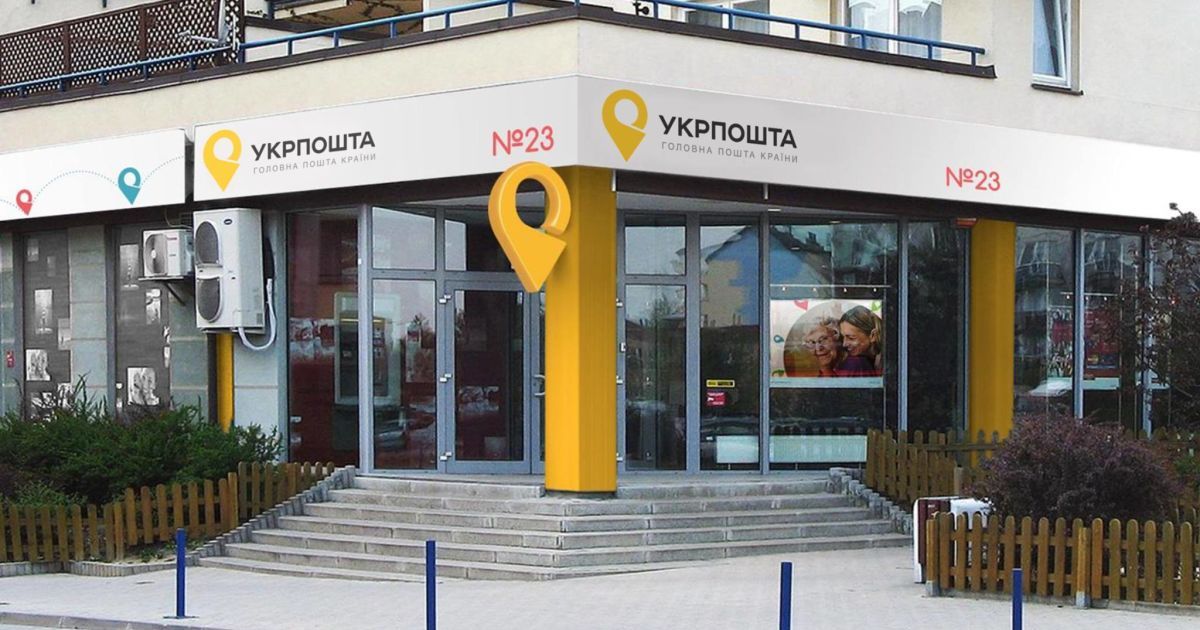
Ukrposhta is one of the country’s largest state-owned companies, a national postal operator with a network of thousands of branches throughout Ukraine and tens of thousands of employees. It delivers letters and parcels, serves businesses, pays pensions and social benefits, and operates in frontline communities and areas where there is often no alternative. Ukrposhta remains a strategic infrastructure of the state, but at the same time, it is a full-fledged joint-stock company that must operate according to the laws of business. It is precisely around its financial condition, management efficiency, and the role of the state as an owner that a discussion unfolded on social media after several high-profile scandals. Ukrainian economist, entrepreneur, educator, and writer Oleksiy Gerashchenko offered a systematic analysis of the myths and real problems facing the company in his Facebook post, according to "Komersant Ukrainian".
Myth 1. Ukrposhta is financed from the budget
The first myth that the economist refutes is that Ukrposhta allegedly lives off the state budget.
“No, Ukrposhta is a business owned by the state,” he emphasizes. He adds that even the term “state-owned enterprise” distorts the essence, because we are talking about a joint-stock company, 100% of whose shares are owned by the state.
In the future, the state may sell some of its shares. Here, Gerashchenko draws attention to the strategic aspect: if a wide range of citizens became shareholders in Ukrainian enterprises, this would have a positive impact on the country’s financial culture. But for this to happen, the company must be “promising, attractive, and profitable.”
Myth 2. Social functions lead to losses
The second common argument is that the company is allegedly forced to operate at a loss because of its social functions. The economist points out that in 2019–2021, Ukrposhta was profitable and earned UAH 750 million in net profit over three years, of which UAH 340 million was paid to the state in dividends.
“Here, we give the head of Ukrposhta a big plus,” he writes, because previously, the company’s profitability seemed almost fantastical.
Social functions, according to him, are not free. He cites an auditor’s report stating that the company’s largest client is the Pension Fund of Ukraine. In 2024 alone, the amount of remuneration for the delivery of pensions and other social payments amounted to more than UAH 2.78 billion.
“This is not funding from the budget, it is payment for Ukrposhta’s services, and it is not insignificant,” Gerashchenko emphasizes. At the same time, he notes that the company should remember its key client in communications.
Myth 3. Competition with Nova Poshta
The third myth is that Ukrposhta has become a serious competitor to Nova Poshta. According to the economist, the figures do not confirm this.
In 2024, both companies will have similar numbers of employees — 32,000 at Ukrposhta versus 33,000 at Nova Poshta. But the private operator’s turnover is 4.5 times higher. “This is a huge gap in both the scale of the business and its efficiency,” he notes.
If one player generates 4.5 times more revenue per employee, this is a sign of serious problems with business processes. The same is confirmed by the ratio of income to assets: each hryvnia of Nova Poshta’s assets brings in one and a half times more income than Ukrposhta.
Chronic losses and “eaten up” capital
After debunking the myths, Gerashchenko moves on to the problems. And here the tone becomes much harsher.
Since 2022, Ukrposhta has become chronically unprofitable and has effectively “eaten away” its own capital. If there used to be a “fat plus,” now, according to the economist, management should put a “fat minus.” For the state as the owner, this means that liabilities exceed assets — that is, the business is potentially unable to repay all its debts.
In such a situation, the owner must either exit the business (which is impossible here) or recapitalize it at the expense of the budget. And that is taxpayers’ money. “Therefore, the issue of recapitalization from the budget is just around the corner,” the author predicts.
He acknowledges that 2022 was an extraordinary year due to the full-scale invasion. But constantly writing off losses solely to the war is not a solution. The business must adapt and look for a model of operation without losses, because “constantly burning through the owner’s capital is not an option.”
The problem with the team and the role of the Supervisory Board
Geraschenko separately raises the issue of the management model. In his opinion, it seems that the top management team does not actually exist: “There is top marketer Smilyansky, top financier Smilyansky, top creative director Smilyansky…” He believes that a company without a strong management team is doomed to poor results.
The Supervisory Board’s report for 2024 raises even more questions. It states: “The company ended the year with a net loss of UAH 413.2 million… Based on the results of the assessment of the achievement of the set goals, the Supervisory Board did not identify any unsatisfactory facts. There are no comments or recommendations.”
“The company is chronically unprofitable, its capital is becoming negative… but everything is going according to plan?” the economist asks rhetorically.
Gerashchenko acknowledges the positive results of 2019–2021 and the role of the CEO in achieving profitability during that period. At the same time, he is critical of the current situation. If he were a member of the Supervisory Board, he would “note the role of the manager” in past successes, but now he would recommend a change in management due to chronic losses, inefficiency, and deteriorating financial condition.
The main focus of his message is not on personalities, but on principles. State ownership can be effective. Social functions do not doom it to failure. But without rigorous evaluation of results, transparent corporate governance, and real accountability for losses, no strategy will work. And in the end, everyone will have to pay.