A cheap alternative to air defense systems: what is known about the Ukrainian laser amid a shortage of missiles, and why its reviews are mixed
16 February 17:11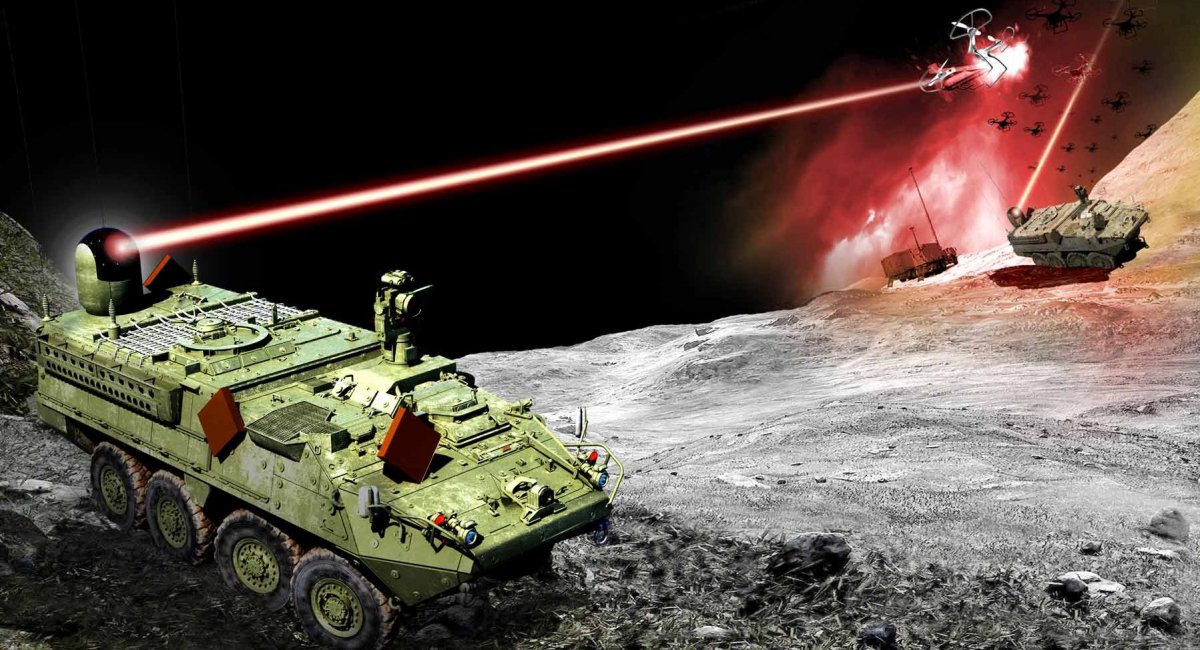 ANALYSIS FROM
Ukraine continues to test its own laser system designed to counter Russian drones.
Ukrainian specialists created the new complex, called Sunray, in response to the lack of anti-aircraft missiles and the increasing intensity of kamikaze drone attacks. Work on the project took almost two years.
The system destroys small aerial targets with a focused laser beam that damages the drone’s body or electronic components. The developers note that Sunray operates almost silently and does not require the use of expensive ammunition. The complex is compact and can be installed on a pickup truck or other light vehicle, ensuring mobility and quick repositioning.
How much does laser weaponry cost?
The prototype cost several million dollars to develop, but the serial version is planned to be significantly cheaper — it could cost hundreds of thousands of dollars, which is significantly less than modern anti-aircraft missile systems.
The development of laser technologies in Ukraine is linked to the lack of traditional air defense systems. Western partners cannot always supply sufficient quantities of missiles, and the use of expensive interceptors against mass-produced and relatively cheap drones is economically unprofitable. Laser installations are seen as a promising component of a multi-level air defense system, especially for intercepting kamikaze drones and reconnaissance UAVs at short ranges.
At the same time, the technology is still undergoing refinement: a number of technical and organizational issues need to be resolved, in particular the integration of the complex into the overall air defense management system.
If the tests are successful, Ukraine could join the ranks of the few countries that use laser weapons in real combat conditions to combat drones.
Laser weapons for Ukraine: skepticism and cautious optimism among experts
The topic of Ukraine’s possible creation and use of laser weapons has sparked a lively debate among military analysts. Some experts call for restraint in their assessments, while others see the new developments as having the potential to strengthen air defense.
Military expert Serhiy Grabsky expresses a frankly skeptical position on the prospects for the combat use of laser weapons.
“Please tell me, which country has laser weapons? None. There are no laser weapons in nature,” he emphasized.
According to the expert, the creation of fundamentally new types of weapons requires powerful scientific, technical, economic, and human resources.
“In order to create new types of weapons, you need scientific, scientific and technical, economic, and material potential. And personnel are the most important thing. We do not have any of these factors to the full extent.”
Grabsky also draws attention to the physical limitations of using lasers in the atmosphere.
“What is normal for ‘star wars’ in a vacuum does not work in the atmosphere. There is such a thing as beam scattering. We live in the atmosphere, and this creates serious limitations.”
He also questions the practicality of destroying airborne targets with lasers at high altitudes due to the enormous energy costs involved.
The experience of other countries
The expert notes that even technologically advanced countries do not have effective combat laser systems. According to him, Israel once considered using lasers to combat incendiary balloons launched from Palestinian territory, but this proved to be too expensive a solution.
Grabsky also emphasized the role of the human factor and was skeptical about hopes for technological “miracle solutions,” including artificial intelligence.
“The foundation of any army is people, trained specialists. You can have hundreds of thousands of weapons, but if there are no people behind them, such weapons are worthless.”
Lasers as a means of countering drones
At the same time, military analyst and co-chair of the Prava Sprava public initiative Dmytro Snegirev emphasizes that certain laser technologies in Ukraine are still in the testing phase.
“Currently, the technology is in the testing phase and requires the resolution of a number of technical and organizational issues, in particular, integration into a unified air defense control system.”
The analyst clarifies that this is not a universal “superweapon,” but a highly specialized tool.
“This is not a laser weapon for fighting aerial bombs or ballistic missiles. First and foremost, it is a means of countering unmanned aerial vehicles, in particular kamikaze drones and reconnaissance UAVs at short ranges.”
According to him, based on open sources, the capabilities of the Ukrainian Trident laser complex were demonstrated in 2025.
Snegirev notes that there are several areas of development for the Ukrainian military-industrial complex.
- “Trident” is a complex that, according to available information, is capable of countering both aerodynamic and ballistic targets at a distance of up to 3-5 km.
- Sunray is a short-range system designed exclusively to combat UAVs.
“We are talking specifically about countering drones at close range. This is an important clarification.”
Mobility and economic feasibility
The analyst cites compactness and mobility as one of the key advantages of the new development.
“The system can be mounted on a pickup truck or other light vehicle. This allows for quick position changes, operation as part of mobile fire teams, and increases crew survivability.”
In addition, according to information published by The Atlantic, the cost of the Ukrainian system may be several hundred thousand dollars — significantly less than similar American models, which cost tens or even hundreds of millions of dollars. Snegirev emphasizes that the development of such systems is linked to new enemy tactics. In such a situation, cheaper and more mobile countermeasures can be an effective addition to traditional air defense systems.
“If the development reaches industrial production and real application, it could significantly strengthen the capabilities of Ukrainian air defense in the fight against drones, both reconnaissance and strike.”
So, the discussion around laser weapons shows different ways of looking at military innovations: from harsh technical skepticism to cautious optimism.
Experts agree on one thing: the decisive factor is not only technology, but also the systematic implementation of that technology, personnel training, and the ability to integrate new solutions into the existing defense architecture.