“Long Neptune” at the launch: how bureaucracy hinders the launch of Ukrainian long-range missiles
29 August 2025 12:24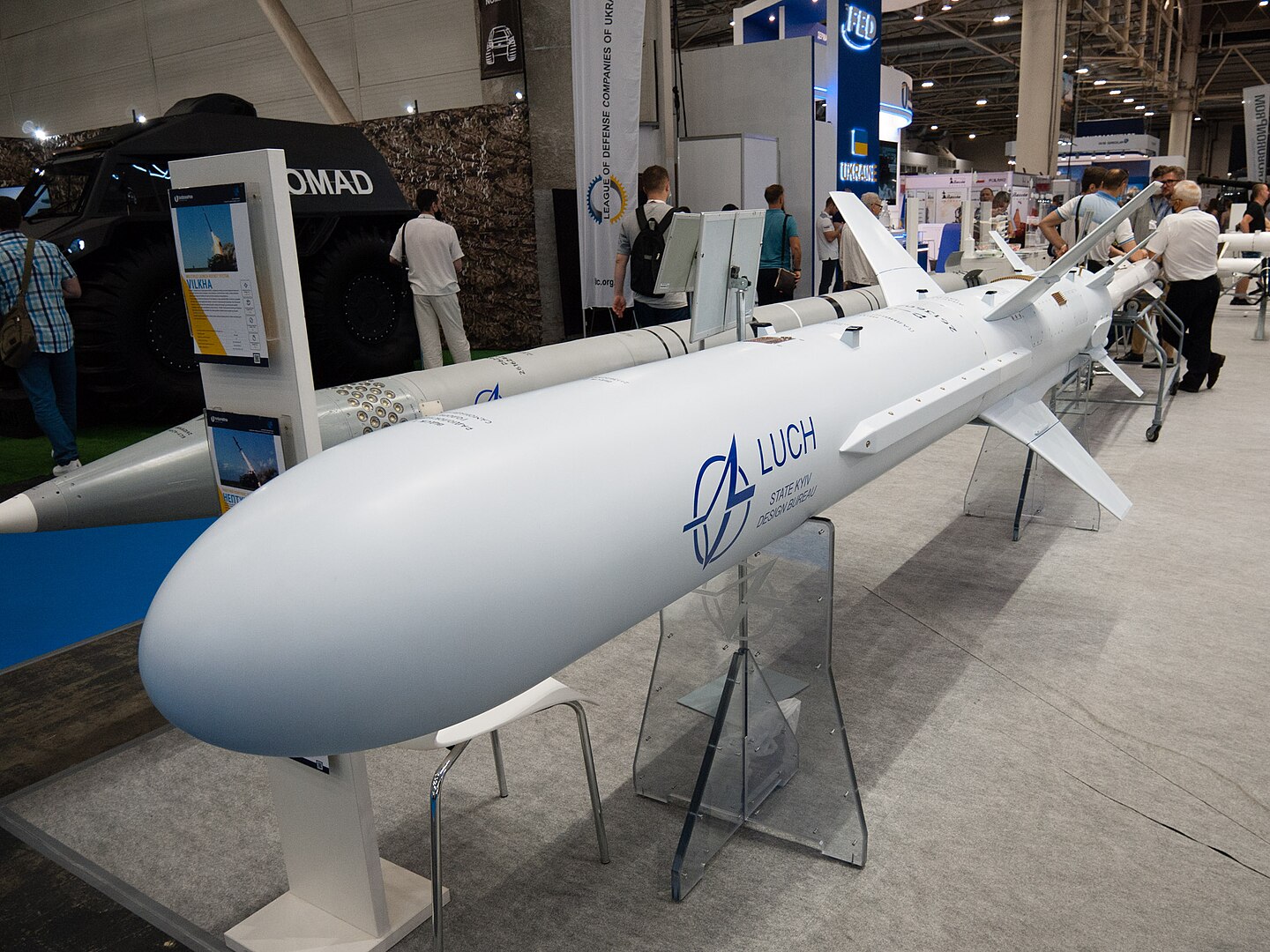
 ANALYSIS
On the official account of the state portal “Zbroya” appeared a video that probably demonstrates a new “long” version of the Ukrainian missile R-360 “Neptun” with an extended range – up to 1,000 kilometers.
Although information about the development of this modification appeared back in the fall of 2023, its image was made public for the first time. As can be seen from the video, the new missile has an increased length – more than 6 meters, which is about one and a half meters longer than the basic version of the R-360.
Ukraine could use the new version of the Neptun missile deep inside Russian territory
The speaker of the Ukrainian Volunteer Army Serhiy Bratchuk in an exclusive commentary for Kommersant Ukrainskogo
“Can we speak cautiously about the fact that such a missile is already being used in combat operations? Actually, indeed, information about the development of exactly the long Neptune appeared back in 2023.”
– bratchuk stated.
According to him, even some sources in the Security Service of Ukraine reported about the existence of a new version of the missile, and some of this information has already become public.
Bratchuk gave an example of probable combat use of the missile:
“The use of the Neptune occurred at least once – on January 10 this year, the 25th. I was asked about this event at the time. It was on the territory of the Rostov region. And it flew exactly to a warehouse with armaments. There, by the way, there were enemy missiles, possibly X-101 or other modifications.”
He specified that the strike was accurate and was carried out as part of a complex attack, which involved Ukrainian drones and missiles. Despite the growing resonance, there is no official statement on the combat use of the new version of the missile yet:
“We, of course, have no official confirmation of this information. And the video that is now being actively circulated in the media and social networks is old. This is not the long “Neptune”, but perhaps its “father”, if we can say so.”
– bratchuk emphasized.
He also noted that the distribution of such materials can help the enemy to analyze Ukrainian developments, so one should be careful with the disclosure of tactical and technical characteristics.
According to Bratchuk, the new modification of “Neptune” is capable of hitting targets at a distance of up to 1000 kilometers:
“I hope that this distance – up to a thousand kilometers – really corresponds to reality. A colleague of mine aptly joked that Russian air defense officers know the specifications of our “long Neptune” better than the Ukrainian military, because they are already scared to calculate the trajectories from which it can fly to Moscow, for example.
Дивіться нас у YouTube: важливі теми – без цензури
The potential for strikes is deep in the Russian rear
The missile, he said, can effectively hit critical enemy infrastructure, such as oil refineries, energy targets or railroad hubs:
“This is the depth of the territory of the Russian Federation. Not 100, 200 or 300 kilometers, but up to a thousand. We understand perfectly well what the consequences of such strikes could be. This is a serious deterrence potential.”
Sergei Bratchuk also stressed that despite all attempts to destroy Ukrainian defense potential, the domestic rocket industry is reviving:
“It was killed for a long time, and first of all by the Russians, preparing for war. But now we have a fact: a Ukrainian missile, Ukrainian-made, is capable of operating at strategic depth. And let the enemies be the first to report about it – this is the best proof of its effectiveness.”
“Russian missiles have already hit us. Ukrainian ones are virtual so far.”
Military expert, former SBU officer Ivan Stupak in an exclusive commentary
“Yes, we talk a lot about Ukrainian missiles – photos, videos, announcements. But the key difference with the Russian ones is one thing: the Russian ones have already flown on Ukraine, while ours on Russia have not yet.”
– stupak noted.
He recalled that the only verified case of Ukrainian missile use against the Russian Federation remains the strike on the cruiser “Moscow” by the missile “Neptun”.
“Everyone recognizes this, although Russia is trying to deny it. They say that maybe it was not the Neptune, because the ship is on the bottom – you can’t check. But there are no other confirmed cases.”
Stupak is skeptical of optimistic statements about the combat use of the new missiles:
“We have seen photos, videos, heard about the developments, but there are no successful flights. Even when the media wrote that ‘something has already arrived’ – without any specifics. If it has really hit, why is everyone keeping quiet?”
Why are there still no real hits?
According to the expert, the delays in the serial production of Ukrainian missiles have several explanations – from bureaucracy to direct Russian strikes on production facilities.
“Even the head of Rheinmetall said head-on: you have a war, and bureaucracy – as in peacetime. In addition, the enemy periodically hits Ukrainian facilities, perhaps – manufacturers of electronics or parts for weapons.”
Stupak notes that many of the Ukrainian missiles that are actively talked about (in particular, Flamingo, Marichka, Trembita, and Sapsan) remain virtual rather than real combat systems:
“There is no confirmation yet that these missiles are actually being used in combat. These are not renderings, they may have been shown to the president, but they have not progressed beyond that. There is no serial production.”
Ivan Stupak believes that the most effective strategy is not to fuel expectations, but to silently test, start production and then hit the enemy:
“We test it in conditional Transcarpathia, correct it, bring it to perfection, and only then – combat use. And not a photo against the background of the missile without any real impact”.
In conclusion, Stupak emphasizes: there are certain shifts, programs have been launched, missiles are being created, but it is a long process that does not give instant results:
“Ukrainian missile engineering is moving forward. But there are still many stages to go through before mass production and real combat applications. Without unnecessary hype, with a clear plan and bringing it to fruition.”
So, despite technical breakthroughs and high expectations, Ukraine has not yet moved to the systematic use of long-range missile weapons. The problem lies not only in technology, but also in bureaucracy, logistics and geopolitical risks.
Читайте нас у Telegram: головні новини коротко