Up to 10 years behind bars for law enforcement officers: the Rada proposes to radically increase the liability of investigators, detectives, prosecutors, and judges
2 March 18:16
Members of Parliament have registered bills (Nos. 14351 and 14350) to increase the liability of law enforcement officers and judges for illegal actions against citizens. As stated in the explanatory notes, the documents are intended to ensure adequate compensation for victims of abuse of power by employees of various law enforcement agencies, according to "Komersant Ukrainian".
The bill was initiated by MPs Anna Skorokhod, Georgy Mazurashu, and Mikhail Sokolov.
According to the accompanying documents, the proposed changes are intended to properly regulate at the legislative level the issue of the liability of law enforcement agencies, pre-trial investigation bodies, the prosecutor’s office, and the court for damages caused to Ukrainian citizens.
“The current legal system has allowed law enforcement agencies to usurp the right to restrict the rights and freedoms of citizens with impunity, without any responsibility for abuse or exceeding the powers granted by the Ukrainian people through the Verkhovna Rada,” the authors of the bill argue in the explanatory note.
It should be noted that in addition to the new proposed articles of existing legislation, deputies are actually proposing to expand the circle of responsible persons.
Practically all of the proposed amendments contain the phrase “law enforcement officer and official of an agency conducting operational-investigative activities and pre-trial investigations.”
What does this mean?
As lawyer Oleksandr Babikov explains, the use of the term “law enforcement agency” is indeed somewhat ineffective.
“Because it is still unclear what the characteristics of a law enforcement agency are and who belongs to this category. Do the NABU (which has special status, ed.), the DBR, and the prosecutor’s office belong to law enforcement agencies?
In other words, the approach is ambiguous, that’s the first thing. And if, instead of a law enforcement agency, we introduce the concept of an agency authorized by the state to conduct operational-investigative activities and pre-trial investigations, then it is justified,” he explains.
At the same time, the lawyer is quite skeptical about the level of professionalism of the aforementioned draft laws, in particular because deputies, for example, ignore such forms of proceedings as inquiries, as well as counterintelligence and intelligence activities.
“By the way, counterintelligence activities have been very widespread in recent years. And it is during counterintelligence activities that legal entities suffer the most damage when certain actions are taken against them on the basis of counterintelligence materials or within the framework of counterintelligence cases,” Babikov explains.
What are the MPs proposing?
The most resonant innovation of the bill is the proposal to supplement the Criminal Code with a completely new Article 365-1. It provides for severe punishment for a whole range of actions that could previously be written off as “procedural errors.” These include well-founded suspicions or unlawful convictions of individuals.
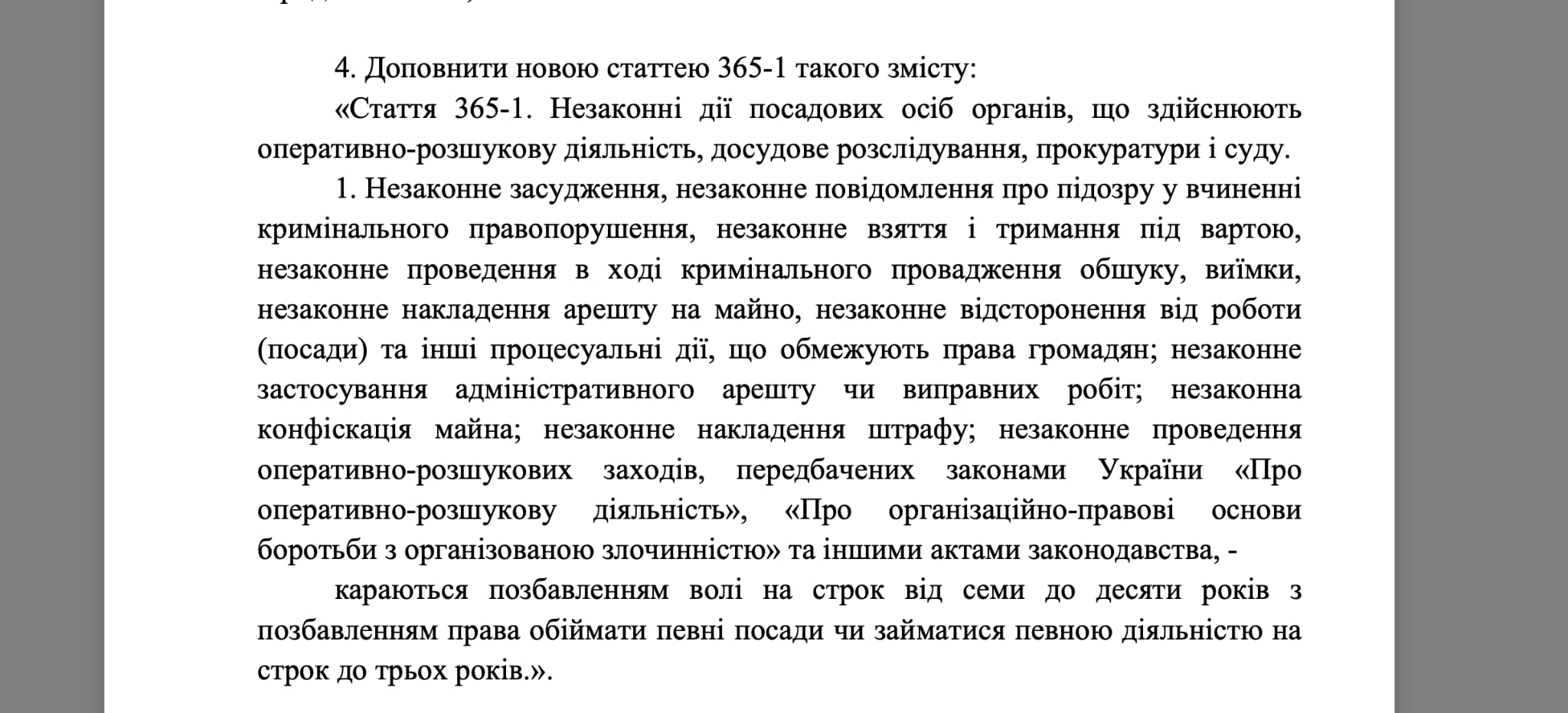
The deputies also propose liability for illegal searches, seizures, seizure of property, or removal from work.
For such acts, MPs propose to deprive law enforcement officers of their liberty for a term of seven to ten years with a ban on holding certain positions for another three years.
In addition, the bill proposes amendments to a number of existing articles of the Criminal Code of Ukraine and even changes the title of Article 365 of the Criminal Code of Ukraine so that it directly refers to the liability of law enforcement officials.
It also proposes introducing liability for unlawful detention for mercenary motives – the relevant changes are proposed to be made to Article 371 of the Criminal Code of Ukraine, “Knowingly unlawful detention, arrest, house arrest, or custody.”
The authors of the bill placed particular emphasis on the compilation of knowingly false documents by investigation and court officials. Also, according to the text of the legislative initiative, in the articles on torture (Article 127) and enforced disappearance (Article 146-1), deputies propose to include “operational workers, investigators, prosecutors, and judges” among “state representatives. “
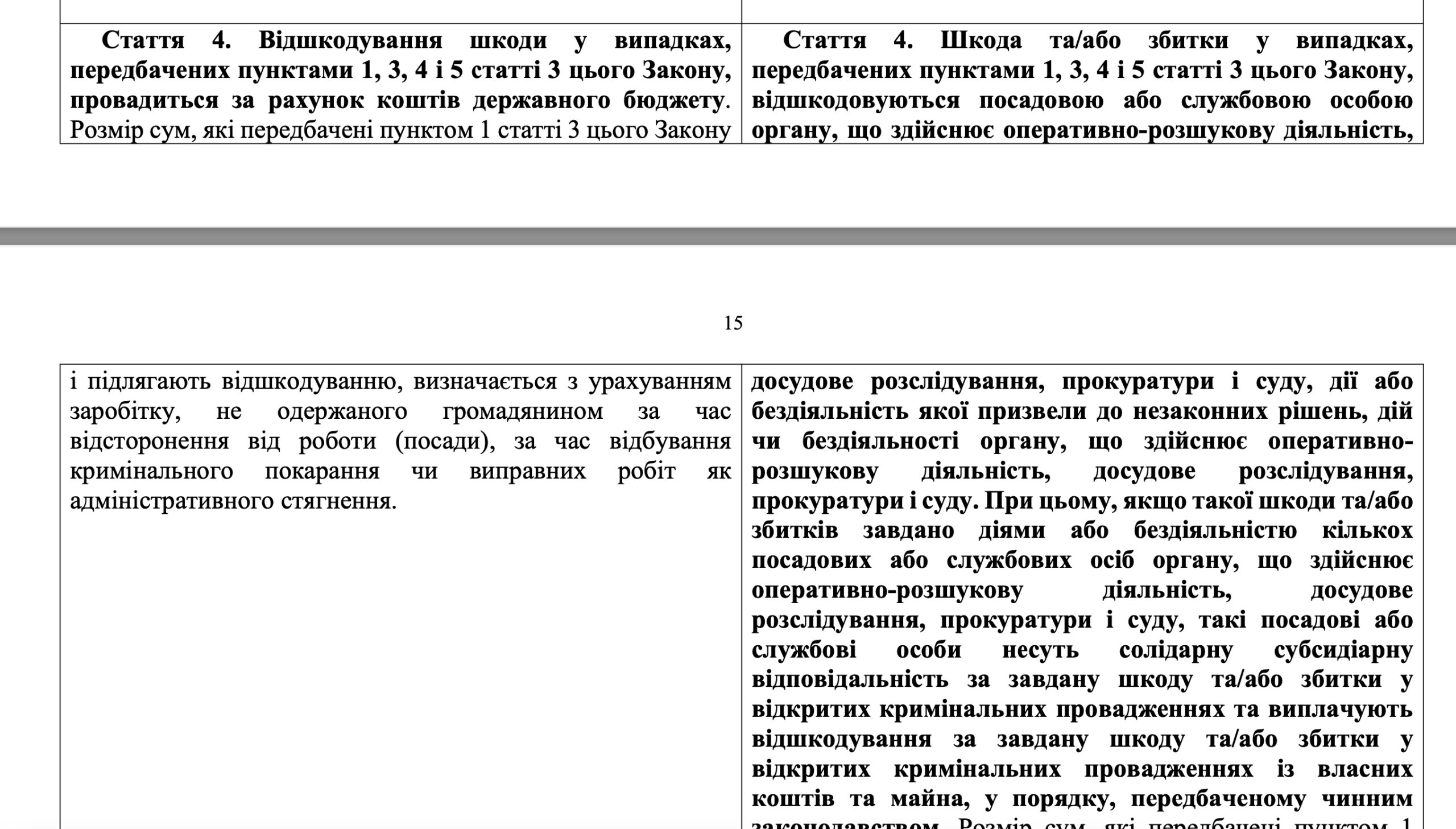
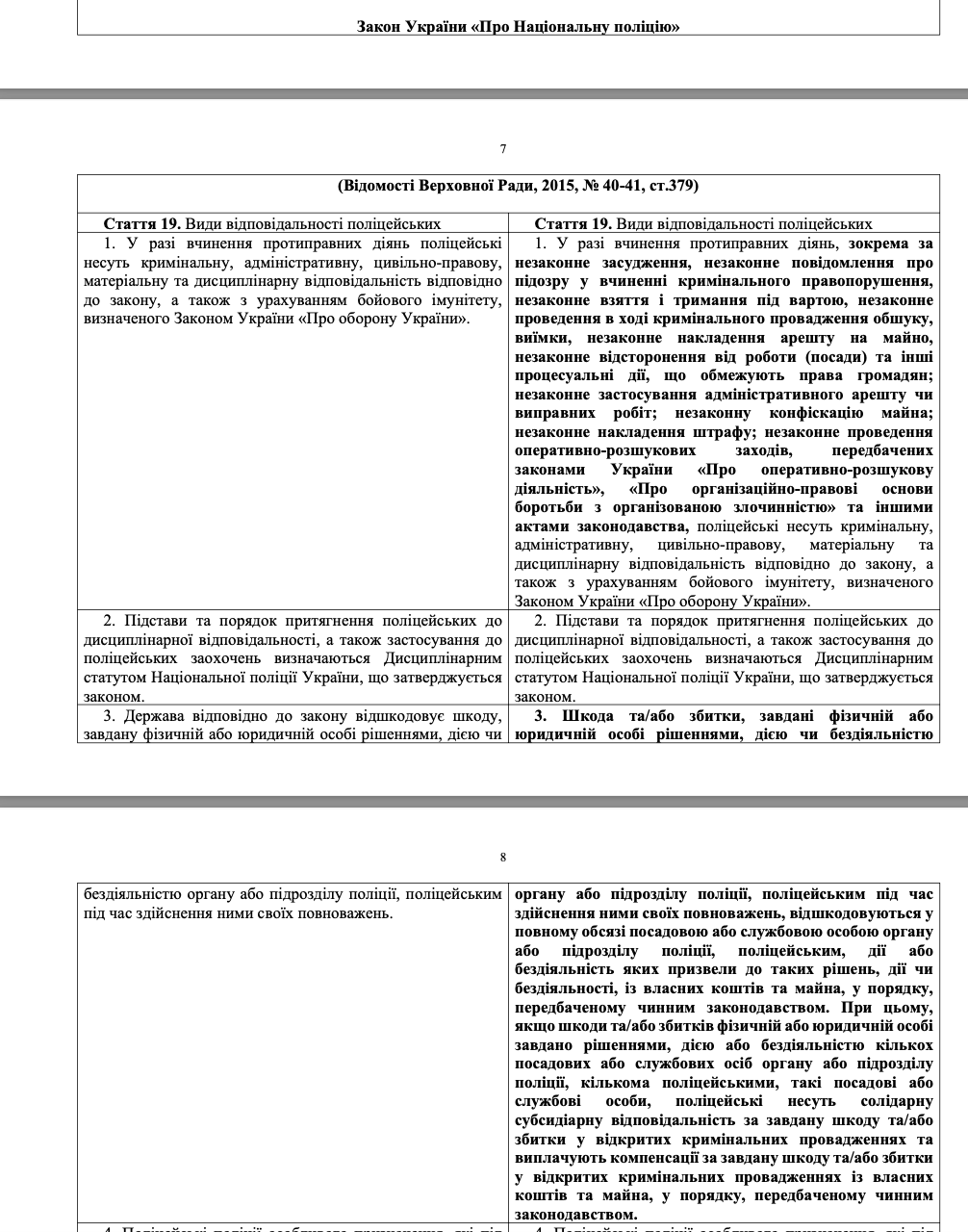
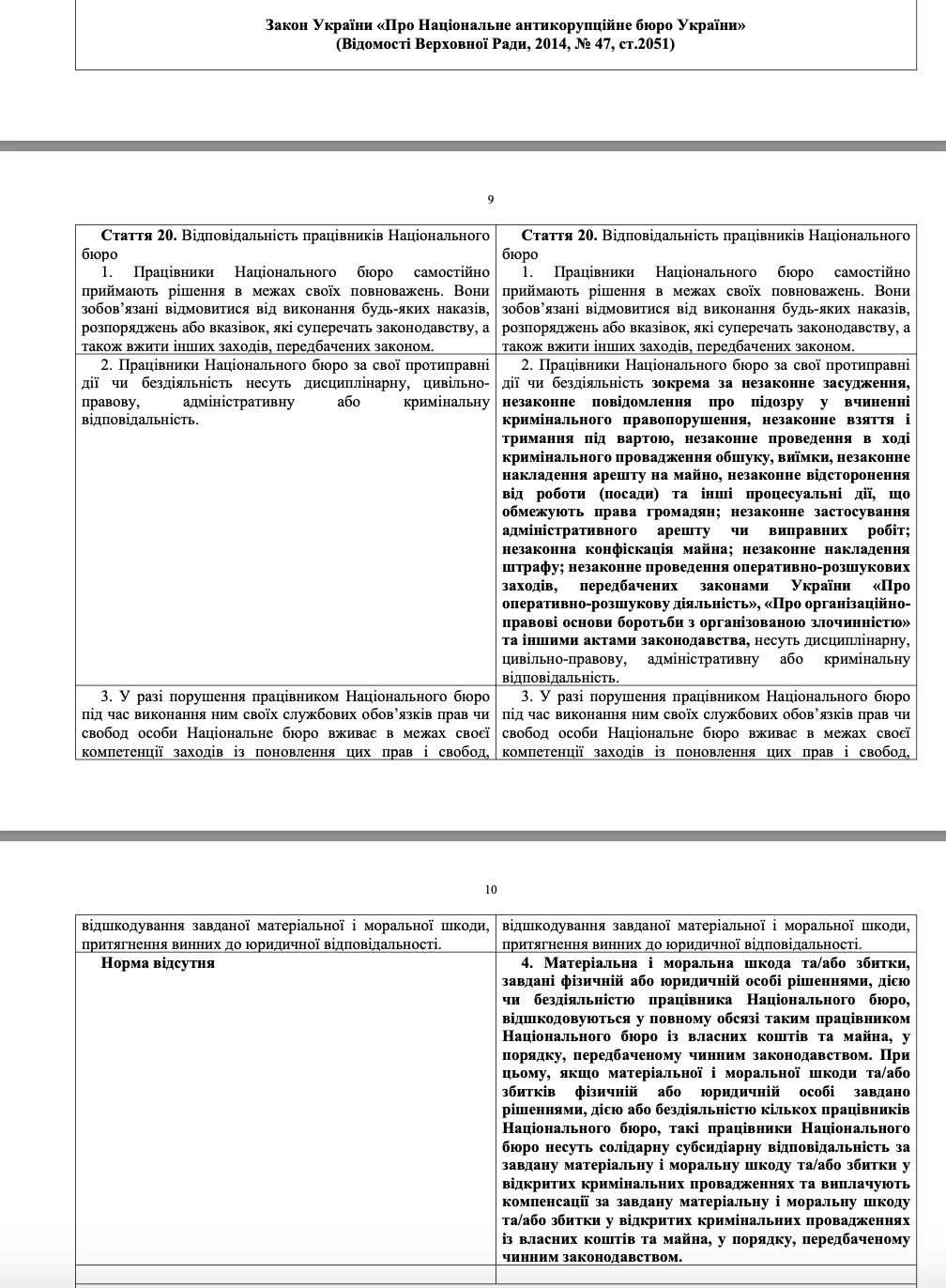
With regard to compensation for damages, the document states that officials or civil servants shall bear joint and several subsidiary liability for damages or losses caused in open criminal proceedings and shall pay compensation from their own funds and property.
As lawyer Alexander Babikov notes on this matter:
“…what does ‘open criminal proceedings’ mean? The term is completely unclear. This term is not used. Criminal proceedings are registered, investigated, and inquired into… Again, what if operational-investigative activities are carried out, but criminal proceedings are not registered? That is, human rights and freedoms are restricted, there is interference in private communication, intrusion into the home, collection of information, and interception of conversations. In other words, the current draft law does not provide for a means of response when such operational-investigative activities and counterintelligence activities are carried out, but after they are carried out, the pre-trial investigation does not begin,” he notes.
Initiatives for the SBU
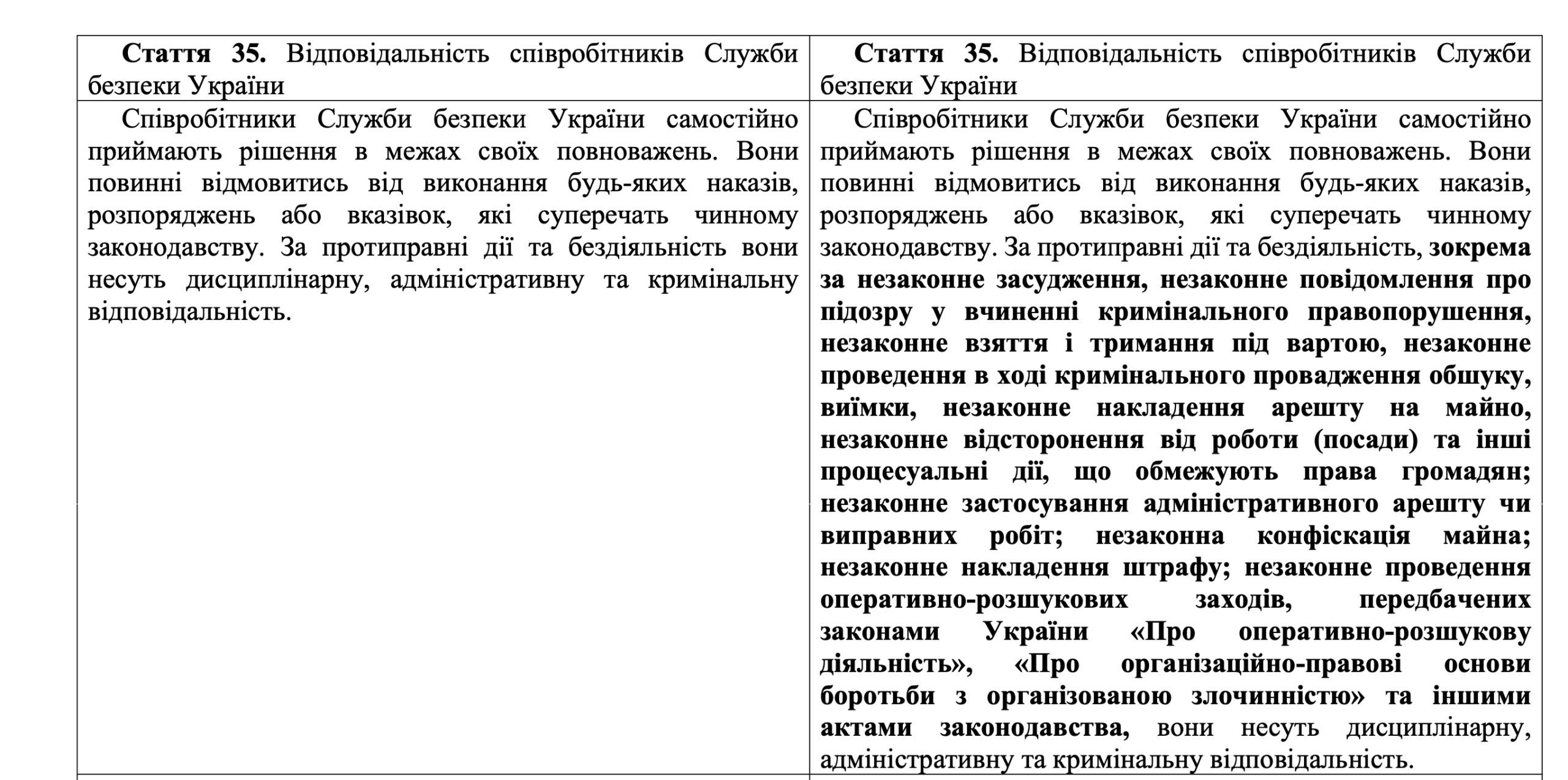
By amending the Law on the Security Service of Ukraine, deputies propose to clearly detail “unlawful actions and inaction.”
Initiatives for the National Police
Initiatives for the NABU
It is worth recalling that one of the authors of the bill, Anna Skorokhod, recently mentioned this bill when commenting on the refusal of the SAPO prosecutor to bring charges in a case that had been going on for almost five years.
“…I submitted two bills: No. 14350 and No. 14351. They establish clear responsibility for pre-trial investigation bodies, the prosecutor’s office, and the court for unfounded accusations. Did you ruin a person’s life with a fabricated case for the sake of bonuses and publicity? You will be held accountable before the law. This is the only way we can stop this punitive conveyor belt,” the parliamentarian wrote on her Facebook page.
We will remind you that the ECHR recently ruled on the lawsuit filed by former judge Tandir regarding his prolonged detention, recognizing the violation of his rights and awarding him compensation.