“Are the ‘volunteers’ running out? Russia has increased payments for those willing to fight in Ukraine to $20,000.
1 July 2024 10:12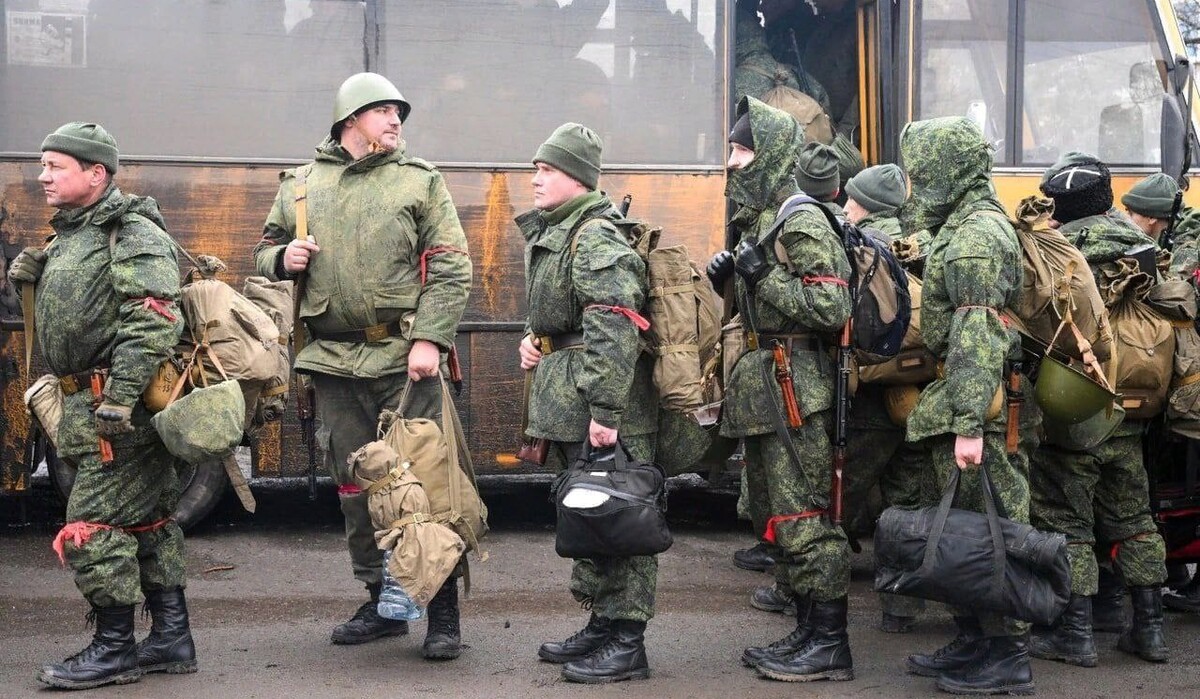
Russian regions have increased one-time payments for signing a contract to participate in the war against Ukraine to $20,000. This is reported by "Komersant Ukrainian" with reference to the DeepState monitoring project .
Deep State visualised the data of analyst Yevgeny Istrebin, who monitors the dynamics of one-time payments to so-called volunteers who sign contracts with the Russian army.
Krasnodar Krai has taken first place among Russian regions in terms of the amount of one-off payments to people who sign contracts with the Russian Ministry of Defence. The amount of the payment is currently 1,645,000 rubles ($19,240).
According to the analyst, in at least 13 cities or administrative units, the amount of kickbacks exceeded 1 million rubles ($11,700).
The media emphasise that the amount of payments in some regions has increased 10-fold over the year. Samara is cited as an example, where the figure was 100,000 rubles in August 2023.
The publication notes that the amount of payments comes from several sources, which is why smaller figures can be found on social media and in the media.
“These figures are evidence that the losses of the Katsaps are large and stable, so there is a constant need for so-called ‘volunteers’. However, soft mobilisation does not give the desired numbers, so there is a need to increase payments many times over,”
– analysts say.

It is worth noting that Russia is recruiting more contract soldiers to the army in order to avoid another mass conscription, which could undermine public support for the war in Ukraine, at least for the time being. The Kremlin wants to avoid a repeat of the September 2022 mobilisation, which shook public confidence and provoked the flight of a million Russians from the country.
The Russian army command is forcing some conscripts to sign contracts.
According to Bloomberg, more and more conscripts in Russia are complaining of significant psychological and, in some cases, physical pressure. The contracts are officially for one year, but they can only be cancelled by the Russian Ministry of Defence during military mobilisation, so they are effectively indefinite until the end of the war.