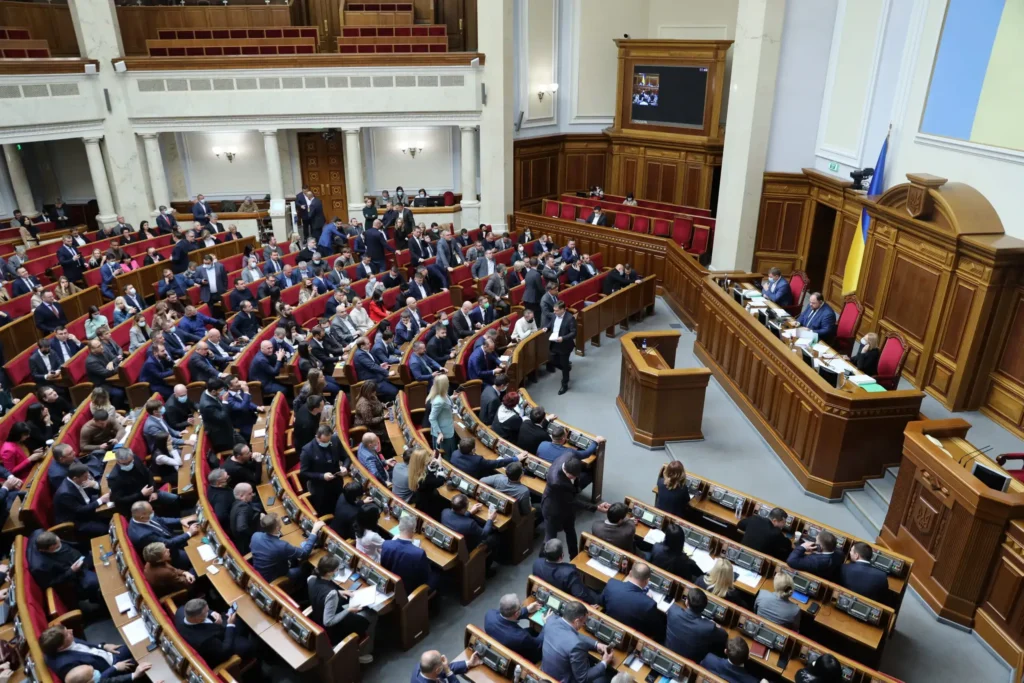
There is experience: who in Ukraine officially works four days a week
12 August 2025 17:37 ANALYSIS FROM
“Four working days a week”. Most employees dream about it. But for some in Ukraine, it is already a reality. How to make dreams come true and how attractive the four-day working reality is – found out
Discussions about the likelihood and feasibility of introducing a four-day working week arise regularly. In Ukraine, too. The latest reason for this came recently, after the Ukrainian Chamber of Commerce and Industry, in its Business Barometer survey, found that 58% of entrepreneurs are positive about the idea of a four-day workweek with the consent of the employer and employees, 16% of respondents are neutral, believing that the decision should be made by the business in any case, and 26% believe that such a step is not timely.
Commenting on these data and assessing the overall trend, Danylo Hetmantsev, Chairman of the Verkhovna Rada Committee on Finance, Taxation and Customs Policy, acknowledged that such a revision of the work schedule has an extremely positive impact: labor productivity is growing or remains unchanged, economic indicators are improving, and the number of cases of emotional exhaustion and burnout is significantly reduced. His conclusion is that this is one of the topics where a dialog between the state, business and employees is crucial.
At the same time, the State Employment Service reminds us that a four-day workweek is not provided for by law in Ukraine. Moreover, as the State Employment Service emphasizes, under martial law, the working week has been extended to 60 hours at certain critical infrastructure facilities.
The Labor Code, on the other hand, refers only to a five-day and six-day working week, and stipulates that the normal working hours of employees may not exceed 40 hours per week. At the same time, a reduction in this time is possible for minors, people with disabilities, or by agreement with the employer. Enterprises and organizations also have the right to set a lower standard for working hours when concluding a collective bargaining agreement. In addition, part-time work or a part-time week may be established by agreement between the employee and the employer. In fact, this provision opens up the possibility of introducing a four-day working week in Ukraine in the format of local agreements. And there are those who have already taken advantage of this.
Four-day working week: Ukrainian experience
The State Employment Service recalls an attempt to introduce a four-day workweek implemented in 2019 by the IT company Brighta. According to the State Employment Service, the first results after the transition to a four-day work week were optimistic: the level of employee burnout decreased. But eventually, in some areas, the level of productivity decreased, and the company revised its approach to determining the length of the working week.
There are other examples. Meet the Ukrainian company You are launched. It develops websites and apps (iOS/Android) for startups. And it has a positive experience of introducing a four-day working week.
Maxim Kuznetsov, the founder of You are launched, told the publication
– How did this idea take hold of the company’s management and your employees?
The four-day working week format was already in use in our company until 2022. However, with the start of the full-scale invasion, we decided to temporarily switch to a five-day schedule. This was due to the high level of instability in both work processes and personal lives of employees. The priority was to ensure maximum mobility and predictability, taking into account safety factors and the needs of each team member. In 2025, having analyzed the situation and having stable operational processes, we deliberately returned to the idea of a four-day working week. This decision was made in a balanced manner: we took into account the request from the team, identified key risks, and assessed the impact on business processes and customer service. The format was launched in April 2025 as a controlled experiment with clear performance indicators.
– It is believed that the four-day work schedule is best suited for companies in the IT sector, representatives of creative and analytical professions, as well as for the pay-for-performance industry. To what extent did the specifics of your company’s work influence your decision?
Yes, the specifics of our work had a direct impact. We work in a dynamic startup environment, where the pace is high and demands change quickly. In addition, we work with clients from different time zones, so we are responsible not only for internal efficiency but also for the client experience. Therefore, the decision to change the format was accompanied by adaptation: some processes were revised, planning became more concentrated, and the workload became more structured. We set ourselves a clear goal: customers should not feel any negative effects of the format change. And we have achieved this through a systematic approach to restructuring teamwork.
– You called the current transition to a four-day week a “controlled experiment with clear performance indicators”. Before launching this experiment, you must have carefully researched and assessed the possible benefits and challenges that the company would experience.
Yes. As for the benefits, first of all, we should talk about optimizing employee resources. An additional day off allows the team to recover better, plan personal time, and solve tasks outside of work without interfering with the workflow.
Secondly, it is focus and planning. People started managing their time better, prioritizing more clearly, and closing tasks within 4 days without losing quality.
Thirdly, the growth of satisfaction. The majority of the team was positive about the changes, both physically and emotionally.
We could not ignore the challenges that needed to be addressed.
First, there was the need to adapt processes. It was necessary to revise planning, communication and the way the week was organized, which took time and effort.
Secondly, the increase in responsibility. Reducing the number of working days automatically means that every hour must be used effectively. The format works only when everyone – from the leader to the performer – is aware of their role in the result.
Thirdly… I would say prioritization. Everything that was not critical had to go. The team has learned to focus on what really matters, and this is also part of growth.
– Let’s try to assess whether such a transition is really possible for other Ukrainian companies. What would you advise them to consider?
It is possible. But only if the decision is made not as a fashion statement, but as a response to real business and team needs. Before implementation, you should take into account the specifics of the business model, the type of clients, the team structure, and current processes.
For product companies, the transition is sometimes easier. For service businesses, especially outsourcing companies, it is more difficult due to external obligations to customers. But even in such circumstances, it is possible, provided that there is a clear adaptation plan, risks are calculated, and the team is prepared.
This is not a format that can be launched “on Monday”. This is a strategic decision that involves a period of transformation.
– Your “controlled experiment” started in April 2025. It has, in your words, “clear performance indicators”. In terms of the results of these few months of work in the new regime, what could you emphasize?
We have established a four-day working week as a sustainable format for the team, accessible to all. The format is based on trust and responsibility. It is important to say that we have NOT reduced people’s salaries and we are NOT trying to fit 40 hours of work per week into 4 days. On the contrary, we have reduced the workload to 32 hours.
At the same time, each team member: plans tasks for the week in advance, completes work on time, takes into account the needs of the team and clients.
In cases where there is a need to support colleagues or complete work, this happens without additional reminders. We do not substitute flexibility for uncontrol. The four-day week format is not a reduction in responsibility, but an increase in it.
And one more thing. This format will remain in the company as long as it works for the team, business, and results, because we are not tied to fashion trends – we are tied to efficiency.
Four-day working week: foreign experience
Belgium was the first country in Europe to introduce a four-day work week by law. In February 2022, Belgian employees won the right to work full-time for four days instead of the usual five without losing their salaries. The new law allowed employees to decide whether to work four or five days a week.
Last year, dozens of companies in Germany joined the experiment to test the 4-day workweek. This was a response to a public demand: according to a Forsa survey, 71 percent of German workers would like to be able to work only four days a week.
Portugal, the United Kingdom, Scotland, France, Lithuania, Iceland, and other countries that have successfully tested the concept of a four-day workweek also joined the list of countries that have implemented the concept.
For example, Iceland is currently the world’s leader in terms of the speed of working week reduction. Up to 90% of Icelanders already work on a reduced schedule or other relaxations.
In early July, an experiment in which employers can offer their employees alternative models of reduced working hours was also launched in Poland.
Japan and the United Arab Emirates are introducing a reduced working week model in certain sectors of the economy. In Canada and the United States, more and more employees are also supporting the idea of a shorter working week.
It is clear that it would be strange to talk about Ukraine’s official transition to a four-day workweek during the war. But there are opportunities to implement such ideas in a local format. This is evidenced by the experience mentioned above. In addition, there are many vacancies from employers that are differentiated by working hours. There are jobs that provide for part-time or irregular working hours, summarized timekeeping, work in shifts or with a split working day. In other words, there is a choice. The main thing is the desire to work.
Author – Sergey Vasilevich
Читайте нас у Telegram: головні новини коротко