Second month of the U.S.-Israel operation: IDF officer issues grim forecast
31 March 19:28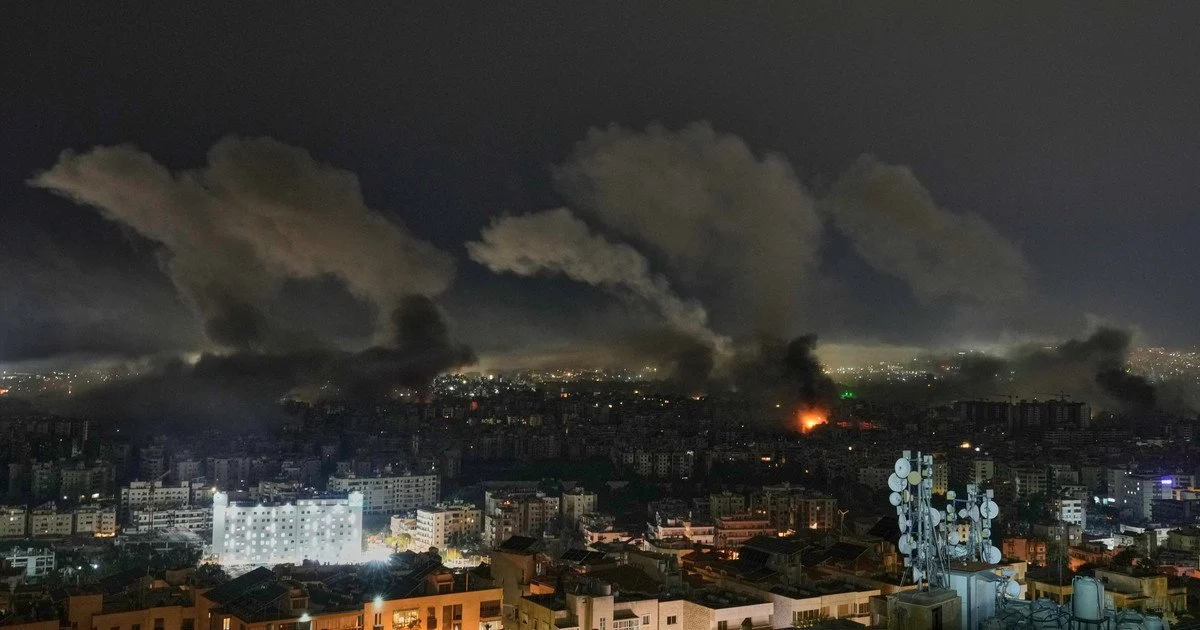 EXCLUSIVE
The Israeli-American operation against Iran has been ongoing for two months, but there is still no clear picture of what is happening. U.S. President Donald Trump’s statements contradict one another: one moment he speaks of agreements with Tehran, the next he openly declares his intention to cut off Iranian oil. Against this backdrop, hostilities are only intensifying, and the escalation is growing. Are the U.S. and Israel really preparing for a ground operation against Iran? What does the concentration of elite units in the region mean? And most importantly—who actually stands to gain from this war?
While Washington talks about possible agreements, strikes on Iran continue. IDF Reserve Officer Grigory Tamar, in an exclusive comment
“You can say anything. Especially Trump. He can say whatever he wants—and no one will hold him accountable for his words. But at the same time, continuous missile and bomb strikes on Iranian territory are continuing—both from Israel and from the U.S.,” said Grigory Tamar.
According to Tamar, in the last 24 hours alone, Israel has struck about 20 targets, including the headquarters of Iran’s naval forces and high-ranking military officials.
Signs of preparation for a ground operation
The IDF reserve officer draws particular attention to the concentration of elite U.S. units in the region. This is not merely a matter of deterrence or a show of force.
“The 160th ‘Night Stalkers’ Regiment, the 75th Ranger Regiment, ‘Delta’ units, ‘Navy SEALs,’ and airborne forces are concentrated there. These units aren’t there for a parade. There is every reason to believe that they could be deployed to capture Khark Island and other targets in the Strait of Hormuz,” says Tamar.
This region is critical for controlling Iran’s oil flows. Despite the large-scale strikes, Iran is trying to retaliate. However, these actions are largely symbolic.
“Iran is trying to fight back. There were about 10 air raid alerts in Israel in a single day; rockets were launched, but most of them were shot down,” says Grigory Tamar.
Attacks by Hezbollah from Lebanese territory, which result in civilian casualties, are creating additional tension.
Russia’s Role: Short-Term Gains and Long-Term Risks
The Kremlin is reaping tactical benefits from the war in the Middle East—rising oil prices, diverting the West’s attention, and straining its resources.
“In the short term, Putin wins—both from oil prices and from the fact that the world’s attention is diverted. But in the medium and long term, this is very bad for him,” says Grigory Tamar.
Tamar explains this with a simple metaphor.
“Putin’s foreign policy is like a stool with four legs: Belarus, China, North Korea, and Iran. If one leg breaks, the whole structure becomes unstable,” says Grigory Tamar.
Iran, he says, has been an important partner for Russia—both in circumventing sanctions and in conducting “dirty operations” through proxy networks.
A statement by a representative of the Israel Defense Forces regarding the possibility of operations not only in Iran caused a particular stir. This, according to Tamar, triggered a nervous reaction in Moscow.
“Hysteria broke out in Russia. After such statements, they even shut down the internet because they didn’t know what would happen next,” says Tamar.
He emphasizes: such statements at this level are not accidental and are approved at the highest level of military and political leadership.
The expert’s key point is that the media noise should not be misleading. Reality is determined not by politicians’ statements, but by military actions.
“If support were measured by words, Ukraine would have already received enough weapons to secure victory. But it is actions, not words, that matter,” says Grigory Tamar.
And although Donald Trump’s contradictory statements may create the illusion of a diplomatic process, the facts tell a different story: the war is not only continuing but also gaining momentum. The concentration of elite troops, intensified strikes, and the struggle for control over oil resources point to a possible transition to a new phase of the conflict.