The Diesel Noose: Is the 2026 Planting Season at Risk Due to Sky-High Fuel Prices?
17 March 14:06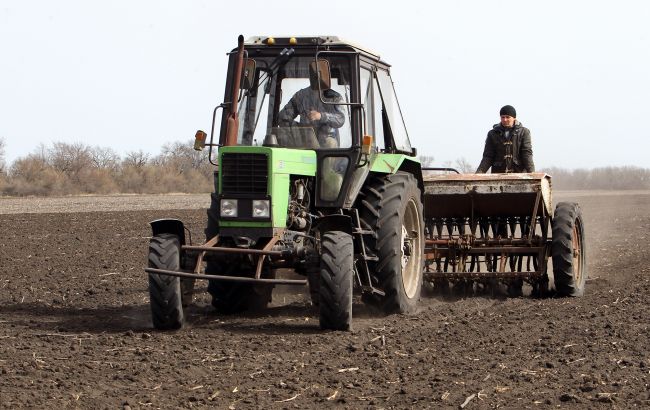 ANALYSIS FROM
The shocking rise in diesel fuel prices is forcing Ukrainian farmers to consider how to continue operating and survive. *Komersant* explored their views
The war in the Middle East continues, global problems with oil and petroleum products are intensifying, prices at Ukrainian gas stations and among wholesalers are staggering, the Antimonopoly Committee is still investigating the situation on the fuel market, and government officials, following a meeting with fuel market operators, are already stating that the market frenzy is gradually subsiding. But outside government offices, there is less optimism.
Everyone agrees that the problems with petroleum products caused by the war in the Middle East have driven up fuel prices. Expert Gennady Ryabtsev commented to the publication
“The second factor is, let’s say, the desire to profit from rising demand. Premium chains are raising prices much faster and by more than is economically justified. At the same time, the government has effectively acknowledged the fairness of the price hikes, and everyone has accepted the explanations provided by the premium chains. The only ones who will face problems are undoubtedly farmers, who have already begun spring fieldwork and are facing prices that are more than a quarter higher than in January,” the expert emphasizes.
The Price Noose
Average wholesale prices for diesel fuel rose by nearly 25% over the first two weeks of March—from 62 to 77 UAH. It is clear that Ukrainian farmers, on the eve of spring fieldwork, were counting on entirely different figures. Oleksandr Chubuk, head of the Kyiv Region Farmers’ Association and manager of the “Chaika-2” farm in the village of Zgurivka, explains:
“In the fall, the price was 45–47 hryvnias; by spring, it had risen to around 50 hryvnias. That’s the price we were counting on. There was also some artificial increase to 52 hryvnias. We managed to weather that somehow. But a couple of days ago, I was already being offered over 72 hryvnias. And the sellers even say: ‘Buy quickly, because prices are expected to rise even further,’” the farmer notes.
His colleague from Volyn— Ruslan Khomych, head of the regional Association of Farmers and Landowners—adds:
“Many farmers simply can’t afford to buy diesel fuel right now. So they’re draining the winter leftovers from their tanks and pouring them into tractors that spread mineral fertilizers to nourish the crops. You also have to understand that fuel isn’t often sold in bulk. And if it is, it’s more expensive than at the gas station. Fuel sellers can’t set a price right now. They’re just waiting to make a profit,” says the farmer.
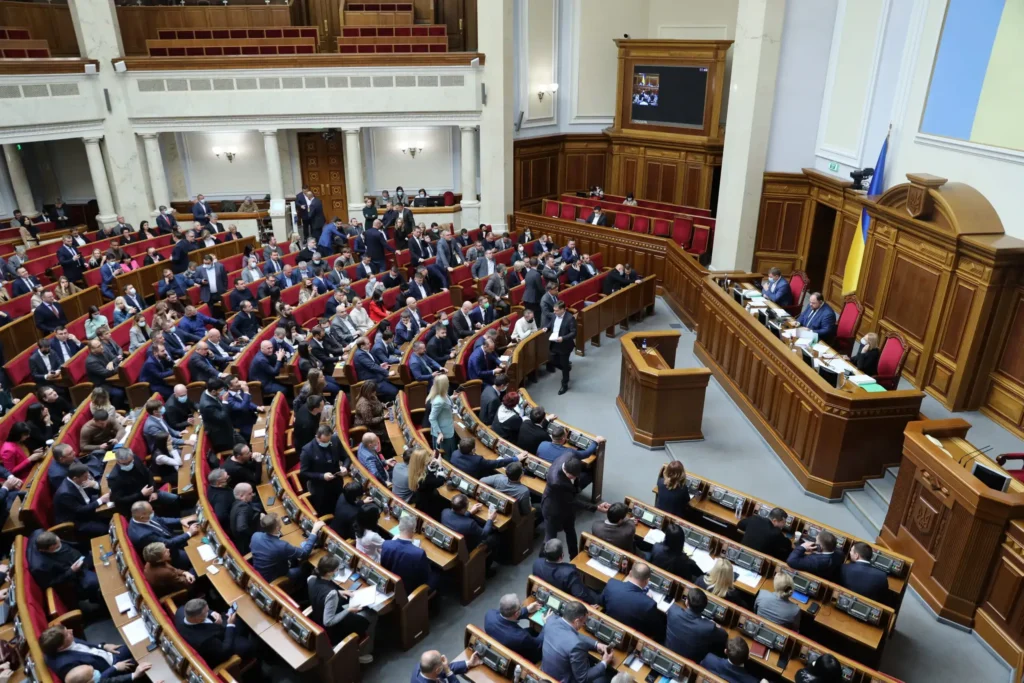
Pavlo Kyrylenko, head of the Antimonopoly Committee of Ukraine, who was summoned to the Verkhovna Rada a few days ago to provide explanations, cited several objective factors influencing prices. These include the Ukrainian market’s dependence on imports, increased demand for fuel amid a decline in supply and inventories, and rising costs for purchasing petroleum products and logistics. At the same time, he cautiously suggested that certain subjective factors may also be influencing the market.
Farmers are more categorical in their assessments. Alexander Chubuk, a farmer from the Kyiv region, continues.
“Of course, there’s speculation. For some, it’s a disaster, but for others, it’s an opportunity to take advantage and make money off of it. I remember very well how four years ago oil prices rose to $100, but back then diesel was 39. And now look—whether it’s already $100, or will be, or won’t be—but wholesale diesel already costs 72–75 hryvnias,” the farmer notes.
Planting season is a priority
When asked, “How are we supposed to keep working with diesel prices like this?” one of the publication’s interviewees said that he and his colleagues are thinking about buying some electric tractors somewhere in China, because you can’t plant much with diesel this expensive. Another farmer, jokingly—or perhaps seriously—said they would write a thank-you letter to Donald Trump with some very critical suggestions. But overall, farmers aren’t in the mood for jokes. Everyone is thinking about how to plant and where to save money. Alexander Chubuk, head of the “Chaika-2” farming cooperative in the village of Zgurivka in the Kyiv region, explains.
“Right now, everyone is trying to save as much as possible, cutting costs on everything, and even planning their farming processes to minimize trips to the field. But we’ll still have to plant—what else can we do? We’ve already fertilized the winter crops. I don’t think there will be a reduction in planting areas. We have to try to plant everything to make some money and cover these expenses. I’m even confident that the acreage won’t be reduced. But the quality of the farming process itself might be worse. Less fertilizer will be applied, and the farming process will be simplified. And because of that, there’s a chance that yields will be lower. It can’t be any other way, given our current financial situation,” the farmer notes.
Viktor Goncharenko, president of the Association of Farmers and Private Landowners of Ukraine, supports his colleagues in their readiness to sow and work despite such price increases.
“Right now, many farmers are also thinking about which crops to grow and what to sow to avoid operating at a loss. But I think everything will be planted, although the planting season will likely be delayed. And fuel prices will definitely affect production costs. Small producers use an average of 90–100 liters of fuel per hectare, so all of this will be factored into production costs, and consequently, the cost of the products themselves will rise. Spare parts and plant protection products have also become more expensive. Therefore, the price at which we will be able to sell the produce we’ve already grown is a big question mark,” the official notes.
But an even bigger question mark hangs over how long the war in the Middle East will last, how much further oil prices will rise, and what consequences this will have for the Ukrainian fuel market.
Author: Serhiy Vasylevych