Julian Assange is free: the story of WikiLeaks and its founder
25 June 2024 10:40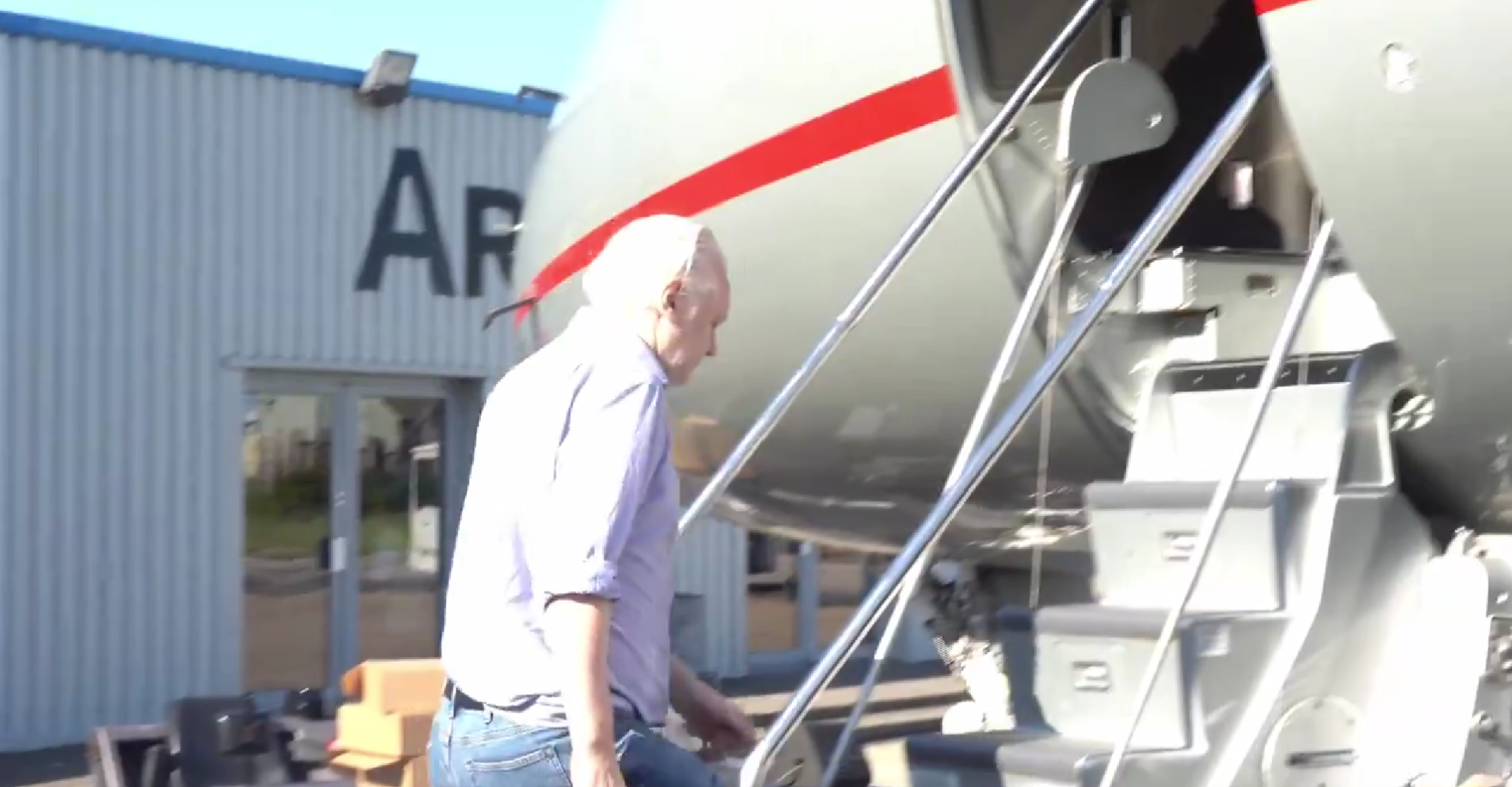
WikiLeaks founder Julian Assange left Belmarsh maximum security prison on 24 June after nearly five years in custody. He was granted bail by the High Court in London, after which he left the country. This was reported by the WikiLeaks publication founded by Assange, reports "Komersant Ukrainian"
According to WikiLeaks, Assange’s release was the result of a global campaign that brought together activists, press freedom advocates, lawmakers and leaders from different political camps, as well as the United Nations.
“This paved the way for lengthy negotiations with the US Department of Justice, leading to a deal that has not yet been formally finalised,”
– wikiLeaks reports.
Assange has spent more than five years in a 2×3 metre cell, isolated 23 hours a day. Now he will be able to reunite with his wife Stella and children, who have only seen their father behind bars.
“WikiLeaks has published groundbreaking stories about government corruption and human rights abuses, holding those in power to account. As editor-in-chief, Julian paid a high price for these principles and for the people’s right to know [the truth],”
– the organisation said in a statement.
Assange is expected to return to Australia, where his wife and children are waiting for him.

The life and struggle of Julian Assange
Julian Assange is an Australian journalist, programmer and activist, known as the founder of the WikiLeaks organisation. He was born on 3 July 1971 in Townsville, Australia. From a young age, Assange showed an interest in computers and hacking, which later influenced his professional career.
In 2006, Assange founded WikiLeaks, an international non-profit organisation that publishes classified documents obtained from anonymous sources. The website became famous in 2010 after publishing a series of leaks, documents about the wars in Afghanistan and Iraq, as well as US diplomatic cables. These publications sparked an international outcry and debate about freedom of information and national security.
Assange’s activities attracted the attention of law enforcement agencies. Immediately in 2010, he was charged with sexual offences in Sweden, which he denied. Fearing extradition to the United States because of his work for WikiLeaks, Assange applied for political asylum in 2012 at the Ecuadorian Embassy in London, where he lived for almost seven years.
on 11 April 2019, the Ecuadorian government cancelled Assange’s asylum and he was arrested by British police. The United States brought espionage charges against him and demanded his extradition. These charges were related to the publication of classified documents on WikiLeaks and could have resulted in a lengthy prison sentence if convicted.
Assange’s case is controversial around the world. His supporters see him as a fighter for free speech and government transparency, arguing that the prosecution of the activist violates freedom of the press. Critics, on the other hand, accuse Assange of being irresponsible and endangering national security by publishing classified documents.

The most resonant publications of WikiLeaks
“Collateral Murder (2010) – a video from a US military helicopter showing the killing of civilians in Iraq. This video caused a wide response as it showed the US military opening fire on a group of civilians, including Reuters journalists. Read more.
TheAfghanistan Dossier (2010) – more than 90,000 documents about the war in Afghanistan, which revealed details of military operations and civilian casualties. These documents showed the real scale of the conflict and its impact on the civilian population, which contradicted official statements.
TheIraqi D ossier (2010) – about 400,000 documents about the war in Iraq, including evidence of torture and killing of civilians. This publication was the largest leak of military documents in US history and revealed numerous cases of civilian abuse.
US Diplomatic Cables (2010-2011) – more than 250,000 diplomatic cables that revealed the backstage of international politics. These documents showed how the US assesses world leaders and negotiates with other countries, which caused a diplomatic scandal.
Guantanamo Bay files (2011) – documents on the detention and interrogation of prisoners at Guantanamo Bay prison.
US Democratic Party emails (2016) – leaked correspondence of the Democratic National Committee during the presidential election. This publication influenced the course of the US election campaign, prompting accusations of election interference.
Vault 7 (2017) – documents on CIA hacking tools. This publication revealed a wide range of cyberweapons used by the CIA for surveillance and hacking, which sparked a serious debate about the limits of state surveillance.

Ukraine on WikiLeaks
WikiLeaks has published a significant number of documents related to Ukraine, which have revealed many aspects of the country’s domestic and foreign policy.
Some of the most important disclosures concerned Ukrainian oligarchs and politicians. In particular, a report was published on a meeting between former US Ambassador William Taylor and oligarch Dmytro Firtash in 2008. The document claimed that Firtash had acquired a 61% stake in the Inter media group and planned to buy a controlling stake in Nadra Bank.
WikiLeaks also disclosed information on arms trade involving Ukraine. The United States expressed concern about Ukraine’s sale of equipment to Iran that could be used to manufacture ballistic missiles, as well as arms exports to Myanmar.
The published cables contained information about relations between Ukrainian and Russian politicians. In particular, according to the documents, former President Leonid Kuchma claimed that “the Russians have enough leverage to control Tymoshenko”. Another document revealed the opinion of the then Ukrainian ambassador to Russia, Konstantin Gryshchenko, that Vladimir Putin “personally had a low opinion” of Viktor Yanukovych and preferred to work with Yulia Tymoshenko.