CBAM: a new barrier for the Ukrainian economy and exports to the EU
9 February 17:15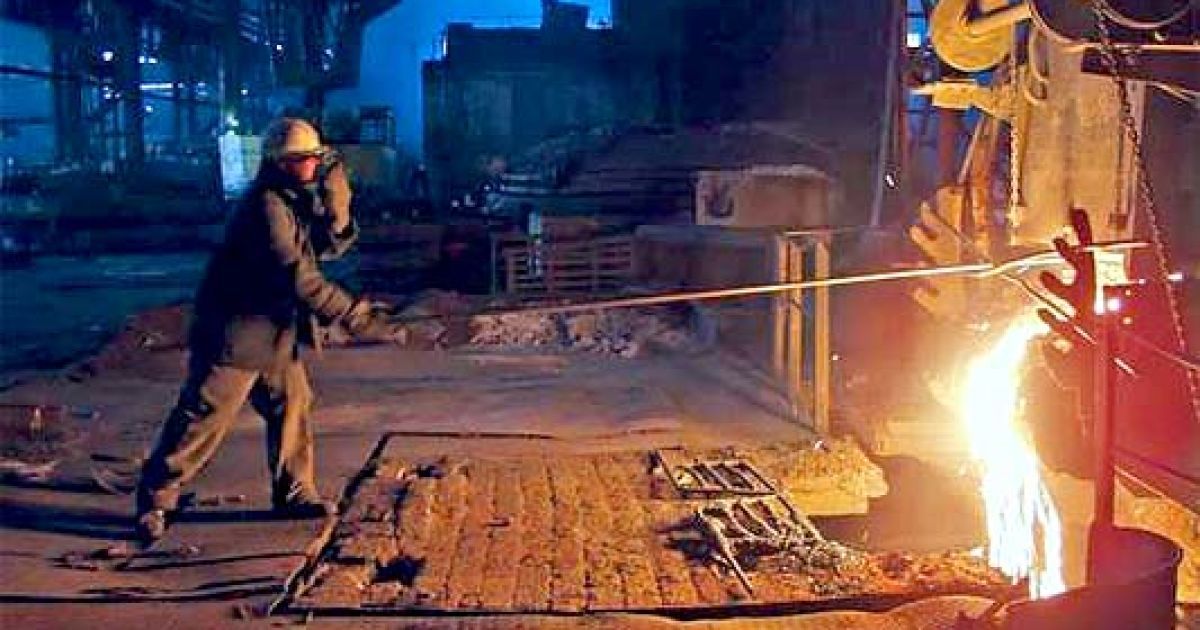
The Ukrainian metallurgical industry risks losing a key sales market due to the full implementation of the Cross-Border Carbon Adjustment Mechanism (CBAM) in the European Union.
This was reported by "Komersant Ukrainian" with reference to Liga.net.
It has come into effect for our country as well, despite the fact that we have the right to defer it, but no agreement has been reached on this yet. Meanwhile, CBAM could deal a critical financial blow to Ukrainian manufacturers.
Metallurgical enterprises are already reporting the first consequences. In particular, ArcelorMittal Kryvyi Rih closed one of its rolling mills, explaining this by the increase in costs due to CBAM. The tax in the EU can reach €86-100 per ton of emissions, while in Ukraine the emission fee is about UAH 30 per ton.
According to GMK Center estimates, Ukraine could lose up to $5 billion in export revenues over five years. The problem is that most Ukrainian factories operate on outdated equipment, and there are no opportunities for rapid modernization in wartime.
Experts emphasize that the only real way to reduce CBAM payments is through large-scale modernization. However, according to Dragon Capital analyst Denys Sakva, complete decarbonization requires billions in investment and years of work, which is currently unattainable for Ukrainian companies.
The situation is further complicated by the structure of exports: about 80% of Ukrainian metal is supplied to the EU, and metallurgy, together with the mining industry, accounts for about 7% of GDP, 15% of exports, and up to 30% of freight traffic. Metinvest notes that Ukrainian producers are in a worse position than other exporters to the EU and do not have alternative capacities to redistribute high-emission products to third markets.
The company emphasizes that it is critically important for Ukraine to obtain a special or transitional regime for the application of CBAM from the EU.
The government confirms that dialogue with the European Commission is ongoing and that the Ukrainian side is analyzing documents on the mechanism’s impact on the economy. A meeting with European Commissioner for Climate Action Wopke Hoekstra is also planned. However, no specific dates have been announced yet.
Meanwhile, it is not only metallurgists who are preparing for possible losses: the cement and chemical industries, aluminum and electricity producers are also affected by CBAM. Without systemic solutions and financial support, the risk of losing the EU market could turn into large-scale economic consequences for the country.
What preceded this
As is well known, the European Commission’s new proposal to strengthen the CBAM mechanism still does not provide for an exemption for Ukraine, despite the war. The EC has stated that the impact of CBAM on the Ukrainian economy will be “minimal.”
However, these assessments are detached from reality, says Stanislav Zinchenko, director of the GMK Center and chairman of the EBA Industrial Ecology Committee. Ukraine remains the largest exporter of CBAM goods to the EU in terms of physical volume. Overall, CBAM goods account for about 2% of Ukraine’s GDP.
Earlier, Ukrainian business ambassador and economic expert Andriy Zablovsky stated that despite the European Commission’s formal refusal to postpone the introduction of CBAM for Ukraine, Ukraine still has a full and legal right to such a postponement, so we must intensify negotiations with the European Commission to exercise this right.