The energy crisis has not changed plans: most Ukrainians are staying in Ukraine
28 January 16:29 POLL
POLL
Regular enemy attacks on Ukraine’s power grid, coupled with the coldest winter in four years, are making daily life very difficult for Ukrainians. Despite this, problems with electricity, water supply, and heating are not yet a reason for most people to change their place of residence. A survey conducted by Gradus in January 2026 showed that most respondents do not plan to relocate unless the situation becomes critical. Only in extreme cases does a small proportion of people consider temporary departure with a return after the situation is resolved, according to "Komersant Ukrainian".
People are adapting to the crisis conditions and do not plan to leave en masse
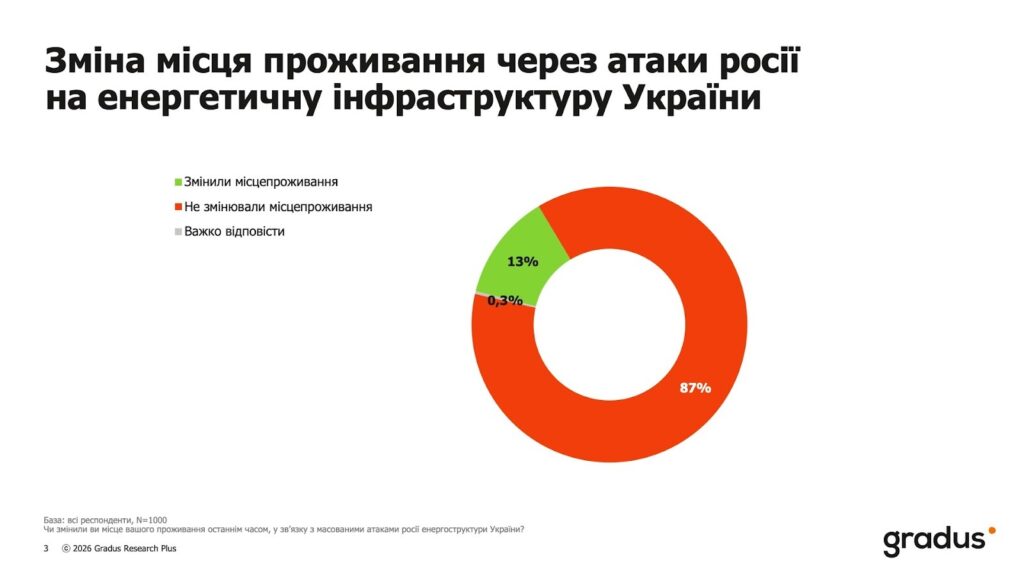
The survey showed that 87% of respondents did not change their place of residence due to attacks on energy infrastructure and the resulting domestic difficulties. The most mobile were residents of the east and Kyiv, the regions most affected by attacks on energy infrastructure. Twenty-one percent and 18% of respondents, respectively, temporarily moved from these regions.
Among the 13% who were forced to migrate due to energy shortages, 60% moved within their region, and another 50% moved to another region in Ukraine. Most of those surveyed intend to return to their permanent place of residence after the weather warms up and as soon as the security situation allows. However, a significant proportion of residents of the eastern and northern regions (16% and 22%, respectively) do not plan to return yet.
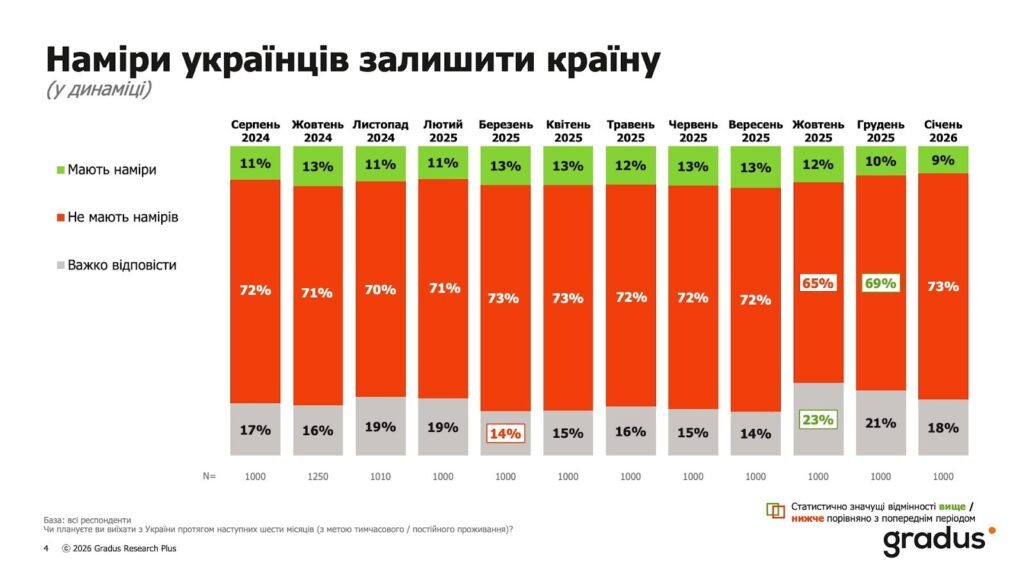
Less than 10% of respondents intend to leave Ukraine within the next six months, which is consistent with the migration intentions reported in previous Gradus surveys. Thus, the intense attacks on energy infrastructure have not led to an increase in migration intentions.
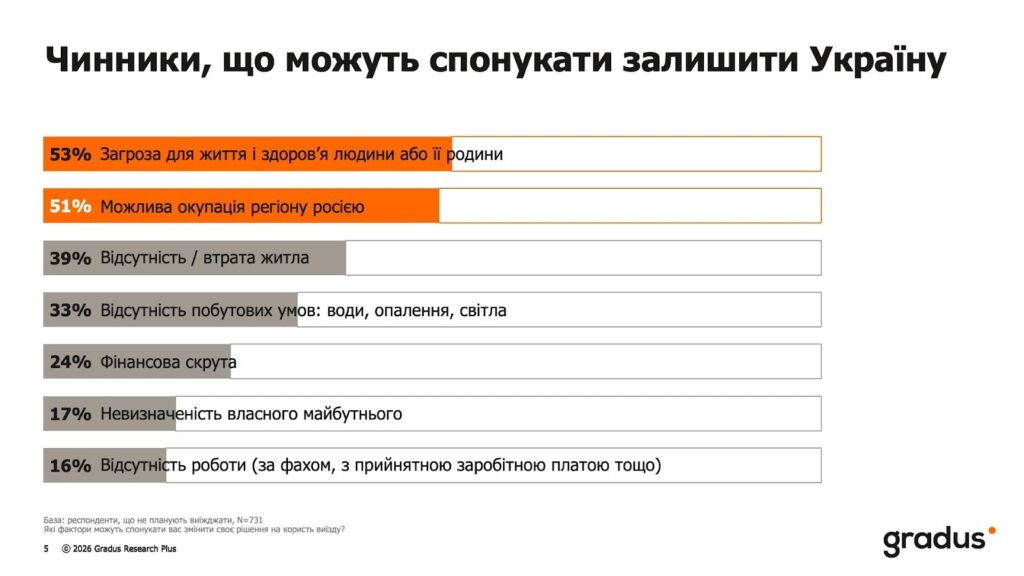
Among the factors that could prompt a change of heart in favor of leaving, the most significant are threats to one’s own life and health or those of family members, the possible occupation of the region by Russia, loss of housing, or lack of basic amenities such as water, heating, and electricity. At the same time, the lack of basic amenities is still not the primary reason for considering relocation.
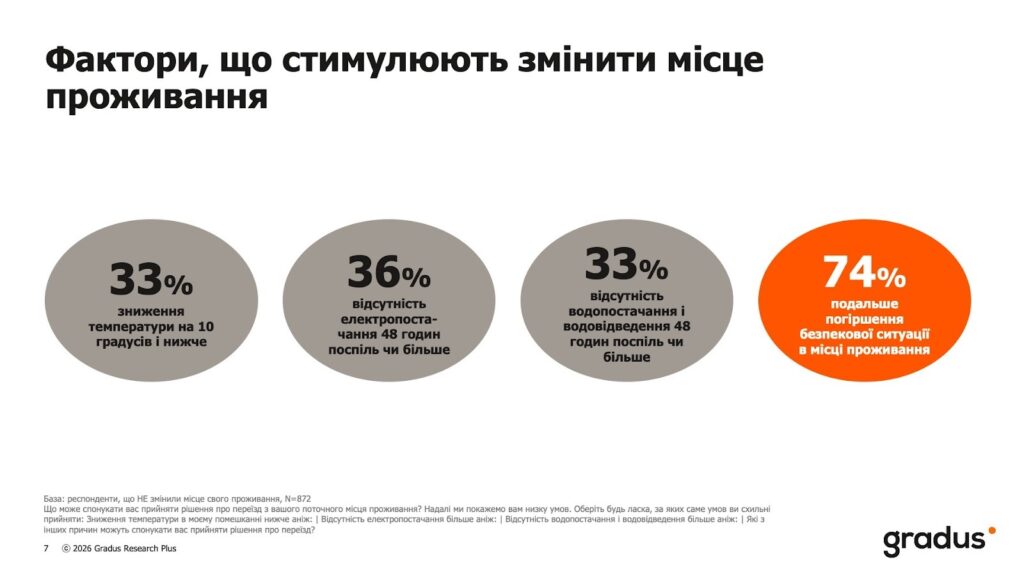
If the situation and living conditions continue to deteriorate, less than half of respondents (43%) are ready to change their current place of residence. Factors that may prompt such a decision include a drop in temperature in the home below 10°C and a lack of electricity, water supply, or sewage disposal for more than 48 hours in a row. However, as before, the only compelling reason to leave one’s current place of residence remains a further deterioration in the security situation.
A significant proportion of respondents prepared their homes in advance for a difficult winter by installing the necessary equipment or even having autonomous power supplies. However, the same proportion do not have the necessary equipment and are completely dependent on public utilities.
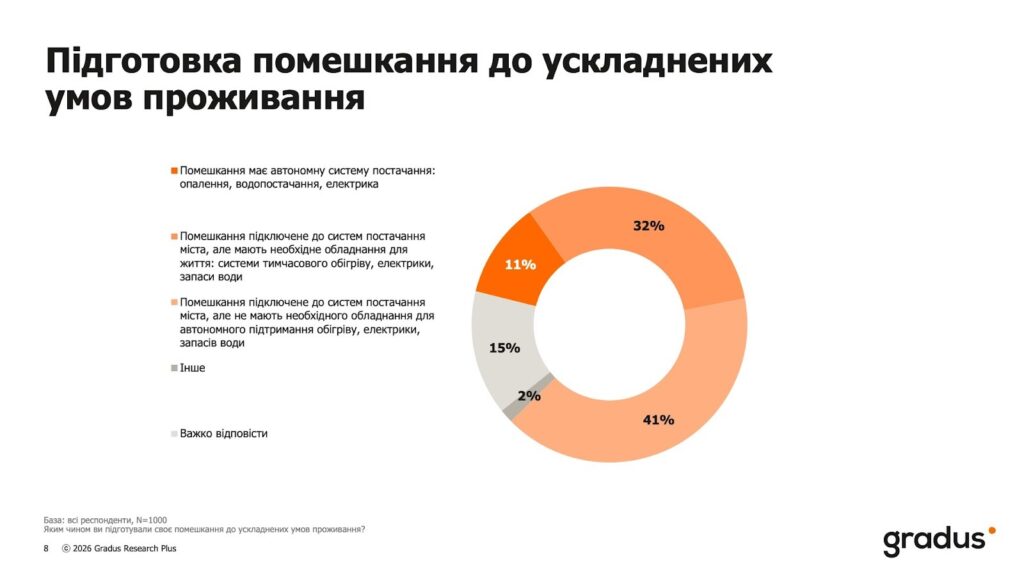
“Ukrainians who have chosen to stay at home during the war are not inclined to change their decision under the influence of such difficult circumstances as the lack of living conditions and cold weather. Even a possible radical deterioration in the quality of life could cause only a third of respondents to leave, and even then only for a short period of time. This indicates that Russia’s energy terror tactics are making life significantly more difficult for Ukrainians, but are not a factor that could cause a repeat of the wave of migration we saw in the first months of the full-scale invasion. After this winter, people will be even more careful about preparing their homes and daily lives for the next cold season,” says Yevheniia Blyzniuk, a sociologist and founder and CEO of the research company Gradus.
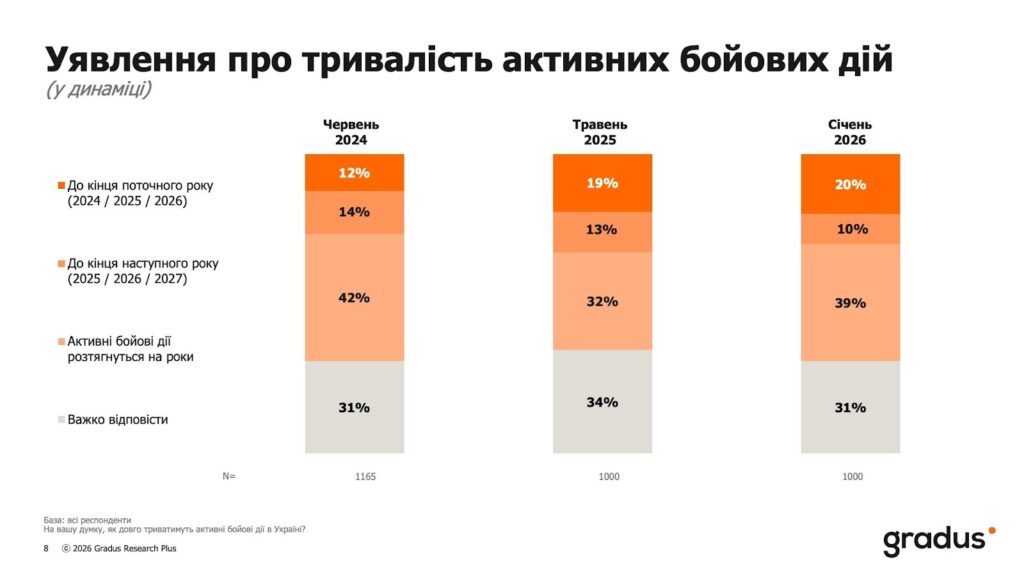
Overall, expectations of a long war remain unchanged. This indicator is much less responsive to any peace initiatives or negotiations than it was at the beginning of 2025.
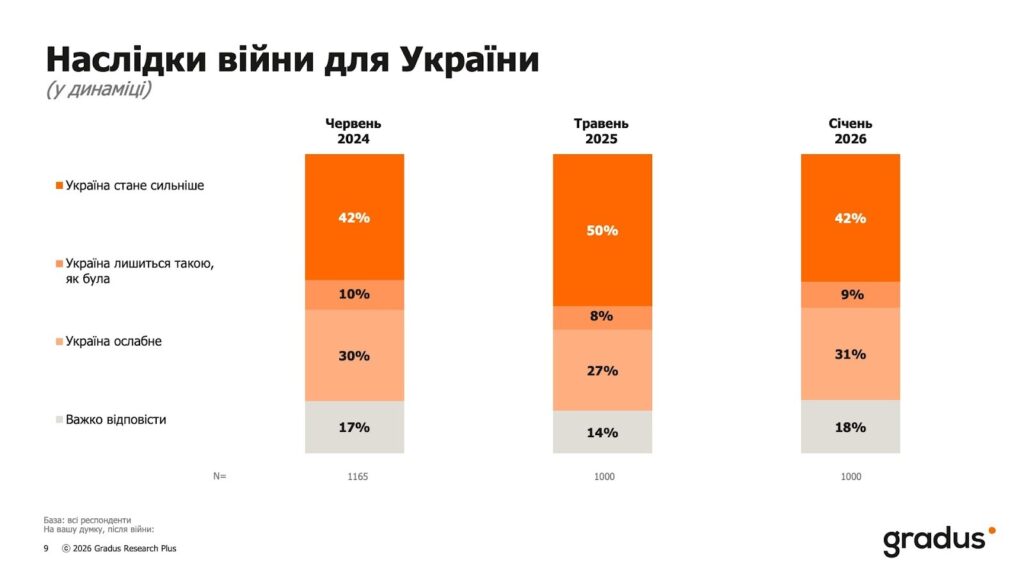
However, despite the harsh winter and the prospect of a long war, a significant proportion of respondents remain optimistic and expect Ukraine to emerge stronger as a result of this war.
The full research report is available on the Gradus website at the link.
The survey was conducted by the research company Gradus using a self-completed questionnaire in the Gradus mobile app. Target audience: men and women aged18–60 living in Ukrainian cities with a population of over 50,000, excluding temporarily occupied territories and areas of active combat operations. Period of conduct: January 22, 2026. Sample size: 1,000 respondents.