Erdogan lost to the fridge: what his party’s defeat means
8 April 2024 14:34
In Turkey, the defeat of President Erdogan’s ruling party in the local elections showed that attractive ideas are not enough to succeed. They need to be supported by economic achievements. Erdogan lost to the fridge, but he has a chance to correct his mistakes and overcome the opposition.
Turkish democracy and the role of Istanbul
The ruling Justice and Development Party lost the municipal elections in Turkey. After the 2019 elections, the main opposition force, the Republican People’s Party, controlled the four largest cities: Ankara, Izmir, Antalya, and the largest metropolis of Istanbul, the president’s allies also lost Bursa, an industrial centre on the Sea of Marmara, in the current race.
The mayoral election in Istanbul is the main political battle in the local elections. Officially, the city’s population is 15 million, but in reality it is 20 million, or a fifth of the country’s population. Istanbul is a continuous large-scale construction of housing and infrastructure. This is the Istanbul metro, which grows by several kilometres every year and adds at least 3 stations.
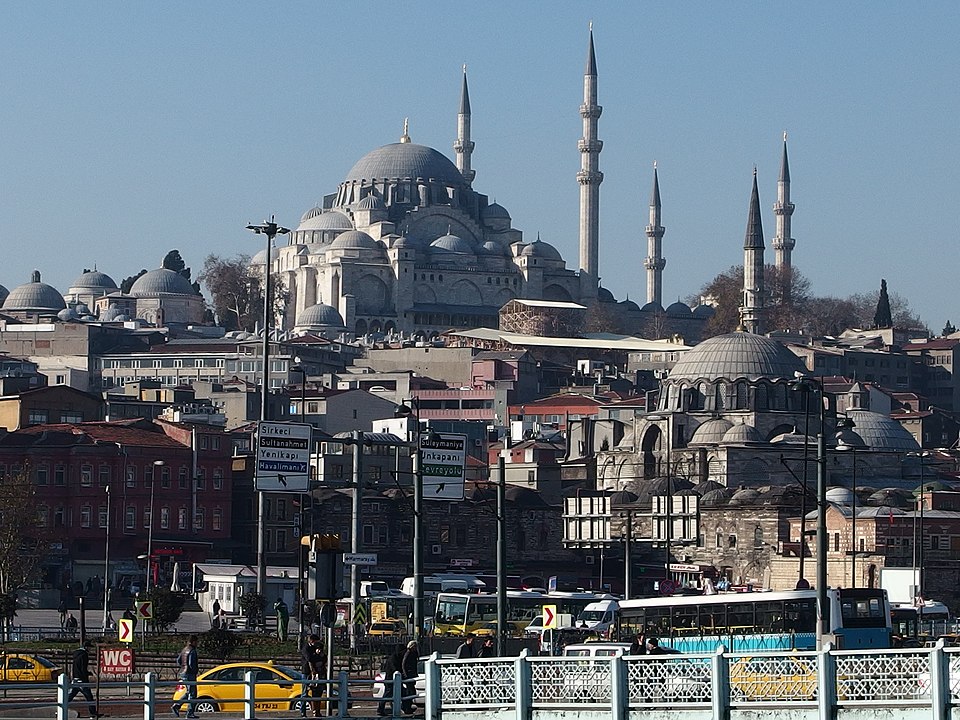
Eugenia Gaber, a Turkologist and senior fellow at the Atlantic Council’s Centre for the Study of Modern Turkey at Carleton University, told Komersant ukrainskyi  reminded that control over the Istanbul city government also means control over the use of the Istanbul Canal budget ($10 billion), as well as large-scale reconstruction and rebuilding of the metropolis, and the construction of hundreds of high-rise buildings.
The mayor of Istanbul is usually the future president of the country. Turkey is a presidential republic with a strong democratic system. Kazakhstani public figure Serikzhan Mambetalin, who has lived in Turkey for many years and is well versed in Turkish politics, in a commentary to Komersant ukrainskyi noted that the political system of this country sometimes seems to be overly democratic.
“During the municipal elections, not only city mayors are elected, but also district mayors and even mukhtar (neighbourhood leaders). Everyone runs their own election campaign. On a national scale, this is a very significant amount of money,”
– said Mr Mambetalin.
“Politician No. 1” versus the “Father of Turks”
The current situation in the country is largely determined by the No. 1 politician, the president and co-founder of the ruling Justice and Development Party. Recep Tayyip Erdogan was the mayor of Istanbul in 1994-1998. Later, he became the head of the government and then the country. In total, Erdogan has been ruling the country as prime minister and president for over twenty years. He has enormous powers after the reforms of 2014 and 2017 in a country of almost one hundred million people and the 19th largest economy (according to the International Monetary Fund).
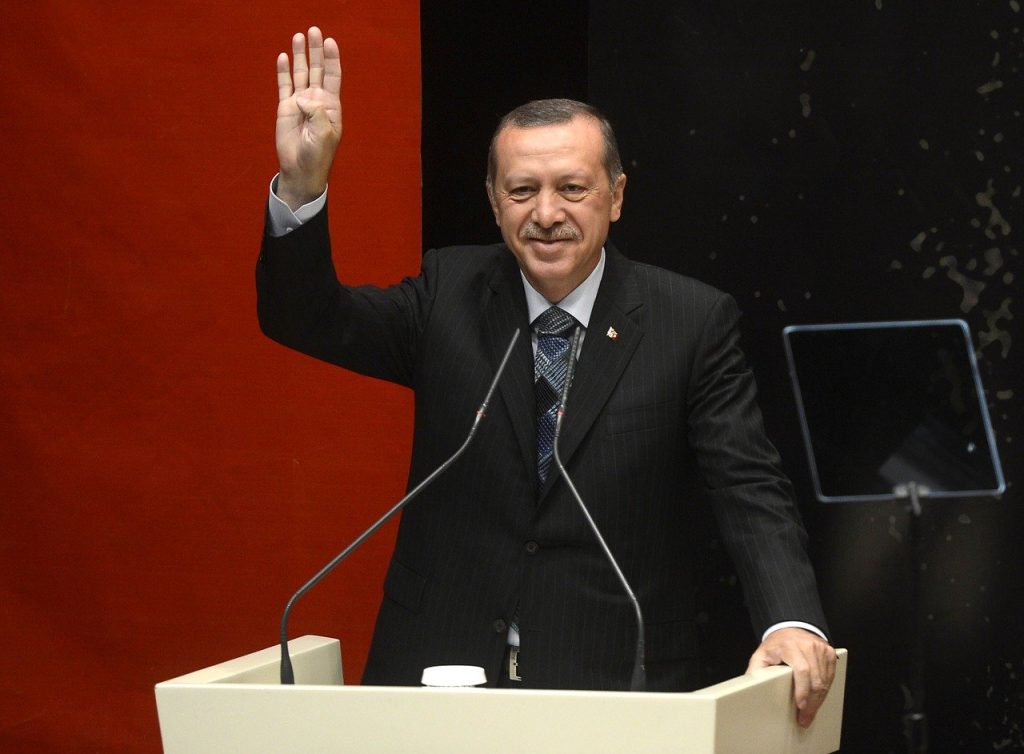
Erdogan has come a long way from being a young opposition politician who defended conservative values in a secular country to becoming the leader of Turkey, who is reckoned with by the world’s largest players. After all, in addition to its significant economic potential, Turkey has one of the most powerful armies in the region. It is constantly improving its combat skills in the war against the Kurdish Workers’ Party units. In the 90s, Erdogan had to spend several months in prison for “inciting religious hatred”. He represented the religious Welfare Party in the city government, which was eliminated in a military coup for “attempting to re-Islamicise” the country.
Turkey’s modern history is marked by the struggle between supporters of a secular, pro-Western course, represented by the People’s Republican Party (CHP), and the revival of religious Islamic values. This direction is represented by the current president’s Justice and Development Party. The CHP is the ideological heir to the founder of the modern Turkish state, Kemal Pasha Ataturk, and is therefore also known as the Kemalists. After the fall of the Ottoman Caliphate, Turkey could have ceased to exist: the Entente troops were a few kilometres from Ankara. It was Ataturk who led the resistance to foreign occupation in the early 20s, organised the defeat of the Entente’s combined forces and carried out tough reforms to westernise the country.

Among Ataturk’s most important reforms was the separation of religion and state, which led to absurd decisions such as the ban on men’s headwear, the fez. Borrowings from the Arabic language were carefully purged from the Turkish language, and religious figures were subjected to repression. A telling fact: back in the 90s, in Turkey, believing female students could not come to university classrooms in hijab. And the military, in accordance with the Atatürk Constitution, could overthrow the government at any time as soon as there was a threat to the secular structure of the state. This right of the military was enshrined in the basic law.
Erdogan overcame the resistance to the system built by Ataturk and even managed to partially dismantle it: the army lost its special rights to interfere in politics. And women covered in accordance with the canons of Islam now look quite normal both on the streets and in public institutions and educational establishments.
Since its founding in 2001, the AKP has relied on the religious Turkish “street”. It is called “Ikhwan” after the name of the popular Islamic movement “al Ikhwan al Muslimin” – “Muslim Brotherhood”, which emerged in the twenties of the last century in Egypt. The Ikhwanis believe it is possible to integrate into the structures of Western democracy to spread Islam and its values, and also rely on the social activity of Muslims. “The Arab Spring, a series of revolutions in Arab countries at the beginning of the 21st century, was mainly the work of the Ikhwan. In Arab countries, the revolutions were suppressed by post-colonial forces oriented towards Europe and the United States. In Turkey, however, the Ikhwanist AKP party has successfully ruled the country for over twenty years. And only in the last few years has the economy been suffering and the standard of living of the general public has been declining.
Ideology matters
All elections in Turkey – from presidential to municipal – are a struggle not only between individuals, but also between ideologies. Yevgeniya Gaber reminded:
“Even in the current economic climate, ideology is important. And to a large extent, the pro-government election programme is based on the fact that if a voter wants to protect traditional Muslim values, he or she should vote for the government. Because if the opposition comes in, there will be alcohol and gay pride parades at every turn.”
Ideological attitudes also determine Erdogan’s foreign policy priorities. Turkey has not joined the anti-Russian sanctions imposed by the US and EU over Moscow’s aggression against Ukraine. In terms of worldview, Erdogan finds Western liberalism more hostile than the hypocritical promotion of “traditional values” by Kremlin ideologues. Ankara harshly criticises Israel and provides political and humanitarian aid to the Palestinians of Gaza. At the same time, Erdogan supports the Syrian opposition, which is fighting Bashar al-Assad and is being bombed by the Russians. Ankara does not extradite fugitives seeking refuge in Turkey to the Russian FSB. Erdogan periodically emphasises that his country will never recognise Russia’s occupation of Crimea and strongly supports the Crimean Tatars persecuted by Moscow. However, Erdogan does not go for an outright confrontation with Putin, trying to play the role of a mediator between Ukraine and Russia.
“As long as Russia is strong enough, Turkey will not do anything anti-Russian…. Some symbolic things, but without the risk of irrevocably damaging relations,”
– the former Consul General of Ukraine in Istanbul, MP Bohdan Yaremenko told Komersant ukrainskyi
Serikzhan Mambetalin, an expert on the country’s domestic political cuisine, reminds us that the traditional electorate of Erdogan’s party is predominantly from the conservative countryside. Among the most reliable supporters of the AKP are rural areas of central Anatolia. It was there that the defeat in the March 2024 elections was most painful for Erdogan. When it became clear that the ruling party would lose the municipal races, the president admitted in his speech that he had failed to achieve his goal. He promised to draw the appropriate conclusions.
Observers say that conclusions should have been drawn after the 2019 elections. Back then, Ekrem Imamoglu, representing the People’s Republican Party, won the mayoralty of Istanbul. Imamoglu won his first mayoral election by a narrow margin. This was the basis for the Central Election Commission’s decision to reconsider the results and hold a second election. Outraged by the government’s interference in the election, Istanbul residents more actively supported Imamoglu, and he won a much more convincing victory the second time around.
“This is the second defeat of the AKP, the Muslim Brotherhood. The first one was in 2019, when Imamoglu’s victory was cancelled, and the second time he won by a large margin, more than 800,000 votes. The current defeat was expected, because in the 22 years of AKP rule, the staff has changed, there are no new ideas, no new investments. And the leader is tired, he is sick. He is not able to reach out to society with new ideas about the country’s future. After all, the economy is in an extremely difficult state,”
– said a writer and translator Mayis Alizade, who has been living in Istanbul for 30 years.
He stressed that in order to get new loans, Turkey needs new projects that the current government cannot offer at the moment. One of the most pressing problems is the rapid fall of the Turkish lira, which is hurting the budgets of Turkish families.
The victory of the fridge over traditional values
Gultekin Hajibeyli, a former member of the Azerbaijani parliament who lives in Stamboul, in a commentary to Komersant ukrainskyi named a number of factors that, in her opinion, were decisive in the victory of the refrigerator over the conservative ideology of the AKP. These include social injustice, corruption, protectionism that enriches the wealthy and further impoverishes the poor, and millions of Syrian refugees.
“The low participation rate of those who traditionally voted for Erdogan and his party was decisive in the election. Many pensioners ignored the vote. Their motive was the government’s disregard for their interests, as the government raised salaries for officials to compensate for inflation, while pensioners did not receive such compensation. Whether Erdogan will be able to stop the downward trend is a difficult question. In the current state of affairs, it will continue, and there are no signs of improvement for the Turkish economy,”
– said Ms Hacibeyli, who has been observing the deteriorating situation in Turkey up close.
The economic downturn and the current victory increases the opposition’s chances in the next elections, which are scheduled for 2028. However, Hacibeyli does not rule out early elections if the situation does not improve in the near future. The situation can be changed for the better with large-scale injections into the economy. Erdogan is due to pay an official visit to the United States next week. However, Ankara’s relations with Washington remain difficult. Therefore, the Turkish leader cannot count on economic support from the United States. Potential donors could be the Gulf countries, which have huge profits from the sale of hydrocarbons. The most likely is Qatar, which is traditionally focused on supporting the Muslim Brotherhood around the world.
Author: Anvar Derkach