Evacuating dogs under Grad: what are volunteers and military ready to do to save animals in hot spots?
27 June 2024 15:30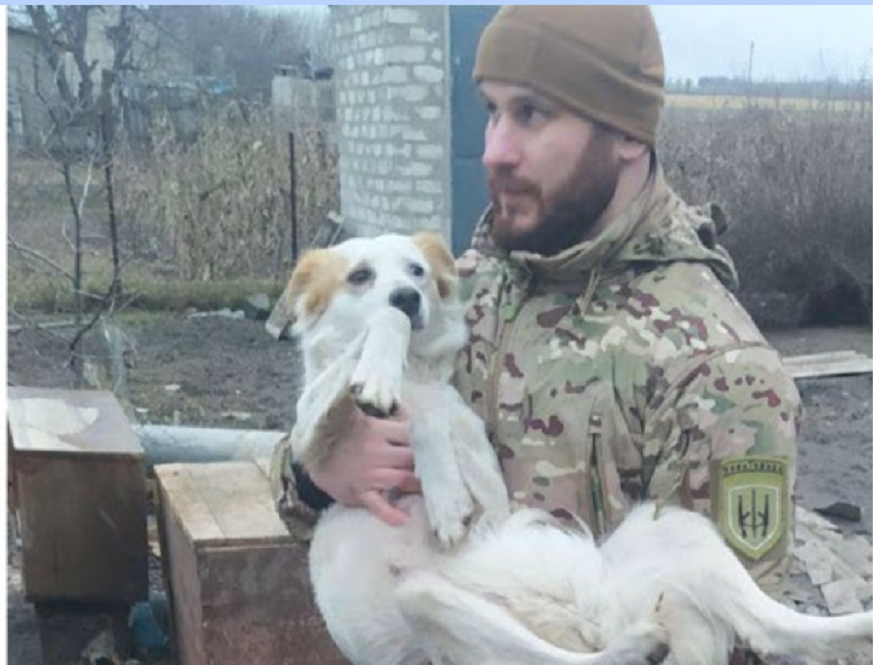
Russia’s full-scale invasion has dramatically increased the workload of volunteers and animal rights activists. They are amazingly brave and risk their lives when they rescue animals under fire and under fire to bring them to safe places and urgently set up new shelters. The military also rescue animals during combat missions.
- [Good afternoon, do you have a few minutes?
- [Dogs barking in the background – ed.] Oh, I don’t have time, I have so many applications, I have to get on the road and my car broke down, it’s hard, I feel like I’m the only one in the whole city.
On the other side of the phone is Yurii Kovbasa, the head of the Zaporizhzhia Animal Protection Service “Chance”. His only opportunity to communicate is on the way to the next evacuation. He works 24 hours a day, 7 days a week. Orikhovo, Mala Tokmachka, Novodanilovka, Gulyaypole – to rescue the four-legged animals, he often has to travel several kilometres from the ground or to villages where there are no more people. After such rescue operations, the military often tell Yuriy, “man, you were just lucky to survive.”
“We stopped in Novodanylivka in the evening. It was dark, so we turned down the headlights. There was no connection, we were blindly looking for a house with an abandoned dog. We found a completely broken house with one dog. I poured some food for him, pulled a stick and drove the car. And the military told us later: “Are you crazy? They saw you [Russians – ed.]… You were just lucky. Or they ran out of shells,” says Yurii Kovbasa.
Sometimes, he has to deliver food to dogs in the grey areas. Yurii recalls how they stopped in Huliaypole:
“We brought food. And two cluster bombs hit us, about 50 metres away. We were saved by a house that covered us.”
HOW TO TAME A FRIGHTENED ANIMAL?
The head of the animal protection organisation Chance says there is no algorithm for taming an animal in extreme conditions. Everything is individual. The main thing is not to be afraid.
“You won’t be able to take those dogs,” I am told during the next evacuation. “We recently arrived, and the dogs miraculously survived. They are terrified. There is no owner, the neighbours have been trying to tame them for a month, but it didn’t work!” I pulled the dog out of the kennel where he was hiding in a minute and took him to the car. I’m just not afraid of them,”
–says Yuriy Kovbasa.
Among the main recommendations is to remain calm, asanimals can sense people’s emotions, so it is important not to add additional stress. A gradual approach to avoid sudden movements and loud sounds. Offer food and water. This can help to gain the animal’s trust. If possible, provide shelter. It can be a box or other secluded corner where the animal can hide. The most important thing is to be attentive to the animal’s needs and act with kindness.
The head of the Zaporizhzhia Animal Protection Service “Chance” also shares the problems that exist in the shelter:
“There are not enough people. And most importantly, we need a new territory for the shelter. Now it is located on the territory of a dacha co-operative. 250 dogs in one place. Many residents do not like it. But it’s a war, we need to help everyone, I keep explaining,”
– says Yurii Kovbasa.
FROM DOGS AND CATS TO FISH, PARROTS AND GEESE: KHARKIV VOLUNTEERS SAVE ALL LIVING THINGS
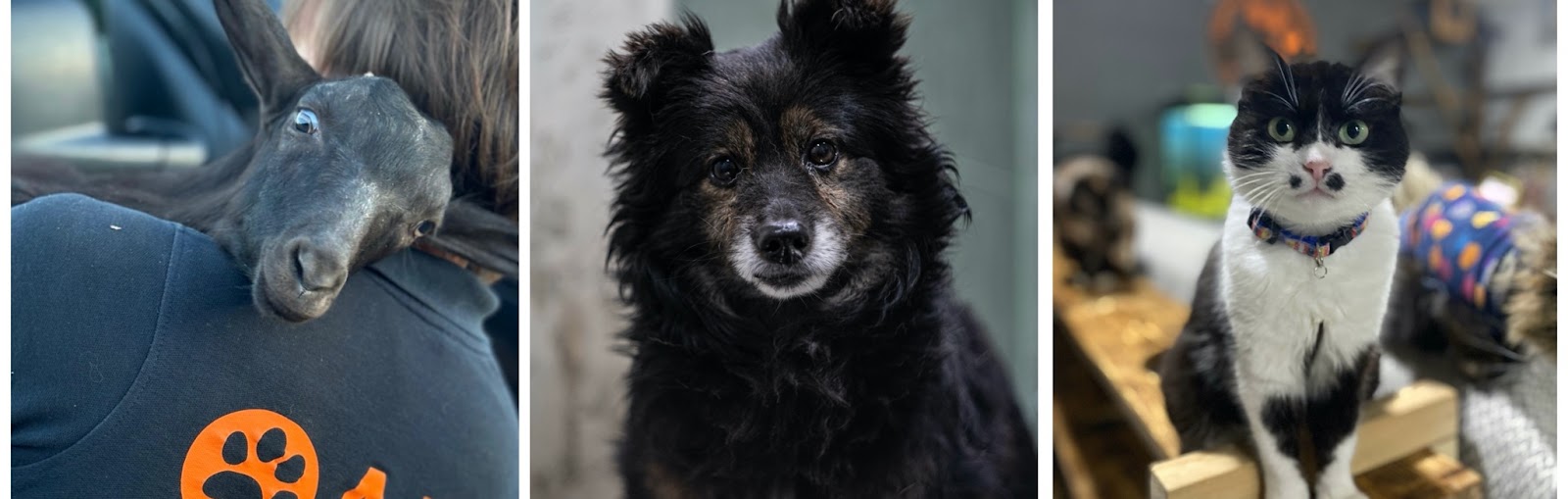
More than 16 thousand rescued animals during the full-scale invasion! The NGO Animal Rescue. Kharkiv” works continuously. Even after the destruction of their shelter by the Russians during the offensive on Kharkiv region in 2022, they did not give up. Yaryna Vintoniuk, Communications Manager, proudly tells us about the work of the volunteers specifically for
Where did you have to evacuate the animals from?
We have expanded our capabilities, and for two years now we have been rescuing animals from the front line, from hot spots, and from the occupied territories. These are Donetsk and Kharkiv regions, we worked in Kherson when the Russians blew up the dam, and we worked in Sumy region.
How does the evacuation process work?
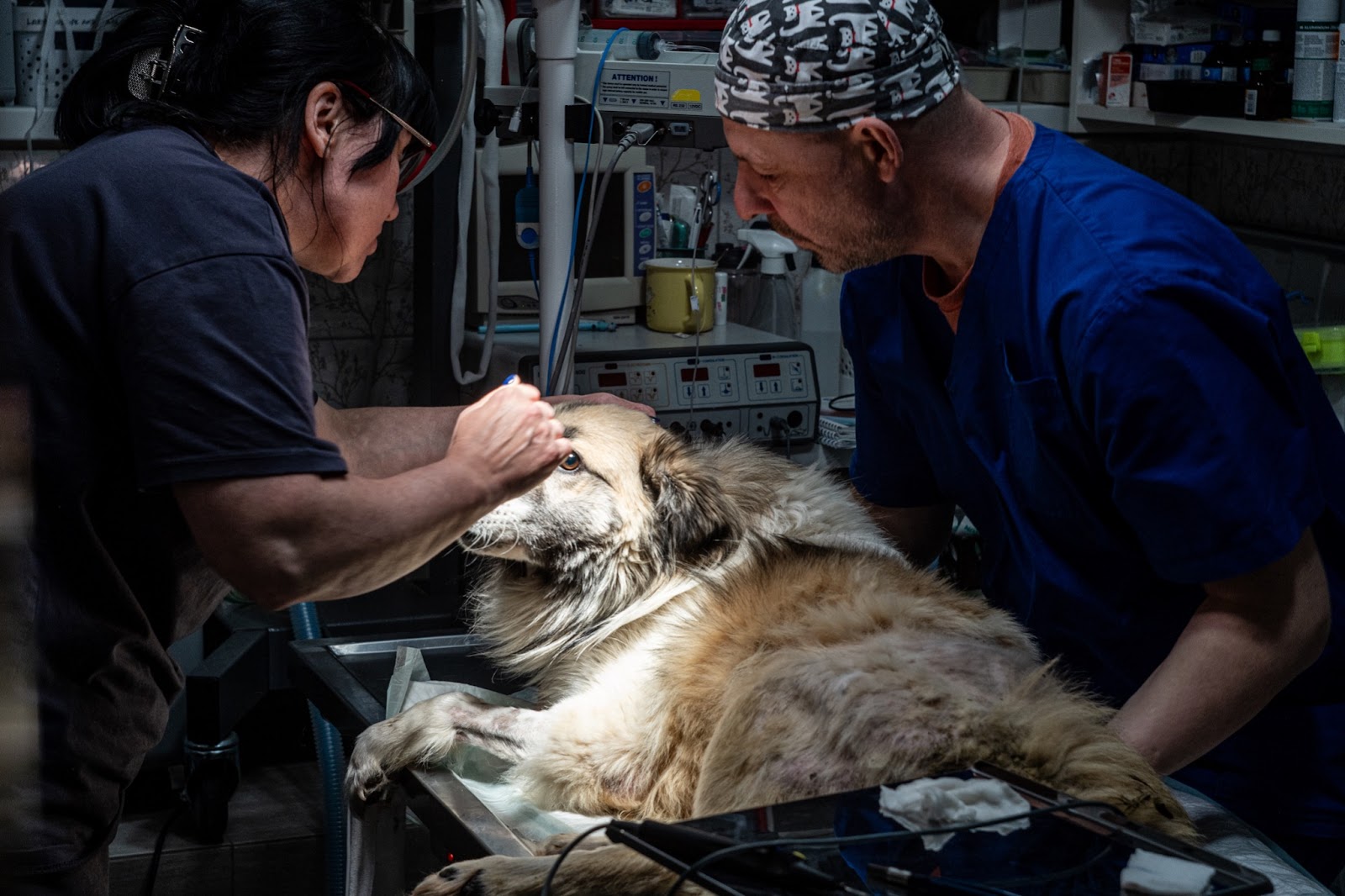
Anyone can call the hotline. We record requests and build routes. The main direction is the eastern front, then according to the situation. We receive a lot of applications from civilians as well as from the military who remain in the destroyed settlements. We respond to requests, but if it is a settlement that has already been destroyed or is in the hot phase of destruction, and we see animals abandoned on the street, we take them away as well. Then we transport the animals to Kharkiv. We have a veterinary clinic that serves only stray animals that we rescue. Here we provide medical care, inpatient treatment for those who need it, carry out complex operations, collect bones, and try to put as many as possible back on their paws.
Are there any restrictions on who can be rescued and who cannot?
Most of them are dogs and cats, as well as domestic animals: horses, cows, calves, pigs, geese, chickens. There are also small ornamental animals – parrots, chinchillas, and decorative rabbits. We also rescued fish from Kostiantynivka, which are now in our rehabilitation centre. That’s why we have different animals.

Kharkiv region is in the enemy’s crosshairs. Is it possible to organise safe places for animals?
We have a rehabilitation centre for cats and fish, where they come after treatment or quarantine. It is a former bomb shelter. And they stay there until they find a family. But for dogs, we rent premises. And because the place where we are today was shelled several times at the beginning of the year, and one of our employees was wounded, these conditions do not allow the animals to fully recover, because they keep hearing shelling, getting scared, trying to escape. So now we are looking for land for a shelter somewhere near Kharkiv.
Also, the NGO “Animal Rescue. Kharkiv” invites everyone to visit the shelters. Yaryna, the communications manager, is convinced that animals need people’s attention first and foremost.
EVACUATION OF DOGS UNDER HAIL
Our military cannot remain indifferent to abandoned animals either.
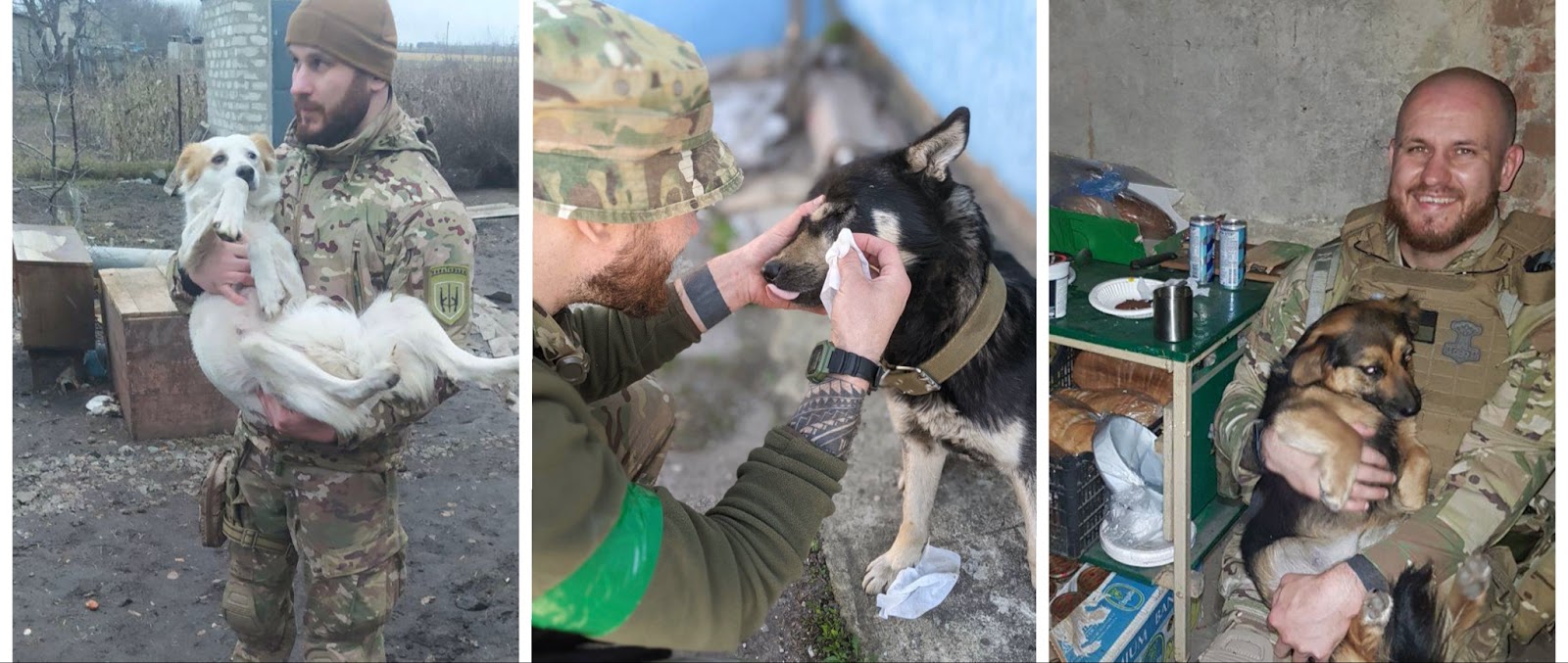
Thecommander of a separate fire support unit “Blind Fury” of the Ukrainian Volunteer Army with the call sign “Mowgli ” saved about two dozen dogs on his own. He also saved more cats than he could count. He even saved a horse! He says it is not his duty, he has to fight. However, the abandoned animals in the frontline areas and hot spots are still touching him.
“Our situation is local. We stop by a house because we have to perform a task in that village. We see that there is an abandoned dog, it sticks to us because it sees people, and we don’t leave it behind when we leave. We take it to a safer village and, if possible, bring it to a shelter. Recently, a friend of mine found a dog tied up, without water or food. We took it out and rehomed it,”
– says the Mowgli soldier.

Sometimes you have to risk your life for the sake of four-legged friends. “Mowgli recalls one of the most dangerous stories of dog rescue:
“While performing a mission in the Kharkiv region, in the village of Peremoha, two dogs, mongrels, got stuck to us. One of them had half a tail. They lived with us in the basement of a building. The shelling started, the building caught fire, and we had to evacuate. However, we immediately decided that we would not leave without the dogs. And we had to catch them under the hail. We took them to a shelter. And after a while, I was sent a video from the shelter where the owner found them. In the video, he burst into tears when he saw them alive.”
They even tried to take the horse away, says the commander of the separate fire support unit “Blind Rage”:
“The mare was living with us like a pet, eating from a plate. We thought we would take it and look after it. Once she got lost, we were looking for her with a drone in a village that was constantly under fire. We found her. However, the second time, when she escaped, she was found dead, a shell had hit her. And the friend we were going to take her to also died a few months later. This is how it happens.”
“WITHOUT FOOD AND WATER, TIED TO A PUNCHING BAG”: A DOG WHO STAYED TO LIVE WITH HER RESCUER
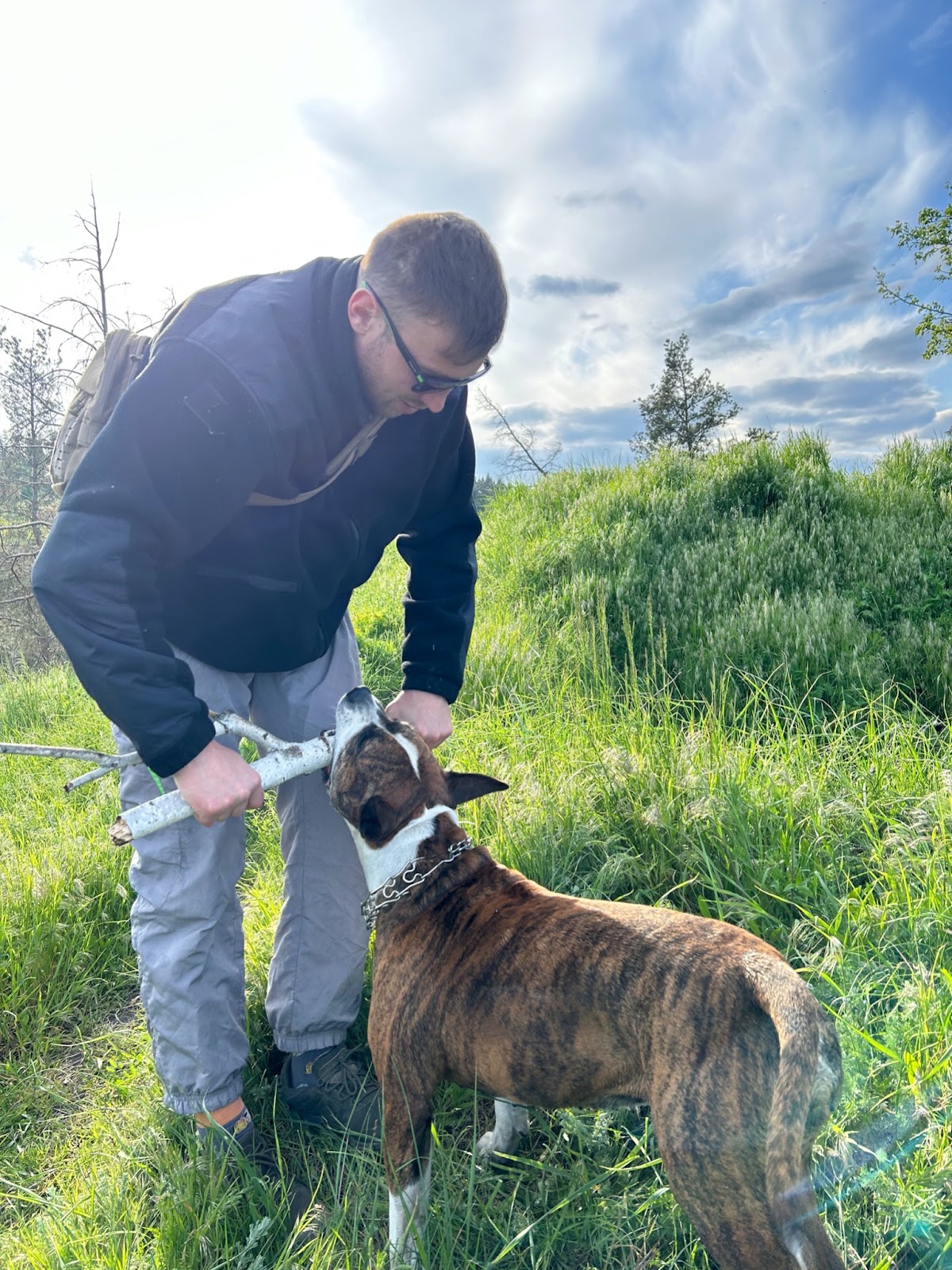
De-occupation of the Kyiv region. The end of March 2022. Oleksandr, a serviceman of the National Guard of Ukraine, while on a combat mission, rescued a dog that has been living with him ever since. He recalls that the Russians were already retreating, but the artillery was still working.
“The orcs occupied a 9-storey sector and a private house ten metres away, they were shooting non-stop. There we found a dog tied to a punching bag. We had been without food and water for about two weeks. It was sub-zero outside, and the dog had short hair. The fact that it did not freeze is very good. And, apparently, a mine had hit the house next door, because the animal was cantankerous. We untied the dog and it lived for another 2 days at our positions,”
– theNGU soldier recalls.
Back at the positions, his comrades named the dog Aliska. And after completing a combat mission, Oleksandr could not go home without her. For more than two years, the soldier has been living with the rescued dog.
A FINE AND IMPRISONMENT: WHAT RESPONSIBILITY DO OWNERS OF ABANDONED ANIMALS BEAR?
Many people who rescued abandoned animals and did not give them to a shelter have a question: what if the owner returns and demands that they give their pet back? Lawyer Igor Feshchenko explains:
“A pet, including an unattended one, is the same object of property as ordinary things: a mobile phone, a car, etc. However, the right to own an animal has its own peculiarities, at least because it is a living being. Based on the fact that an animal is property, such a “thing” requires similar treatment by other people, in particular, not to take it without the owner’s permission, not to cause harm, and to respect other people’s property. When rescuing the same dog that was abandoned by its owners during the war (left without food and water and tied up), a person should remember that he or she is taking the risk of being accused of committing petty theft of another’s property or actual theft (depending on whether the value of the animal exceeds UAH 302.80).”

How to avoid the risk of being accused of theft when rescuing other people’s animals?
To prevent this from happening, every person who rescues an animal must insure himself or herself and “prove to society his or her noble purpose”. According to Art. 340 of the Civil Code of Ukraine, , a person who has detained an unattended pet must report it within 3 days to a local government body (it is not specified which one), which takes measures to find the owner of the animal. During the search for the animal’s owner, the rescuer may keep the animal or transfer it to the local authority. After the relevant application is submitted, a 2-month countdown to find the owner begins. If the owner is not found, or if the owner is found and does not declare his or her ownership of the animal, the animal becomes the property of the person who rescued it.
If the owner is still found, the person who rescued the animal is entitled to reimbursement of expenses related to the maintenance of the animal, as well as to a reward (up to 20% of the animal’s value). However, the animal will still have to be returned.
What liability will a person who leaves an animal to its fate bear?
1) Administrative, which consists of abuse that caused the animal to suffer, caused physical pain, suffering, but did not lead to bodily injury, mutilation or death, as well as leaving the animal at will. It is punishable by a fine of UAH 3400 to 5100 with confiscation of the animal if its stay with the owner poses a threat to its life or health.
2) Criminal, which consists in cruelty to animals (vertebrates), if it resulted in bodily injury, mutilation or death of the animal. It is punishable by restraint of liberty for a term of 1 to 3 years or imprisonment for a term of 2 to 3 years with confiscation of the animal.
Author: Anastasiia Fedor