Defendant in the Rotterdam case Kryvenko may head the GTSOU: HACCU decision raises questions
21 August 2025 21:56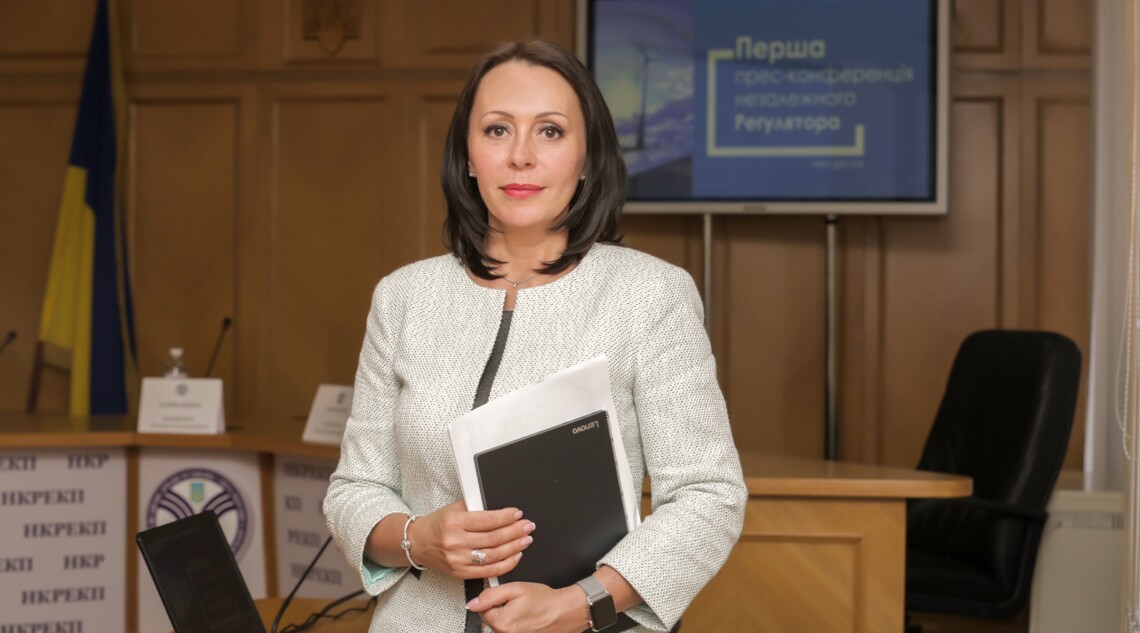
The High Anti-Corruption Court (HACC) has released former NEURC head Oksana Kryvenko from criminal liability in the Rotterdam case. The reason for this is the expiration of the statute of limitations, "Komersant Ukrainian" reports, citing the HACC ruled platform.
The decision effectively closes one of the most high-profile proceedings in the field of energy regulation, which has been a source of heated debate among experts, politicians and the public for years.
According to the investigation, Kryvenko was suspected of negligence in office related to the implementation of the scandalous Rotterdam formula used to calculate the wholesale market price for electricity. The formula allowed for the inclusion in the tariff of the cost of coal delivery from Rotterdam to Ukraine, even if the fuel was not imported.
However, the HACC recognized that prosecution under this article became impossible due to the expiration of the statute of limitations. The civil suit against Kryvenko was left without consideration.
Kryvenko, personnel ambitions, and the Rotterdam case: how they are connected
According to energy industry sources cited by Yevropeiska Pravda, Oksana Kryvenko is considered one of the candidates for the position of head of the Ukrainian GTS Operator, a state-owned company responsible for the transit and transportation of natural gas. Her candidacy was supported by former Energy Minister Herman Halushchenko and his successor Svitlana Hrynchuk.
As the media wrote a few days earlier, citing its sources in the government, the Energy Ministry plans to further delay the competition until the court “removes” Kryvenko from the criminal case. If this scenario materializes, the way to her appointment to a strategically important enterprise will be open.
Such plans are causing concern among market participants, given that even exemption from criminal liability does not mean that there are no potential violations in the past. A candidate who was involved in a long-running corruption scandal could pose a reputational risk to the state-owned company and its international partners.
However, according to energy experts, Kryvenko’s dismissal is unlikely to calm public opinion. Ukrainians are still paying tariffs based on formulas close to Rotterdam. And transparency in price formation and personnel policy in state-owned companies remain on the agenda.
At the same time, they warn against jumping to conclusions: the HACC decision is legally correct within the framework of the current CPC, but this does not mean that there is no guilt or ethical violations.
How Oksana Kryvenko built her career in the energy sector
Oksana Kryvenko was born on September 16, 1974, in Sverdlovsk (now Dovzhansk), Luhansk Oblast. In 1996, she graduated from Kyiv State University of Economics (now Vadym Hetman Kyiv National Economic University) with a master’s degree in Business Economics and a specialization in Project Management and Consulting.
In 2010, she also received a mechanical engineering degree from the Ivano-Frankivsk National Technical University of Oil and Gas, specializing in Oil and Gas Pipelines and Storage Facilities. This gave her technical competence in the energy sector.
Starting in 2001, Oksana Kryvenko worked at the National Electricity Regulatory Commission of Ukraine (before the NERC). This was her start in the public service in the field of energy regulation.
In June 2012, she was appointed Deputy Head of the Department of Methodology, Tariff Calculation and Monitoring, in particular in the oil and gas sector, where she was responsible for price calculation formulas and tariff monitoring.
In 2014-2015, Kryvenko worked as an assistant to the Minister of Energy, and then returned to the NEURC as deputy director of the Department for Regulation in the Oil and Gas Sector.
on May 29, 2018, Oksana Kryvenko was elected as a member of the NEURC following an open competition, and on June 6, she was appointed as the chairman. She became the first woman to hold this position.
In 2020, Ms. Kryvenko resigned from her position after the expiration of her term of office.
It is known that Oksana Kryvenko is divorced and has two sons: Oleksii (born in 1997) and Ivan (born in 2010).
In 2018, she was ranked 48th in the “100 Most Influential Ukrainians” rating by Focus magazine, and in 2019, she was included in the TOP 50 most influential women in Ukraine in the public sector, according to Korrespondent.
The Rotterdam case: what you need to know about it
The case involves accusations against former top officials of DTEK and the National Commission for State Regulation of Energy and Utilities of illegally applying the Rotterdam formula to coal at Ukrainian thermal power plants. The state suffered more than UAH 38 billion in losses, while DTEK received excessive profits.
The Rotterdam formula is a methodology for calculating the wholesale cost of coal transported to Ukrainian TPPs from the Dutch ports of Amsterdam, Rotterdam, and Antwerp. At a meeting of the NEURC in January 2016, the defendants in the case decided to apply the formula to the entire volume of coal of the same grade – 25.5 million tons, while the amount of “Rotterdam” coal was only 130 thousand tons annually. This resulted in more than UAH 18 billion in losses in 2016-2017.
The formula continued to operate in 2018-2019, so end consumers continued to overpay for electricity. In two years, the state suffered more than UAH 20 billion in losses, and the second episode appeared in the case – officials who did nothing to cancel the Rotterdam formula were added to the defendants.
The defendants in the case:
- ivan Geliukh, former CEO of DTEK Networks;
- borys Lisovyi, former advisor to DTEK Vostokenergo;
- dmytro Vovk, former head of the National Commission for State Regulation of Energy and Utilities;
- oksana Kryvenko, former head of the National Energy and Utilities Regulatory Commission;
- volodymyr Butovskyi, former Head of the Energy Market Management Department of the NEURC;
- taras Revenko, former Deputy Head of the Energy Market Management Department of the NEURC;
- volodymyr Yevdokimov, former director of the State Enterprise Market Operator;
- former NEURC members Olena Antonova, Victoria Morozova, Ruslan Mashlyakivskyi, Oleksandr Formagyi and Dmytro Kovalenko, Yuriy Holliak, and Borys Tsyhanenko.
The actions of the defendants were classified under Part 2 of Article 364 of the Criminal Code of Ukraine (official abuse that caused grave consequences), and some of the defendants were charged with Part 2 of Article 367 of the Criminal Code of Ukraine – official negligence.
The suspects in the case, if proven guilty, face imprisonment for a term of three to six years with disqualification to hold certain positions or engage in certain activities for up to three years, as well as imprisonment for a term of five to eight years with disqualification to hold certain positions or engage in certain activities for up to three years and a fine of two thousand to five thousand tax-free minimum incomes or without it.
Дивіться нас у YouTube: важливі теми – без цензури
Former NEURC Chairman Dmytro Vovk and Head of the NEURC Department Volodymyr Butovsky were put on the wanted list in 2019 and are subject to special court proceedings. Former NEURC members Borys Tsyganenko and Yuriy Holliak were released from criminal liability because the statute of limitations had expired.
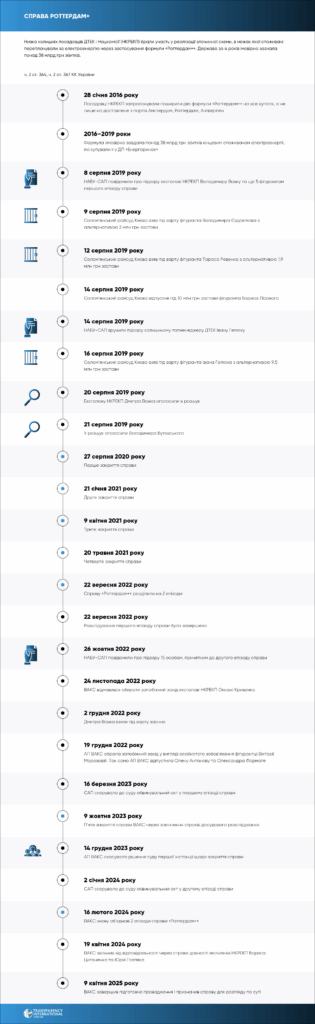
The pre-trial investigation in the case lasted almost five years. The criminal proceedings were closed and reopened five times. The reasons were: the inability to prove the UAH 19 billion in damages and the end of the investigation; the inability to prove the illegality of NEURC Resolution 289; the inability to prove the guilt of the defendants, the direct damage caused and the subsequent money laundering; and the expiration of the pre-trial investigation. More details on this issue can be found in the material.
The proceedings in the case have been separated and merged. The latter was consolidated for the purpose of joint consideration of the criminal proceedings, given the interconnectedness of the events of the incriminated criminal offenses, the same stages of the trial, and the same composition of participants.
Читайте нас у Telegram: головні новини коротко