Phishing emails from gov.ua addresses: Entrepreneur Tynnyy warns of new cyber fraud schemes
5 April 12:14
Ukrainian entrepreneur Igor Tynny shared an observation on social media that clearly illustrates the new level of cyber threats, according to "Komersant Ukrainian".
According to him, over nearly two decades of using the same email address, he has repeatedly been the target of attacks. Previously, these were mass, often crude hacking attempts that relied on sheer volume. However, the nature of phishing emails has changed significantly in recent times.
This represents a qualitatively new approach: attackers have begun to pay much more attention to detail and personalization. In their emails, they use domains that inspire trust, particularly those resembling government resources such as gov.ua. This creates the illusion of officialdom and significantly increases the chances that the user will open the message or click on the link.
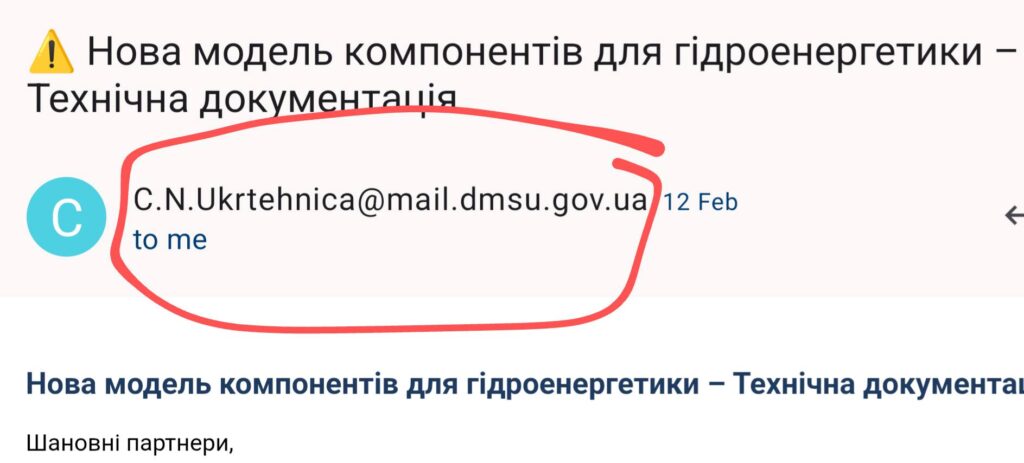
Another aspect is particularly telling—the personalization of content. As Tynnyi notes, the authors of the phishing attacks took into account his professional experience related to the construction of small hydroelectric power plants. This approach indicates the use of open data and, likely, modern technologies—including artificial intelligence—to create convincing scenarios.
In a lighthearted tone, the entrepreneur offered several possible explanations for the situation—ranging from “the professionalization of hackers” to ironic theories about government initiatives or even his own paranoia. Yet behind the humor lies a serious problem: phishing is becoming increasingly sophisticated and dangerous.
Today, the main goal of such attacks is to gain access to confidential data, financial resources, or to use them for blackmail. And while users used to be able to easily spot suspicious emails due to their flaws, the risk is now much higher.
This situation serves as a reminder of the need for digital hygiene: check the sender’s address, avoid clicking on questionable links, and critically evaluate even messages that look “official.” After all, in a world where technology works both for the benefit of businesses and for the benefit of scammers, caution becomes a key security tool.