The voice of war from centuries ago: an Iron Age battle horn has been found in Britain
8 January 22:18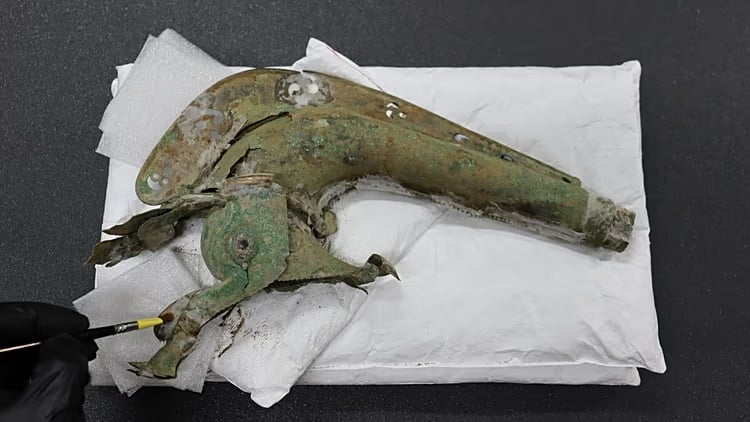
During planned archaeological excavations in Norfolk County in eastern England, archaeologists discovered a rare collection of Iron Age artifacts, including an almost completely preserved bronze battle horn called a carnic. The find dates back to the period before the Roman conquest of Britain and is already considered one of the most important discoveries in recent years.
The discovery was reported by Euronews Culture, according to "Komersant Ukrainian".
What exactly was found
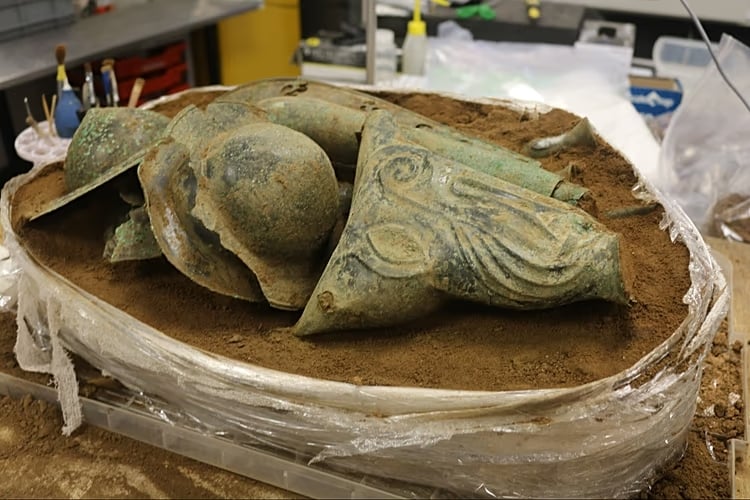
Archaeologists found several metal objects, including:
- an almost completely preserved carnicus — a bronze wind instrument in the shape of an animal’s head;
- a fragment of another similar instrument;
- a bronze boar’s head, which was probably part of a military flag;
- five umbones — metal shield bosses;
- an iron object whose purpose has not yet been determined.
All artifacts were found on a site designated for residential development as part of a standard archaeological assessment procedure prior to construction.
Carnicxi were characteristic of the Celtic tribes of Europe
They were used on the battlefield — the loud, sharp sound was intended to intimidate enemies and encourage their own warriors. The instruments often took the form of a boar’s head or other animal — a symbol of strength and aggression.
Such horns are well known from depictions on Roman reliefs, where they were often shown as trophies, but very few physically preserved examples remain.
What scientists say
Dr. Fraser Hunter, curator of the Iron Age and Roman period at the National Museum of Scotland, called the find exceptional.
According to him, detailed research and conservation of fragile artifacts could radically change our understanding of sound, music, and military rituals of the Iron Age.
He also emphasized that the combination of carnicks and a military flag with a boar’s head indicates Britain’s close cultural ties with continental Europe, rather than its isolation during that period.
The artifacts will be sent for long-term research and restoration. Scientists hope to not only determine their function, but also, in the case of the carnic, to recreate the sound that echoed on the battlefields more than two thousand years ago.