International Legion under threat of disbandment: military explains it is either integration or loss of a unique resource
11 February 10:55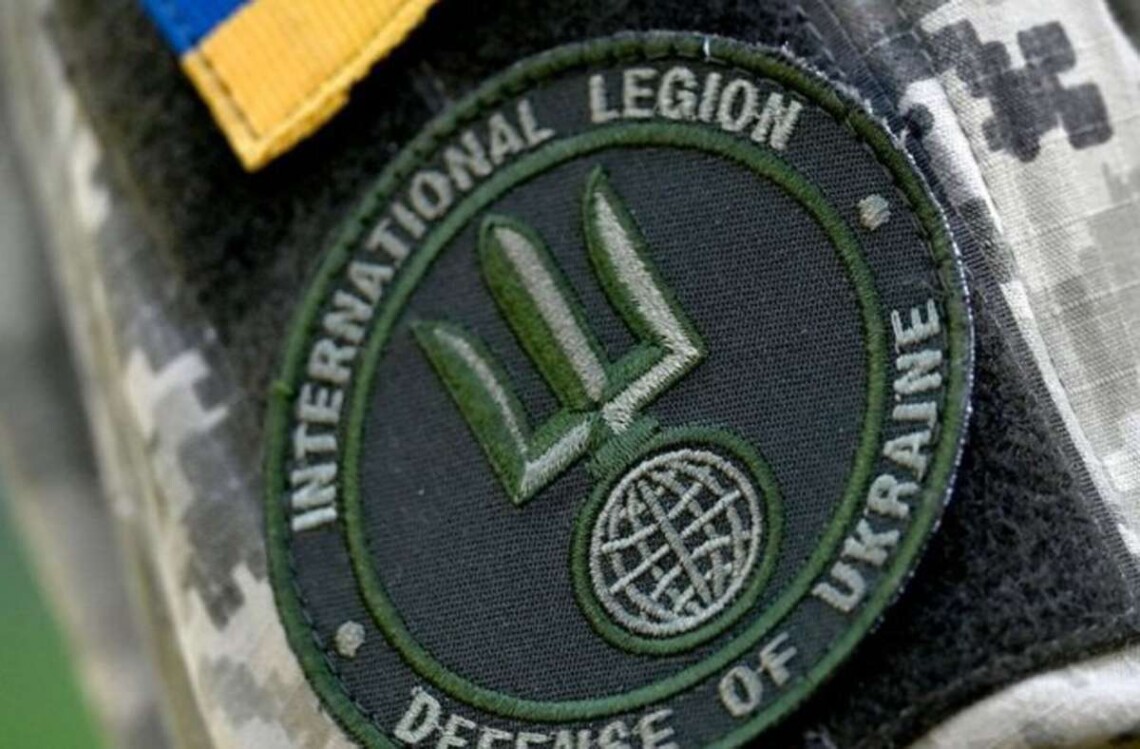
At the end of 2025, Ukraine de facto began to disband the International Legion, a unit formed by order of President Volodymyr Zelensky shortly after Russia’s full-scale invasion in 2022. Foreign volunteers are being transferred to assault regiments of the regular forces, which are involved in the most dangerous combat operations, according to the French publication Le Monde.
The General Staff’s decision was announced privately on December 31, 2025. At the same time, the Legion’s second battalion managed to get a temporary pause until February 15, although its servicemen have already been formally assigned to the 253rd assault regiment of the 129th territorial defense brigade.
“It came as a complete surprise. We were simply told: ‘Pack your things and leave for Kryvyi Rih on the same day,'” says a 45-year-old volunteer from the Faroe Islands, a Dane with the call sign “Viking,” who joined the Legion in 2023.
According to him, after the transfer, the conditions of service deteriorated significantly:
“We live in overcrowded barracks, where there has been no water or internet for a week. No training or preparation. People are morally exhausted, many have simply left,” he says.
Andriy Spivak, chief of staff of the Second Battalion of the International Legion, considers this decision by the command to be a serious strategic miscalculation:
“The liquidation of the International Legion is a colossal loss of resources. We are the only unit in the army where all officers are bilingual. We trained legionnaires using modern defense techniques, but now they are being sent to assault units, which involves a completely different format of tasks.”
According to Spivak, as a result, there is a real risk of losing all these hard-earned skills.
The size and dynamics of the International Legion
Official information about the number of foreign military personnel in the Legion is not disclosed. It is only known that since 2022, several thousand volunteers have signed contracts, but the unit has not reached the planned target of 20,000 people. Foreigners serving in the Armed Forces of Ukraine receive the same monetary compensation as Ukrainian military personnel, but have the right to terminate their contract after six months of service, which has led to high personnel turnover.
As of 2025, the International Legion had four battalions and was involved in key operations, from the de-occupation of the Kharkiv region to the battles for Vovchansk and Chasiv Yar. According to information from the units, the 1st and 3rd battalions suffered serious losses and cases of desertion, after which their remnants were incorporated into assault regiments.
Some of the legionnaires say they are ready to continue serving under any circumstances. For example, a 27-year-old American of Ukrainian descent with the call sign “Connor” says:
“I came to fight for my country, not for a specific unit. The main thing for me is not to stop fighting.”
At the same time, others are considering leaving the service.
“I’m going to terminate my contract. We are risking our lives to support Ukraine, and in return, we are simply being left to fend for ourselves. It feels like a slap in the face,” says 53-year-old American combat medic Carl.
He also adds that transfers to other units effectively nullify the period required to obtain Ukrainian citizenship.
The volunteers emphasize that the International Legion created relatively comfortable and understandable conditions of service for foreigners. “Viking” explains:
“Everyone is afraid of ending up in a unit where the commander doesn’t speak English.”
Are there any problems, and will there be any?
Military expert, retired Ukrainian Armed Forces colonel Roman Svitan, in an exclusive comment for "Komersant Ukrainian", explained that the decision to disband the separate International Legion unit was made as part of a broader reorganization of the Armed Forces.
“With regard to the formation of units that were to be incorporated into the corps structure, a decision was made to disband the Legion’s platform. Otherwise, it would have been necessary to recruit a separate corps and create its own infrastructure. But this is not part of our command’s strategic plans,” Svitan said.
According to him, the key decision was to integrate foreign volunteers directly into the units of the Armed Forces of Ukraine:
“The right emphasis has been placed on allowing foreign legionnaires to join any unit. Once they join the Armed Forces of Ukraine, they become military personnel just like Ukrainians. Equal opportunities are extremely important.”
The colonel stressed that the process has already been launched, and in units where service and management conditions are comfortable, foreigners will naturally concentrate over time through the Armed Forces’ recruitment mechanisms:
“Nothing terrible is happening. It’s just a time for reformatting. There are absolutely no problems in this matter, and there will be none. On the contrary, the decision was made precisely to improve recruitment opportunities, including for legionnaires.”
Legionnaires remain in the special services
Separately, Roman Svitan noted that foreign fighters continue to serve in the Ukrainian special services:
“The same foreign fighters remain in the special services. Foreign legion groups operate in the Main Intelligence Directorate and the Security Service of Ukraine, performing special tasks in accordance with the needs of the special services. Everything remains unchanged there.”
Legionnaires are highly professional and motivated
The spokesperson for the Ukrainian Volunteer Army, who worked directly with foreign fighters on the front lines, also gave his assessment of the situation:
“We had to carry out combat missions together with the fighters of the International Legion, in particular in the Kupiansk direction. Their high level of professionalism should be noted. They work efficiently, are motivated, and always give the Russians a hard time.”
According to him, the current changes should be viewed as a transformation rather than a restriction:
“The goal is not to ‘drive someone into a corner,’ but to pass on the combat experience of the legionnaires to our soldiers and, if I may say so, infiltrate them into units that perform extremely difficult tasks.”
This refers, in particular, to assault units, which often operate in the hottest areas of the front line.
The UDA spokesperson also drew parallels with Russia’s practice of recruiting foreigners:
“The Russians operate on the principle of ‘cannon fodder’. It doesn’t matter which country the mercenaries come from — they are openly referred to as ‘disposable’. We can be proud that our legionnaires are much more professional.”
Strengthening combat capability
In his opinion, despite the fact that some issues still need to be worked out, the state is demonstrating its readiness to work systematically with foreign volunteers:
“The Ukrainian state has turned its attention to this military contingent. Appropriate incentives are being provided for our brothers-in-arms from other countries. This issue will be resolved to the benefit of all.”
In conclusion, the UDA representative expressed cautious optimism:
“The idea behind this decision is certainly not a bad one. Another matter is how the implementation mechanism will work. But the involvement of foreign fighters is an unconditional strengthening of our combat capability.”
So, on the one hand, the integration of foreign volunteers into regular units of the Armed Forces of Ukraine seems like a rational step within the framework of corps reform: it equalizes the status of military personnel, simplifies management, and potentially expands recruitment opportunities. On the other hand, a sudden and non-public decision, problems with service conditions, language barriers, and the loss of specialized skills create the risk of demotivating the very category of fighters that has been an important symbol of international support for Ukraine.
In fact, this is not about “eliminating” foreign participation in the war, but about reformatting it. However, the success of this step will depend not on the idea itself, but on its implementation: whether the army will be able to preserve the combat experience of the legionnaires, provide them with clear conditions of service, and at the same time use their potential in the most difficult operations. Without this, a strategically correct decision risks turning into a reputational and personnel miscalculation.