Iran as Russia’s military hub: IDF officer responds that the Kremlin will lose if the regime falls
2 March 10:17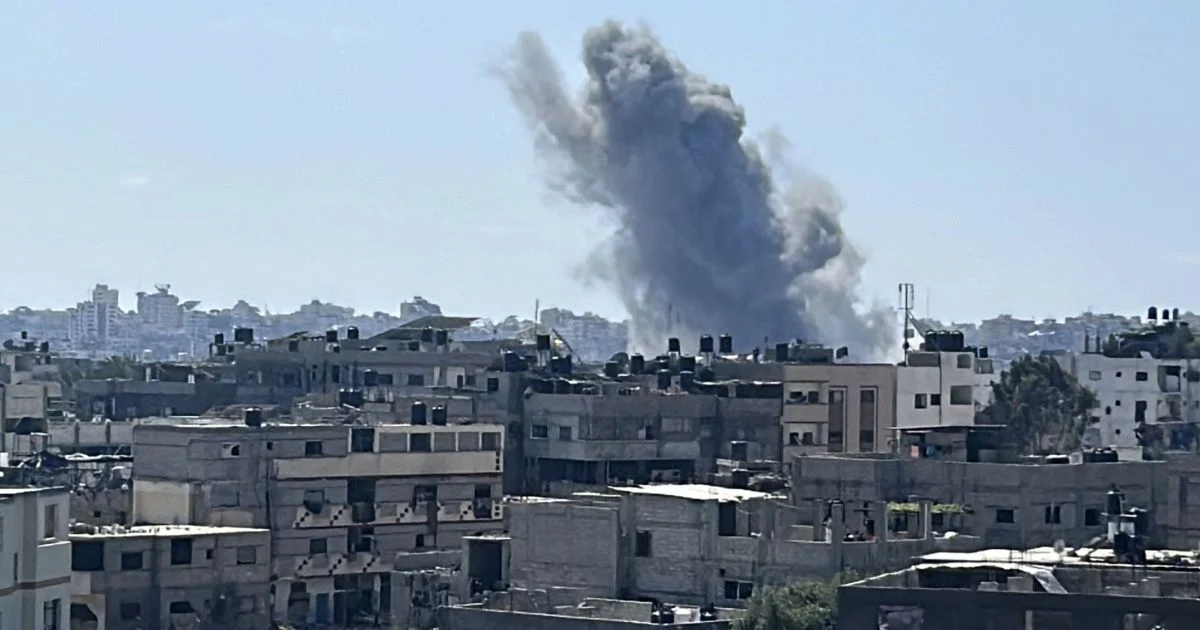 ANALYSIS FROM
Massive missile strikes, unprecedented integration of air defense systems, hundreds of combat aircraft in the sky, and possible tectonic shifts within Iran itself — the situation in the Middle East is rapidly entering a new phase. Tel Aviv and Washington are demonstrating an unprecedented level of military coordination. What role are the US and its Persian Gulf allies playing in the current operation? Could the elimination of Iran’s supreme leader be a point of no return for the regime? Will the new war affect the amount of US aid to Ukraine? And most importantly, does the weakening of Iran mean a weakening of Russia’s military capabilities?
Massive missile strike and air defense operations
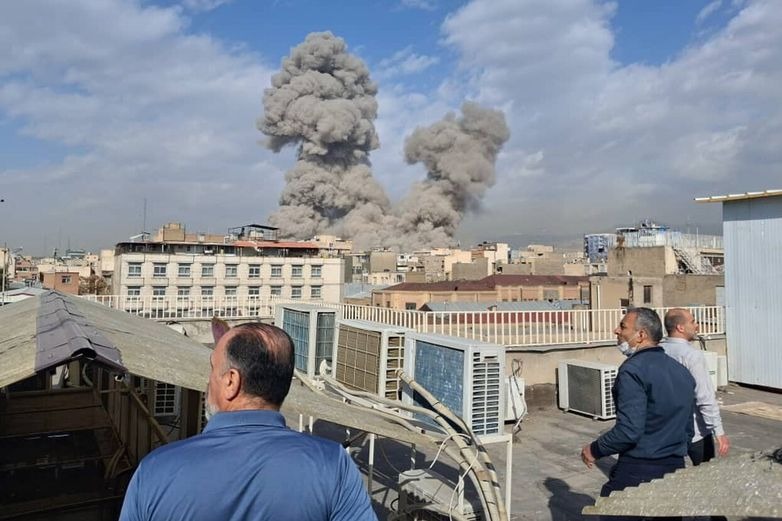
Israel has suffered another massive rocket attack. Dozens of ballistic missiles were fired, with the exact number currently being determined. Israeli Defense Forces (IDF) reserve officer Grigory Tamar, in an exclusive comment for the publication
“At this point, we are talking about 100% interception of ballistic targets by air defense systems. Even during the 12-day war, the effectiveness was 96%, which was considered extremely high. Over the past six months, the system has been optimized, and now we are seeing 100% results,” Tamar said.
At the same time, the officer emphasizes that even complete interception does not mean the absence of damage. When a missile is destroyed in the air, its fragments, sometimes the size of a car, fall to the ground and can cause significant damage. In particular, large fragments have been reported in two areas of Tel Aviv, with injuries and damage to buildings.
Not only Israeli cities were hit, but also a number of countries in the region, including the United Arab Emirates, Saudi Arabia, and Jordan. There are reports of casualties in these countries.
At the same time, Israel, the US, and partners in the region are working in close coordination. The joint air defense system integrates the Israeli Hetz and David’s Sling systems, the American THAAD and Patriot batteries, and the air forces of several countries.
“This is an unprecedented level of cooperation. We are essentially seeing a unified defense architecture,” the officer emphasized.
Offensive operation: division of roles
According to Tamar, Israel carried out one of the largest air operations in its history—more than 200 combat aircraft attacked targets in Iran. The US used approximately the same number of aircraft. Strikes were also carried out with cruise missiles.
“Israel is taking on targeted, ‘surgical’ tasks — the elimination of high-ranking individuals, the destruction of headquarters and air defense systems. The Americans are delivering powerful strikes on well-fortified targets,” Tamar explained.
Among the targets, he said, are facilities belonging to the Islamic Revolutionary Guard Corps, which Israel considers a key force of the regime.
Political consequences in Iran
Tamar also commented on the information about the elimination of Iran’s supreme leader Ali Khamenei. According to him, this will be a serious blow to the sacred legitimacy of the regime.
At the same time, he emphasizes that the system of power in Iran is clan-based, and even if the Ayatollah dies, the regime will not disappear immediately — a successor from the conservative camp will likely be appointed.
“In the Middle East, the role of the leader is extremely important. His disappearance could become a catalyst for internal processes,” Tamar noted.
The US factor and its impact on Ukraine
The officer paid particular attention to the question of whether the conflict would affect the amount of US aid to Ukraine. He denied any direct link between US operations against Iran and arms supplies to Kyiv.
“Ukraine uses certain types of weapons—artillery, HIMARS systems, Patriot complexes. Iran uses completely different ones: aerial bombs, cruise missiles, air force resources. These are different logistical directions,” Tamar explained.
At the same time, he acknowledged that the US traditionally avoids simultaneously waging two major wars, so Washington’s geopolitical focus may change depending on how events unfold.
Consequences for Russia
Tamar believes that the weakening of Iran will be a negative factor for Moscow, which has cooperated with Tehran in the military-technical sphere, in particular with regard to Shahed-type drones used in the war against Ukraine.
“Iran was not only a supplier but also a logistical hub for circumventing sanctions. The loss of such an ally is a blow both politically and economically,” Tamar stressed.
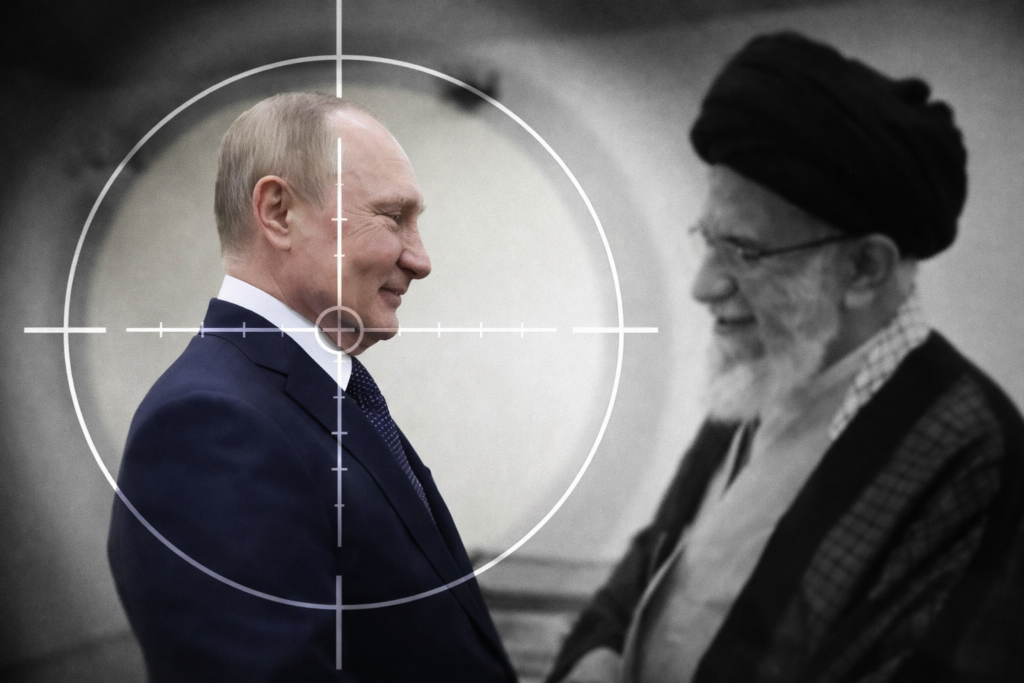
Another dictator, Vladimir Putin, sent a telegram of condolences to the Iranian leadership on the death of Supreme Leader Ali Khamenei. In his message, he called the elimination of the Iranian ayatollah a “cynical murder” that allegedly violates the norms of morality and international law.
The officer emphasized that Israelis feel a deep understanding from Ukrainians.
“Today, Ukrainians, like no one else, know what it means to live under rocket attacks and realize that if you don’t defend your freedom yourself, no one will do it for you,” Grigory Tamar concluded.
So, we are talking about the formation of a new regional security system in which defense and offense are integrated between several states. Unprecedented coordination between Israel and the US, strikes on key Iranian military targets, and possible political changes in Tehran could have long-term consequences. For Ukraine, this is not abstract geopolitics. Iran is an important element of military cooperation with Russia, and any weakening of this link could potentially affect the intensity of attacks against Ukrainian cities. At the same time, the US’s focus on the Middle East could change Washington’s strategic priorities.