Historic event or just another statement: what does the start of EU accession negotiations mean for Ukraine?
2 July 2024 09:01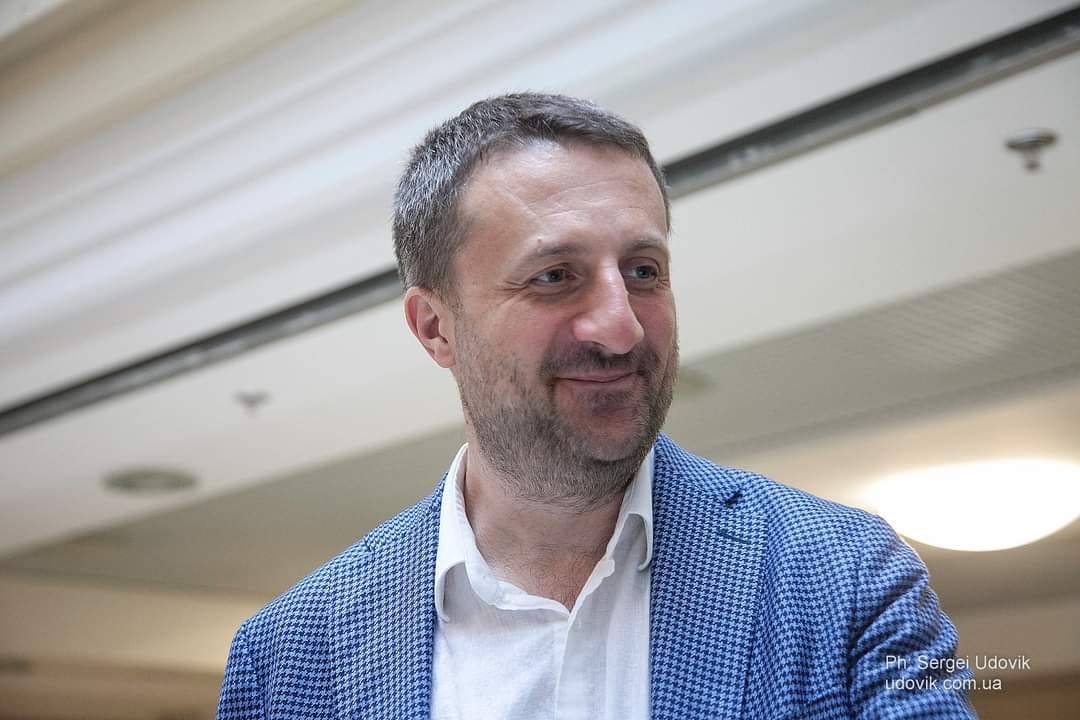 INTERVIEW
In 2010, the European Parliament adopted a resolution granting Ukraine the right to apply for EU membership. This was followed by Yanukovych’s refusal to sign the Association Agreement with the EU, the Revolution of Dignity, the coming of a new government led by Petro Poroshenko, and eventually the ratification of the Association Agreement, a free trade area and visa-free regime with the EU.
And only 12 years later, almost immediately after the start of the full-scale invasion, in February 2022, President of Ukraine Volodymyr Zelenskyy signed an application for Ukraine’s accession to the European Union. In June 2022, Ukraine became a candidate for EU membership, and negotiations began in December 2023.
On 25 June this year, the first EU-Ukraine Intergovernmental Conference was held in Luxembourg. It marked the beginning of actual negotiations on Ukraine’s membership in the European Union.
“The start of our membership in the European Union will be counted from today,”
– said Volodymyr Zelenskyy.
However, neither the President nor Foreign Minister Dmytro Kuleba specified how long it would take Ukraine to become a real member of the European family.
From now on, Ukraine needs to carry out a number of important reforms, including the reform of the Constitutional Court, continue judicial reform, appoint the head of the SAPO, implement the anti-oligarchic law, change the legislation on national minorities, etc.
Kommersant Ukrayinsky spoke to Taras Zagorodny, political strategist and managing partner of the National Anti-Crisis Group, to find out when Ukraine’s accession is expected and what pitfalls it may face along the way.
What factors determine the actual accession of Ukraine to the EU?
We must assume that Ukraine’s accession to the EU depends on many factors, some of which are not even directly within our control. That is, we can fulfil a number of requirements to a certain extent, but not all of them. For example, one of Hungary’s requirements is, in fact, the creation of national autonomy for a separatist group on the territory of Ukraine with a claim to annex Zakarpattia. Well, we cannot fulfil this.
*I am referring to 11 demands of Hungarian Prime Minister Viktor Orban, one of which is the requirement to automatically recognise all settlements in Transcarpathia as "traditionally Hungarian".
Yes, we can pass many laws, but this will not mean that Ukraine will become a member of the EU. Because, as I said, there are several factors that come into play here that are beyond Ukraine’s control. The first is whether the EU has the money to keep us in the Union Let me explain: the European Union has a system of subsidies to equalise the development of EU member states. Ukraine is a large country that needs a lot of subsidies, the amount of which is not yet clear.
Can you give us an example?
I’ll give an example of Poland, but with an eye to the territory error: Poland is 2 times smaller than Ukraine. Also, when it joined the EU, there was still Britain in the Union, which was a donor. Now there is no such thing. When Poland joined, Germany’s economy was in a better state because they had cheap Russian gas. And let’s not forget that Poland joined the EU when it was already a NATO member. That is, it had already gone through a long way of reform before joining the EU.
According to official data, from 2005 to 2010, direct subsidies amounted to about 200 billion euros. And Poland still receives about €10 billion in aid annually.
This raises the question of whether the EU has the financial capacity to take on this “monetary burden”. Because the money will have to come from someone else. And, accordingly, the countries receiving these subsidies will receive less. Will they want this? I think not.
Which countries are we talking about?
Hungary, Slovakia, Romania, and I think Poland as well.
Still, what depends on Ukraine? What exactly can we change on our own to actually join the EU?
We have to understand that the economy we have built now, when we produce one mono-product for export abroad, does not fit into the structure of the EU economy. For example, the same agriculture: in the EU, it is built on farmers, while we have huge agro-turnover companies that produce a single product. This is unacceptable for the European Union.
That is why Ukraine must first of all inform agriholdings that they cannot exist in the way they are now: let them redirect their money, for example, into the production of agricultural machinery, biogas equipment, processing, etc. Otherwise, a paradoxical situation will arise where, due to its size, Ukraine will be eligible for almost all EU agricultural subsidies. You understand that this will be simply impossible, because others will rebel.
So, in your opinion, if our agricultural holdings do not change the format of their work, a so-called rebellion may start in the EU?
We have to understand that due to our size, our country’s inclusion in the EU could lead to a crisis there. Imagine that, despite any objections, our agricultural holdings enter the Union as they are.
There will be a huge crisis in the EU. It will be like with the Poles (blocking the border – ed.). The behaviour of the Poles is a small model of what will happen next.
We need to understand that for Hungary, Slovakia, Romania, and Poland, we are an extra competitor for markets, people, and investments.
What else should Ukraine do?
We still do not have a defined specialisation, because every EU country specialises in something at least initially. I believe that the most promising for Ukraine will be the arms cluster: Defence industry and related products. But this requires a lot of effort that is not directly related to EU requirements: ensuring the secrecy of the military-industrial complex, secrecy of customs clearance of various components, allowing exports of Ukrainian high-tech products, and providing insurance for military-industrial enterprises. We have to become a high-tech military hub.
In your opinion, when can we expect Ukraine to be accepted into the EU?
Personally, I would not expect less than 7-10 years, because due to our scale, we need more time than others. It takes a lot of time just to invest in transport infrastructure and bring it up to EU standards.
The EU is always about money, nothing else. I think that Moldova will be accepted sooner than us, because they have a much smaller population than us and a smaller territory.
Is it possible that Ukraine will not be accepted into the EU?
Anything is possible, but if we are not accepted into the EU, we should not take it as a disadvantage. On the contrary, as I have already said, many countries are afraid of our accession because they do not know what consequences it will bring to their economies.
We should follow Turkey’s example. It applied to the EU back in the mid-90s, did a lot of things, but when they demanded to leave Northern Cyprus, they stopped and said they would not join the EU. And they started building their own economy. So now the EU is chasing Turkey itself. We also need to behave like that and understand our value. Ukraine has a lot of resources, and we should focus on developing what we already have.