ISW explains why Russia is inventing an “attack” on Putin’s residence
31 December 2025 10:32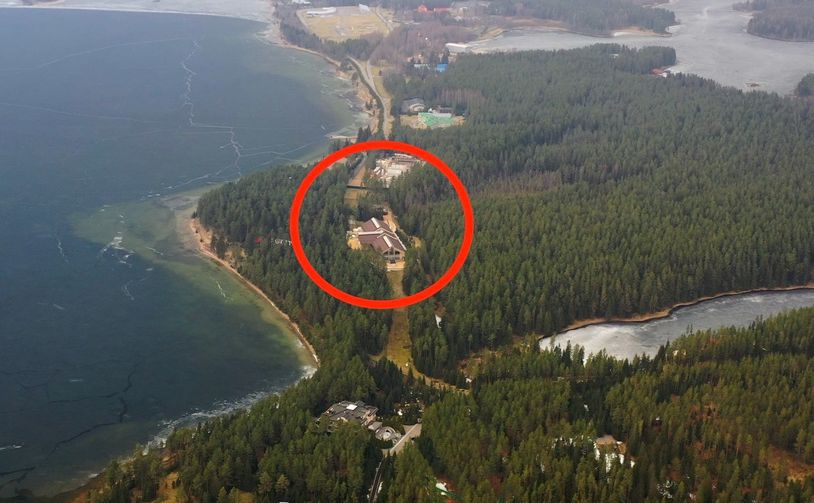
Analysts at the Institute for the Study of War (ISW) have concluded that the Kremlin’s statements about the alleged attack of Ukrainian drones on the residence of Kremlin dictator Vladimir Putin are of an informational and political nature and are not supported by any evidence. This is reported by "Komersant Ukrainian" with reference to ISW.
According to experts, Russia is using this story as a tool to increase pressure on Ukraine and the West and to promote its own ultimatum demands.
The Kremlin refuses to provide evidence
ISW notes that the Russian authorities have not provided any photos, videos or drone debris that could confirm the attack on Putin’s residence on the night of December 28-29. Moreover, the Kremlin has actually rejected the very need to prove anything.
In particular, Kremlin spokesman Dmitry Peskov said that he saw no need to provide evidence of the alleged Ukrainian drone strike. When asked about possible wreckage, he replied that he “could not say” and advised to contact the Russian military.
Analysts believe that this position is an attempt to smooth out contradictions in previous statements by Russian officials.
Confusion in numbers and versions
ISW reminds that initially the Russian Defense Ministry reported 41 drones shot down over the Novgorod region, which is significantly less than the number that Russian Foreign Minister Sergey Lavrov called “aimed at Putin’s residence.”
Later, the Russian military released an updated report, which already mentioned 91 drones allegedly targeting the residence:
- 41 – over the Novgorod region;
- 41 – over the Bryansk region;
- 1 – over the Smolensk region.
Analysts note that such a sudden change in data looks illogical and inconsistent.
Geography does not support the Kremlin’s version
ISW also drew attention to the geographical aspect. Putin’s residence in the Valdai district is located
- about 210 km from the border with Smolensk Oblast;
- about 435 km from the border with Bryansk Oblast.
At the same time, it is Bryansk and Smolensk regions that contain legitimate military and defense-industrial targets that Ukraine has already attacked before. According to experts, these regions look much more logical as attack targets than the residence of the Russian dictator.
In addition, ISW emphasizes that no video or evidence, which usually appears after real Ukrainian strikes at great depths, has been recorded so far.
The West also sees no evidence
Doubts about the veracity of Russian claims have been confirmed by Western sources. The French newspaper Le Monde reported that a source close to French President Emmanuel Macron said: “there is no hard evidence” of a strike on Putin’s residence – even after verifying the information with international partners.
Why does Russia need this fake?
According to ISW, the Kremlin is using the story of the “attack” for political pressure and manipulation. In particular
- to justify a tougher negotiating position;
- to impose ultimatums like those of 2021-2022 on Ukraine and the West;
- to promote demands for Ukraine’s actual surrender.
Peskov has already stated that the Kremlin will “strengthen” its negotiating position after the alleged strike, although he did not disclose any details. And Lavrov reiterated the demand to recognize the occupied territories – Luhansk, Donetsk, Zaporizhzhia, Kherson regions and Crimea – as part of Russia.
ISW’s conclusion
Analysts of the Institute for the Study of War emphasize that Russian statements about the “attack” on Putin’s residence are an information operation aimed at justifying further aggression and pressure on the West.
The ISW emphasizes that these ultimatum demands show that Russia’s goals in the war go far beyond Ukraine, and any peace agreement without taking into account Russia’s demands for NATO and the European security architecture will not suit the Kremlin.