Security officials explain “special operation” against NABU to G7
22 July 2025 21:46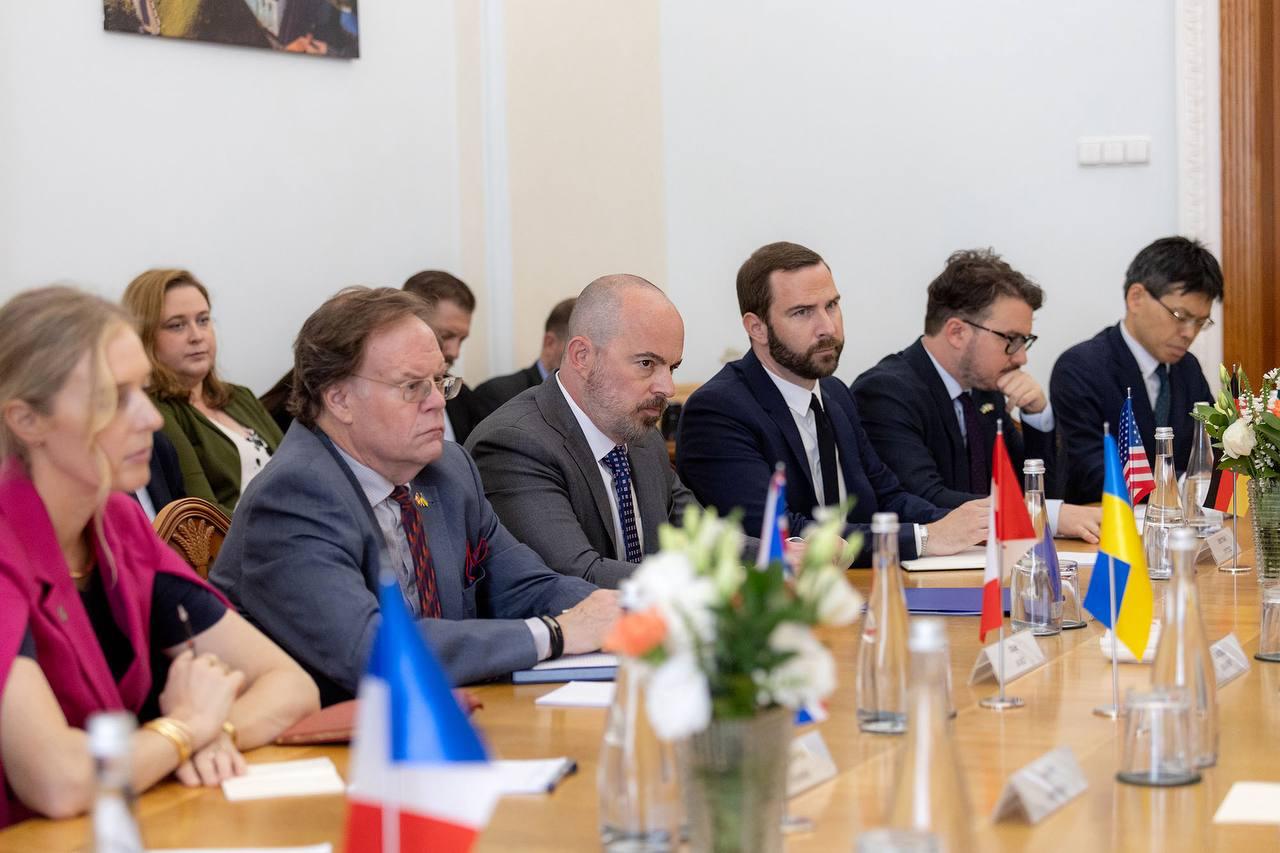
Prosecutor General Ruslan Kravchenko, SBU Head Vasyl Malyuk, and SBI Director Oleksiy Sukhachov met with representatives of the G7 countries. Kravchenko announced this on his Telegram channel, "Komersant Ukrainian" reports.
The discussion centered on the events surrounding the National Anti-Corruption Bureau of Ukraine (NABU) and recent legislative changes that weaken its independence.
“We discussed a number of issues: from eradicating corruption and reforming law enforcement agencies to fighting the enemy on the front line and inside the country, in particular with Russian agents,” he wrote.
According to Kravchenko, the partners received “comprehensive answers” both on the overall work of the law enforcement system and on the “special operation to neutralize Russian influence on the NABU” conducted by the SBU.

This week, the Security Service of Ukraine, together with the Prosecutor General’s Office, conducted searches of a number of NABU detectives. According to the SBU, the detention is related to high treason and unauthorized access to information. At the same time, the NABU emphasizes that the SBU had previously informed the bureau that there was no evidence of this employee’s involvement in the crime.
In addition, on July 22, the Verkhovna Rada passed Bill 12414, which expanded the powers of the Prosecutor General for the period of martial law. He was given the right to actually control the work of the SAPO, give written instructions to the NABU, seize cases and transfer them to other bodies.
The formal purpose of the draft law was to strengthen guarantees for the legal profession, but experts and anti-corruption organizations see this as a threat to the independence of the NABU and the SAPO.
The international reaction was immediate. The very next day, the G7 countries issued a statement expressing “serious concern” about the situation.
We are closely following today’s developments at NABU… Ukraine and the G7 have a shared commitment to support transparency, independent institutions and good governance,” the statement reads.
The European Commission also expressed concern. European Commission spokesperson Guillaume Mercier emphasized that the independent work of NABU and SAPO is critical for fighting corruption, providing macro-financial assistance and advancing Ukraine’s path to the EU.
“These institutions must operate independently to effectively fight corruption and maintain public trust,” he said.
The international press has harshly assessed the events in Ukraine.
The Financial Times called the law a “step backwards ” and warned that it undermines confidence in the reforms. According to the newspaper, G7 diplomats have already conveyed their warnings to the Ukrainian leadership.
The Wall Street Journal emphasizes that the decision to expand the powers of the Prosecutor General’s Office could complicate the receipt of further financial assistance and opens the way to “corruption revenge.”
Politico Europe considers the vote in the Verkhovna Rada to be an alarming signal to the EU on the eve of the possible opening of accession talks. European institutions doubt the sincerity of Ukraine’s reform commitments.
Bloomberg draws attention to the fact that the law was adopted without public discussion – in “turbo mode,” which is typical for authoritarian regimes. The agency notes that this approach could affect investor confidence and slow down the post-war recovery process.
Reuters, citing diplomatic sources, reports that Western partners are “disappointed and shocked.” Of particular concern is the tendency to de-prioritize anti-corruption reforms as the West focuses on supporting the Armed Forces. USAID representatives called these steps by the Ukrainian authorities “unacceptable” and called for adherence to the rule of law.
Читайте нас у Telegram: головні новини коротко