Who will send troops to Ukraine: leaders of the “coalition of the willing” prepare a multinational mission
26 August 2025 16:10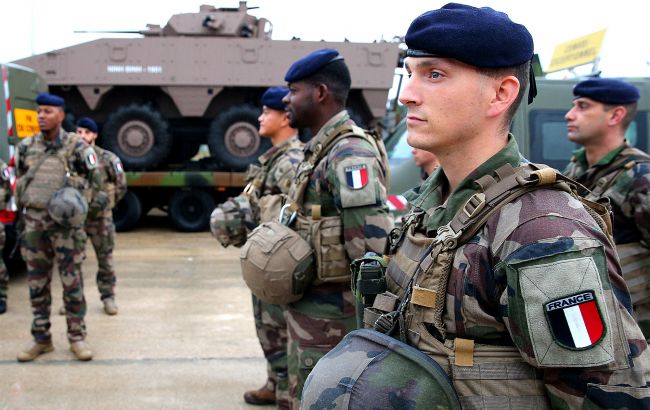 ANALYSIS FROM
European and non-European partners are preparing the outlines of a possible multinational mission in Ukraine after a ceasefire is declared or respected. The initiative is being jointly led by the United Kingdom and France; it is known as the “coalition of the willing ” and is designed to provide Ukraine with reliable security guarantees during the transition period. Key parameters and potential participants are already visible. President Volodymyr Zelenskyy has emphasized that the issue of “boots on the ground ” is not his to decide, but that the participation of major powers is a key factor. Who will be part of the multinational mission in Ukraine? Will there be troops sent “to the front line” and what tasks will the mission face after the fighting stops?
After talks in Washington with U.S. President Donald Trump and European leaders, work has begun on specific security guarantees for Ukraine. According to the WSJ, U.S. Secretary of State Marco Rubio will lead a special working group of national security advisers and NATO representatives to draft the guarantees. Rubio reiterated the U.S. readiness to participate in post-war security guarantees, but emphasized that Europe should take the lead in this matter.
The UK is the first driver and military backbone of Europe
London, together with Paris, is moderating the coalition and working on the concept of the Multinational Force Ukraine (MFU), a multinational support force after the cessation of hostilities. According to media reports that cite government briefings, Britain has discussed significant involvement, with some scenarios calling for up to 10,000 troops in a stabilization mission. There are no final political decisions and no public commitments on the number of troops, but it is London that is in charge of planning.
British Prime Minister Keir Starmer said that the military contingent of the countries participating in the “coalition of the willing ” is an unavoidable and very important part of the peace agreement.
If there is no contingent to support this agreement, Putin is likely to violate it as well. There have been agreements in the past that he has not respected. We need a lasting peace. A peace that will last for a few months or years is not appropriate,” Starmer said.
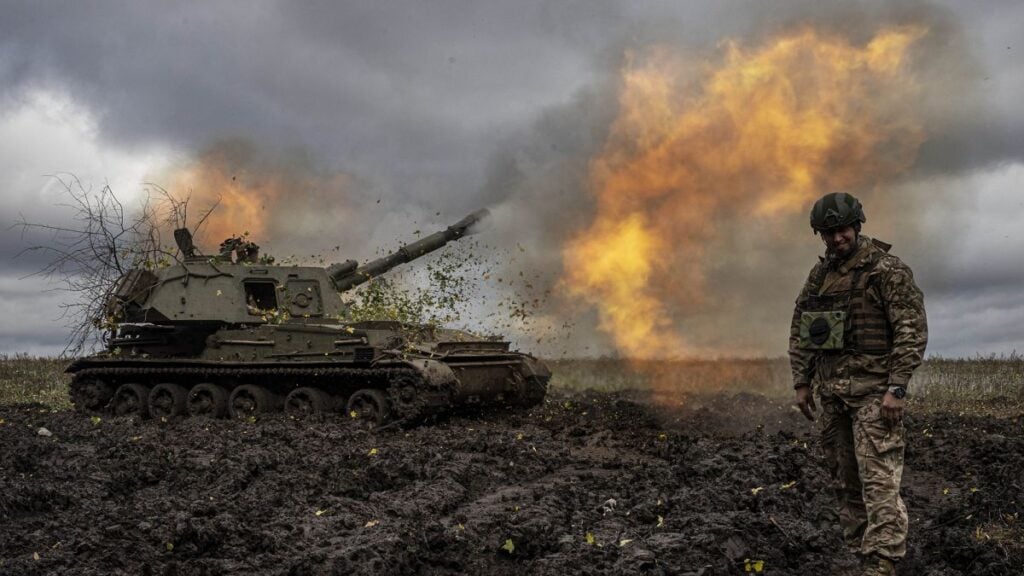
British capabilities have already been demonstrated on the battlefield: the supplied Storm Shadow/SCALP cruise missiles have become a tool for precision strikes on targets in Crimea, in particular during the high-profile attack on the headquarters of the Russian Black Sea Fleet in Sevastopol on September 22, 2023. The Ukrainian Armed Forces also actively used Challenger 2 tanks; despite losses in the intense combat zone, the vehicle has proven to be a well-protected platform in the modern war of drones and ATGMs.
By the way, according to the Global Firepower 2025 ranking, Britain is the 6th largest army in the world, which emphasizes its importance as a coalition leader.
France – a nuclear power and political initiator
Paris does not rule out the possibility of sending troops in the event of a Russian breakthrough or in the format of post-war stabilization. President Emmanuel Macron has repeatedly articulated this framework in 2024-2025. France, together with the UK, is coordinating a “coalition of the willing” and is also promoting the creation of headquarters and coordination structures for the future mission. In May, French President Macron said that work on the formation of the contingent was still ongoing. The decision on the contingent also depends on Russia’s response to the proposal for a 30-day ceasefire.
When it comes, we will work on the most effective proposal,” Macron said.
Australia is a distant but technological partner
Canberra traditionally avoids direct “combat missions” but at the political level does not reject a limited peacekeeping contribution under the auspices of the coalition after the ceasefire. In the public space, this is formulated as a willingness to consider a “small contingent” in the post-conflict stabilization format.
Australian Prime Minister Anthony Albanese said that Canberra is ready to send its military to a mission to protect Ukraine if requested. This was reported by Bloomberg.
Against this backdrop, the question arises: what kind of forces can Australia deploy, given its own resources and international obligations?
According to The Military Balance 2024:
- australian ground forces include 24.8 thousand career military personnel;
- 15.6 thousand reservists.
This structure is focused on mobility and expeditionary tasks, not on large-scale land wars. At the same time, the Australian military has active experience in foreign operations. In particular:
- 110 special forces soldiers are deployed in Iraq;
- 120 infantrymen – in Malaysia;
- about 400 military personnel are in the United Arab Emirates;
- another 70 instructors are working in the UK as part of the Interflex program to train Ukrainian soldiers.
Meanwhile, Australia has consistently supplied equipment and trained Ukrainians; in particular, Bushmaster armored vehicles have been repeatedly reported as actually saving lives at the front.
Canada – a signal of readiness and a large training school
Ottawa has been one of the core partners of training missions for the Ukrainian Armed Forces since 2015 (Operation UNIFIER). Canadian Prime Minister Mark Carney said that he does not rule out sending Canadian troops to Ukraine as part of the security guarantees within the international “coalition of the resolute.”
He said this during a joint press conference with President Volodymyr Zelenskyy in Kyiv on Sunday, August 24.
“We are working with our allies and the ‘coalition of the willing’ with Ukraine on the terms of these security guarantees on the ground, in the sky and at sea. And I would not rule out the presence of the military,” Carney emphasized.
He emphasized that the details of future security guarantees are currently being worked out. Canada has been one of Ukraine’s key partners since the beginning of Russia’s full-scale invasion. Canada has provided Ukraine with air defense systems, armored vehicles, artillery and ammunition. The total amount of aid from Ottawa has already exceeded several billion dollars.
What is the “coalition of the willing” and who can join next?
This is a temporary multinational grouping of countries ready to take on specific tasks: maintaining the ceasefire, protecting critical infrastructure and logistics, strengthening air defense/air defense facilities, training and supporting security sector reforms, and coordinating demining. Decisions on the number and deployment areas will depend on the contours of a political agreement and Russia’s actual behavior. European capitals are already agreeing on headquarters elements and coordination mechanisms (in particular, Paris-London) and are consulting with Washington.
The coalition already includes 30 states; regular coordination meetings are held at European venues with the participation of the United States. The conditional “next” countries are Northern and Central Europe (with experience of KFOR/IFOR missions), as well as non-European partners of the Commonwealth and the Asia-Pacific region, which are looking for a format of participation without direct combat involvement. Final announcements depend on the political framework of the ceasefire and the parameters of the mission’s mandate.
The idea of “troops to Ukraine” is already a subject of substantive planning, but it is a stabilization/peacekeeping mission after the ceasefire, not the deployment of foreign combat troops to the front line here and now.
Читайте нас у Telegram: головні новини коротко