Who will receive 300,000 from “SvitloDom” and what can be purchased with it
2 February 10:21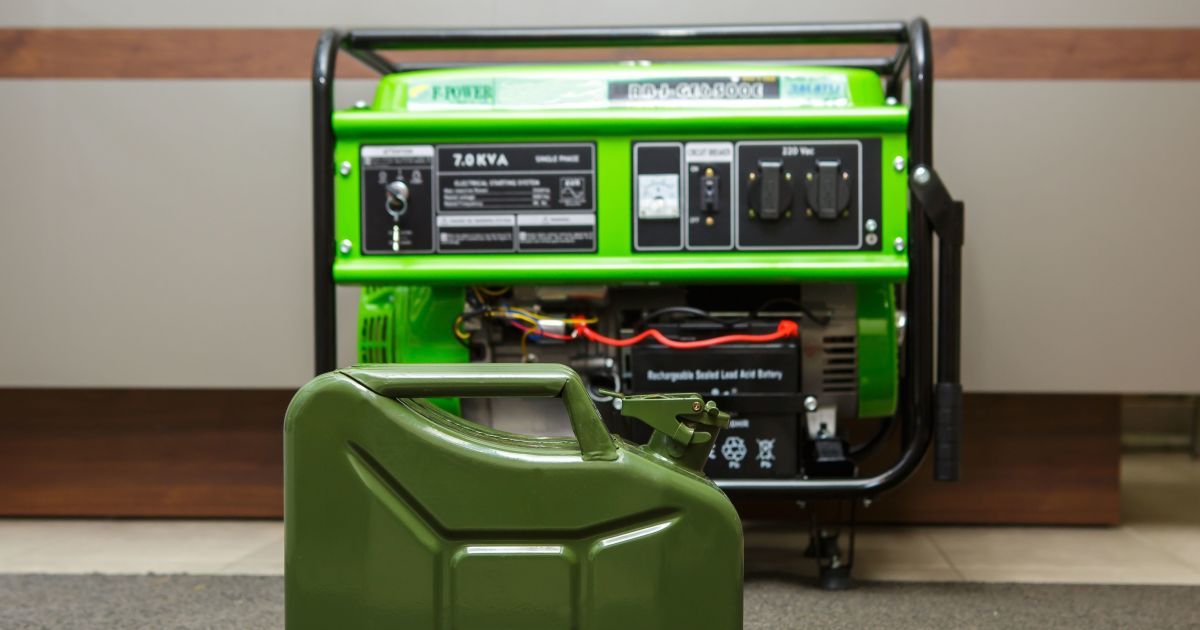 ANALYSIS FROM
On Friday, January 30, the Ministry of Community and Territorial Development of Ukraine is launching the SvitloDim state aid program. It is designed to help residents of apartment buildings ensure autonomous power supply during prolonged power outages. The program aims to ensure the stable operation of key life support systems: water supply, communications, elevators, lighting, and heating, especially during the heating season. Komersant investigated who is eligible for assistance and under what conditions.
The first to benefit from this program will be residents of Kyiv and the Kyiv region. They have been allocated UAH 800 million. And, as Minister Oleksiy Kuleba emphasized, it is now important not only to restore the energy and heating infrastructure, but also to strengthen people’s homes with alternative solutions.
“We are launching a program of additional support for residents of apartment buildings. We want to provide a simple and understandable mechanism for assistance that will work quickly, online, and transparently. People will be able to choose the equipment and supplier themselves. We must provide real support for the operation of life support systems in buildings,” Oleksiy Kuleba emphasized.
Who can count on state aid
The amount of state aid ranges from 100,000 to 300,000 hryvnia, depending on the number of floors in the building and the number of entrances.
Up to 6 floors – 100,000 hryvnia
7-16 floors – 200,000 hryvnia,
more than 16 floors – 300,000 hryvnia.
It is also available for buildings with attached, built-in, or rooftop boiler rooms and for buildings with 4 to 16 floors (inclusive) that have 3 or more entrances.
The funds can be used to purchase:
- gasoline, diesel, or gas generators;
- inverters;
- batteries;
- high-voltage battery control units;
- solar panels.
Applications can be submitted by condominium associations, housing and service cooperatives, and managers of apartment buildings regardless of ownership. The program does not impose restrictions on the choice of equipment or supplier.
All applications will be submitted online through the electronic office on the Diya portal. The commission at the Ministry of Development reviews and approves applications. Payment is made within 48 hours after validation.
The SvitloDom program will operate during martial law (but no longer than two years from the date the resolution comes into force) in communities where an energy emergency has been officially declared.
The SvitloDom program is being implemented jointly by the Ministry of Community and Territorial Development of Ukraine, the Ministry of Digital Transformation of Ukraine, and Oschadbank, with the involvement of partner banks (any bank in Ukraine can be a partner). The official website of the program, svitlodim.gov.ua, is already up and running and contains basic information.
The idea is excellent, the main thing is how it will be implemented
According to the Ministry of Development, the program is primarily designed to ensure that there is no power outages in the stairwells, that the pumps are working, that the buildings are warm, and that there is communication at critical moments. This assistance is very timely and necessary, emphasizes Oleg Popenko, head of the Union of Utility Consumers.
“The main task today is to restore critical infrastructure inside the building. To keep the elevator and pumping stations working. And this applies primarily to high-rise buildings. Five-story buildings do not have elevators, and water reaches the top without a pump,” he said in a comment
[Komersant] .
The main thing, according to Oleg Popenko, is that the launch of the program does not turn out to be a false start. There are fears that there will be a flood of applications, and it is important that the money is allocated first and foremost to the most problematic buildings, of which there are thousands in Kyiv. And how many there are in the Kyiv region is not even known.
However, as noted by MP Nina Yuzhanina, when purchasing with state funds, condominiums and managers will overpay for equipment. To clear customs for diesel generators of all capacities and gasoline generators with a capacity of up to 7.5 kW, it is necessary to pay the full duty and 20% VAT. This is because tax legislation does not provide for any exemptions for this equipment. It turns out that people and businesses, trying to solve the problem of lack of light and heat, face an additional financial barrier from the state.
“There is no electricity or heat, and on top of that, we have to pay taxes when importing generators (not to mention the subsequent considerable costs of purchasing fuel for generators, the price of which also includes considerable taxes – VAT and excise duty: 18.5 hryvnia per liter of gasoline and 15.5 hryvnia per liter of diesel),” said Nina Yuzhanina.
On the one hand, assistance programs are being launched to purchase equipment within the country (for example, “SvitloDom”), and on the other hand, customs barriers for its import are not being removed, which makes autonomous solutions less accessible to those who urgently need them. This creates an absurd situation where people are forced to pay taxes for the opportunity to protect themselves from the consequences of infrastructure destruction caused by the war. Such a policy not only fails to stimulate the solution of the problem of energy independence at the household level, but also demonstrates the lack of a comprehensive approach in a critical situation.
Meanwhile, communities in 10 regions will receive 447 generators from the EU: the first 300 have already arrived in Ukraine. 445 are low-power (13.75 kW and 15 kW) and two are powerful industrial units (over 200 kW). The total cost of the aid is €3.7 million. The donated equipment will support the work of hospitals, resilience centers, and water and heat supply facilities. In particular, 148 generators have already been delivered to Kyiv and 152 to Kropyvnytskyi. The rest of the equipment is already on its way and will be distributed among communities in the near future.
Author: Alla Dunina