“The Collective Kremlin is running the war”: are there any new faces behind the scenes and who could replace Putin in 2026?
29 December 2025 14:32
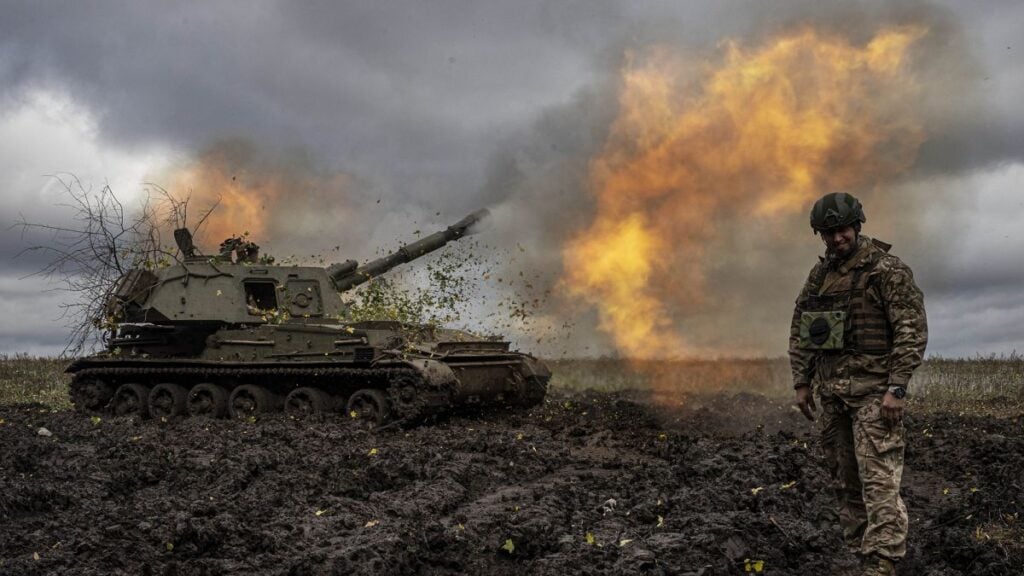
At the end of 2025, the subjectivity of Russia’s war against Ukraine became one of the most pressing and high-profile issues in international politics. The war is not led by a single person, but by a complex collective mechanism of the Kremlin, which unites political, security, and business structures capable of making key decisions without Putin’s direct involvement.
Everything that happens on the frontlines and at the negotiating tables is the result of this complex system, where personalities may change, but the essence of war management remains the same. Who is really in charge of Russia’s war against Ukraine? Is it possible to replace Putin without upheaval in the system? What scenarios of the Kremlin’s “collective rudder” should Ukraine consider?
Putin is not a “one-man dictator”
In an exclusive commentary for
“It’s not really Putin. This is a collective decision. The Ozero cooperative, the Kovalchuks, the Patrushevs, the Shoigus-they still live in Moscow and have not disappeared. This is the so-called collective Putin, which makes key decisions,” Popov emphasized.
The psychologist also voiced his version of Putin’s authenticity.
“Whether Putin is alive or not, I can’t honestly tell you, but the war is managed collectively, not by one person,” Popov said
Popov emphasizes an important detail: until the “old cooperative” has disappeared from public and physical space, it is too early to talk about new decision-making centers.
“When we see that the Patrushevs, Kovalchuks, and Shoigus have disappeared, then we can say that new faces and new groups of influence have emerged. But for now, these are the same people who are in charge of everything,” Popov adds
The expert also drew attention to the figures that Putin has already “brought to the arena” – diplomats and business negotiators.
“The fact that he allows Dmitrievs, Ushakovs, and Medinskys is not a new force. These are just proxies that the Kremlin uses as a voice or a tool,” Popov summarizes
Who can replace Putin in 2026?
Political scientist Vadim Denisenko says that almost 60% of Russian citizens are worried about the possibility of Vladimir Putin’s sudden departure from power without announcing a successor.
“We did a sociological survey on this very issue about six months ago, and I don’t think the numbers have changed much now. At that time, almost 60% of Russians said they were afraid that Putin might not be around to name a successor. This is really one of the biggest fears in the country,” Denisenko said.
The expert emphasized that the fears of the population are related not only to political uncertainty, but also to potential destabilization within the Kremlin system.
According to Denisenko, the issue of the upcoming change of power in Russia remains one of the most sensitive and uncertain factors in the country’s domestic politics.
Although the Kremlin is not openly preparing for a “power transition,” in 2026 the scenario of a change of leader may not be a political choice, but a forced reconfiguration of the elites.
Among the most likely figures discussed in international analytical circles as potential successors are:
Nikolai Patrushev
- One of the main ideologues of the Russian security bloc.
- He has direct influence on the security forces and the “hawkish” logic of war.
- Scenario: strengthening of the military dictatorship, tougher rhetoric, but weaker diplomatic maneuvers.
Alexey Dyumin
- Former Putin’s bodyguard, governor of the Tula region.
- Has a reputation as a “controlled technocrat” acceptable to the elites.
- Scenario: an attempt to stabilize the system without a radical turnaround.
Sergei Kiriyenko
- Kremlin curator of domestic policy, propaganda manager.
- A strong apparatchik, but without support from the power bloc.
- Scenario: reliance on control of society and information.
Kirill Dmitriev
- Already plays a role in international contacts.
- Closer to the business wing than to the security forces.
- The scenario is unlikely as president, but possible as a key part of the “collective rudder” after Putin.
However, no matter who sits on the dictatorial throne in Russia, the war is not run by one person, but by the Kremlin’s collective mechanism, which can survive a change of faces but not a change of substance. For Ukraine, this means that the strategy should be based not on personalities, but on understanding the entire system.