Parliamentary Committee Calls for Personnel Changes at the Ministry of Digital Transformation and PlayCity: Who Has Been Affected by the Failure in the Gambling Sector
8 April 05:14
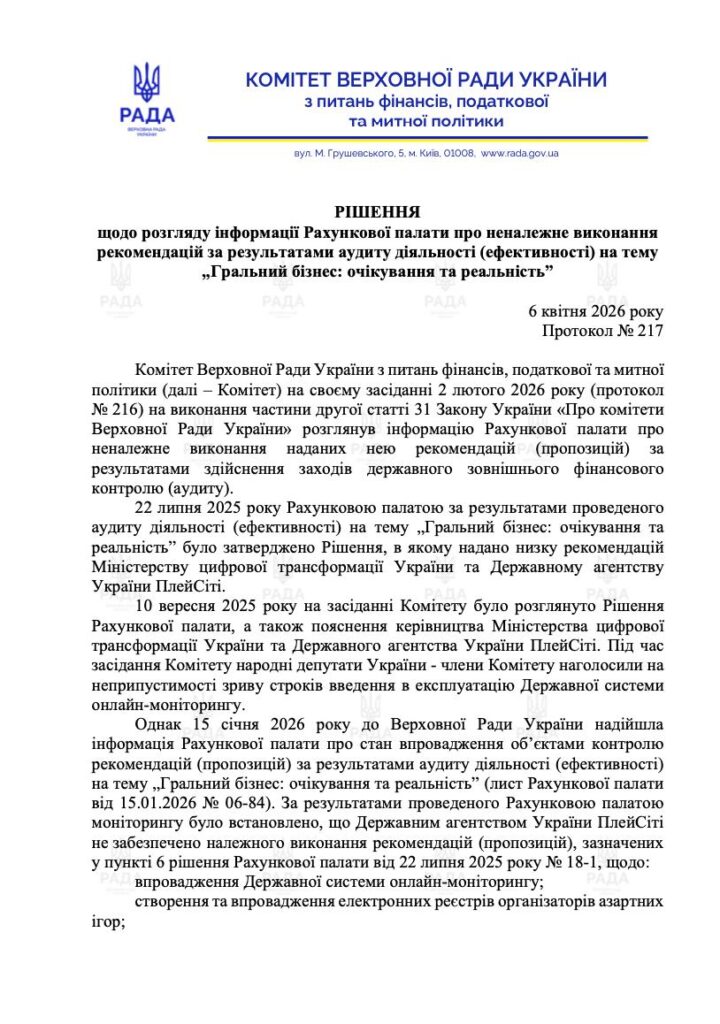
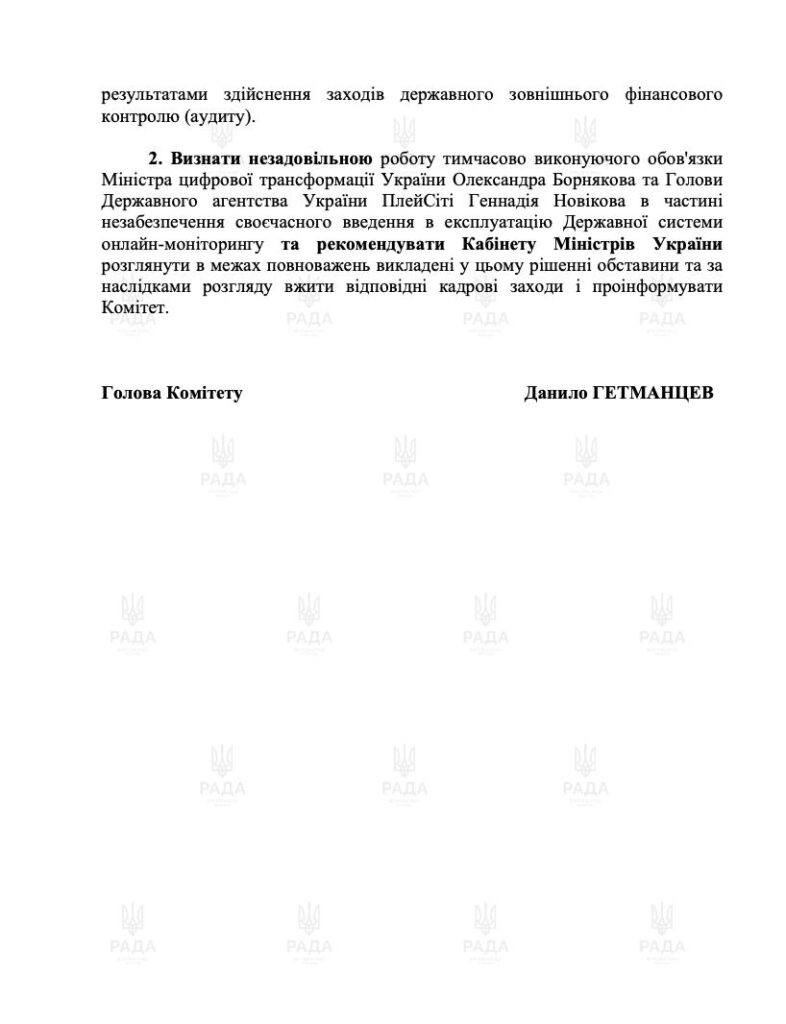
The Verkhovna Rada Committee on Finance, Tax, and Customs Policy has recommended that parliament review, during a plenary session, the Audit Office’s report regarding the State Agency for the Control of the Gambling and Lottery Business’s failure to properly implement recommendations regarding PlayCity. According to a message posted on Telegram on Tuesday by Finance Committee Chairman Danil Getmantsev, among other recommendations is to deem the work of Acting Minister of Digital Transformation Oleksandr Bornyakov and PlayCity Director Hennadiy Novikov unsatisfactory regarding the delayed implementation of the state online monitoring system, reports "Komersant Ukrainian"
The committee also recommends that the Cabinet of Ministers review the circumstances outlined and, based on the results, make the appropriate personnel decisions.
“I am convinced that the relevant decisions will be made shortly,” wrote Getmantsev, who, since the transfer of state policy on gambling to the Ministry of Digital Transformation last year, has regularly criticized the activities of PlayCity, the ministry, and its former head, Mikhail Fedorov, who now heads the Ministry of Defense.
PlayCity and the Ministry of Digital Transformation reject the allegations and state that they are actively working to restore order in the market following the dissolution of the Commission for the Regulation of Gambling and Lotteries.
What exactly happened
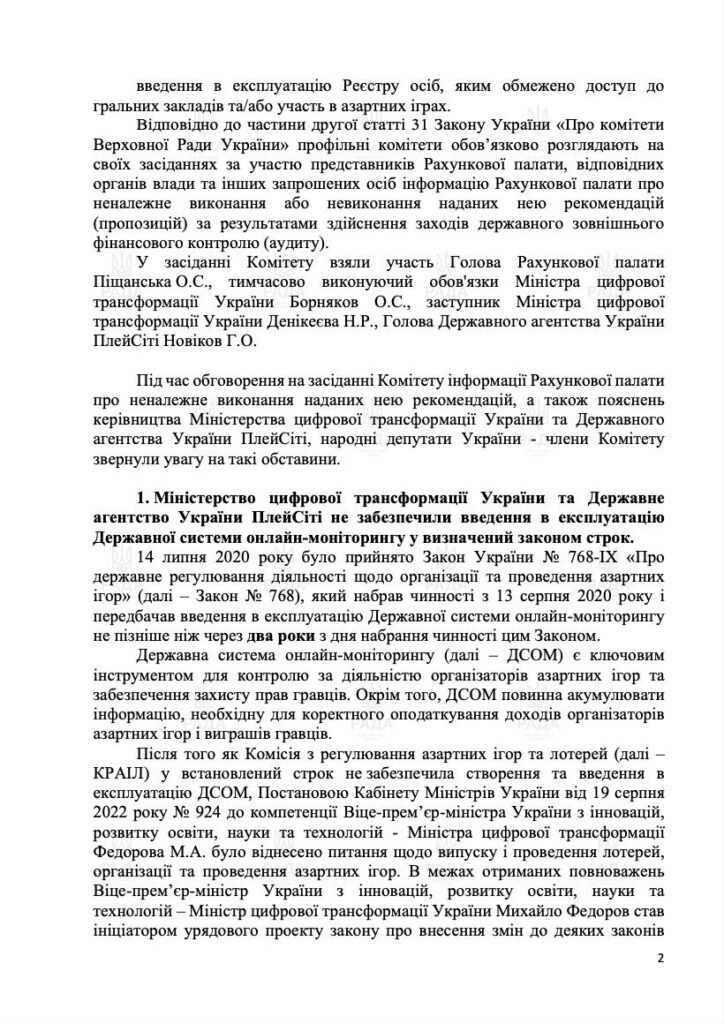
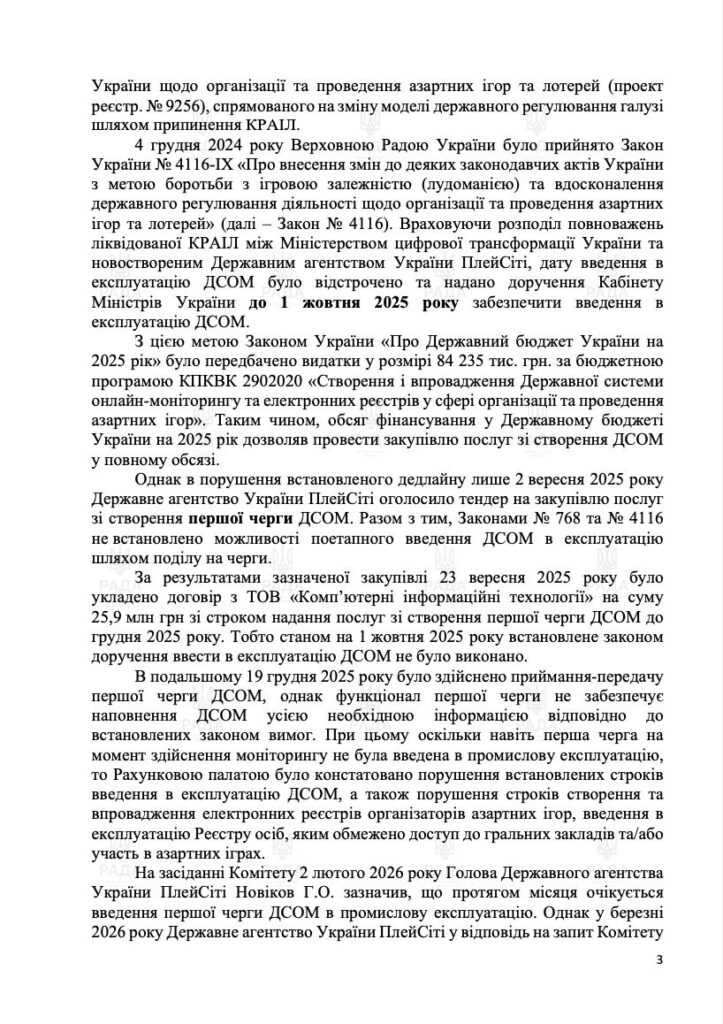
Both officials failed to fulfill a key responsibility—the timely launch of the State Online Monitoring System (SOMS) for the gambling market. The system was supposed to be launched by October 1, 2025—the deadline set by Law No. 4116.
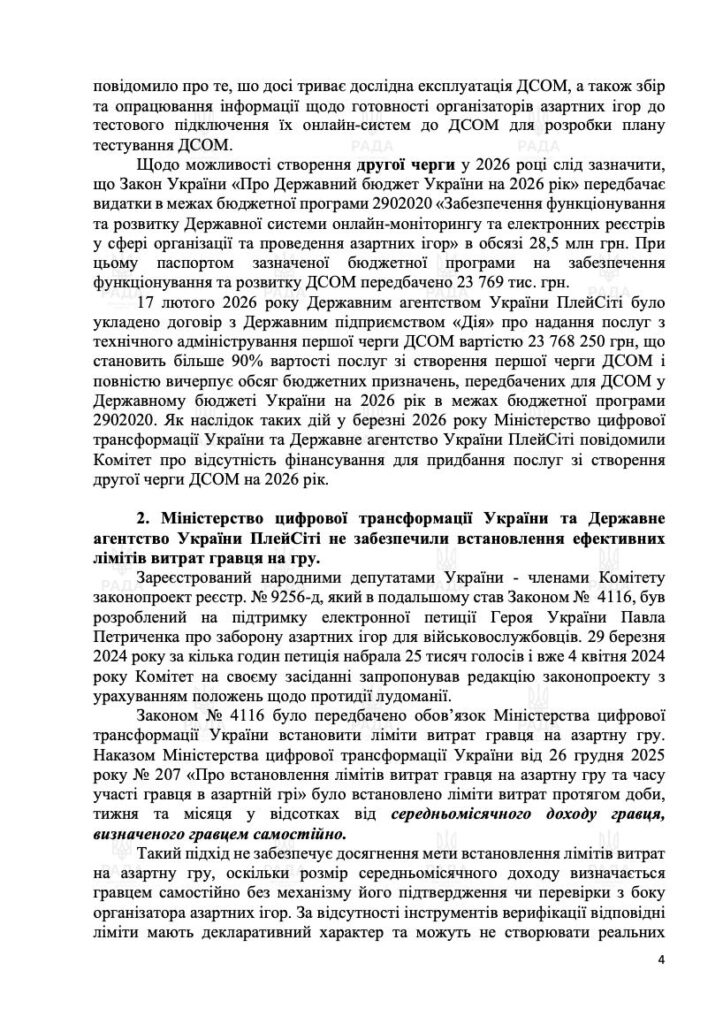
Instead, PlayCity announced the tender only on September 2, 2025, signed a contract worth 25.9 million UAH, and by the end of 2025 had delivered only the first phase—and even that without operational deployment. The Accounting Chamber documented systematic violations of deadlines.
Why the delay in launching the DSOM became a problem
The absence of a fully-fledged online monitoring system means that the state lacks a sufficient digital tool for continuous real-time oversight of the gambling market. The Accounting Chamber’s report emphasizes that the introduction of the DSOM and the digitization of the market were intended to improve the transparency and accountability of the gambling industry and ensure the full collection of taxes, fees, and other payments to the budget.
In fact, the delay in launching this system means that one of the main control mechanisms, which the state considered fundamental to the new market regulation, is still not fully operational. This is precisely what became one of the main arguments for the parliamentary committee’s harsh reaction.
Why the complaints are directed at the Ministry of Digital Transformation and PlayCity
Following the entry into force of Law No. 4116 on April 1, 2025, the CRAIL was dissolved, and the PlayCity agency was established in its place. Among its tasks, the audit explicitly mentions the digitization of the licensing process, the launch of the DSO, the implementation of tools to control the gambling market, and the fight against illegal casinos. The agency operates under the coordination of the Ministry of Digital Transformation, so the criticism applies to both the ministry’s leadership and the new regulator.
That is why the Parliamentary Committee, in its decision, held both the Ministry of Digital Transformation and PlayCity responsible for the delayed launch of the system.
What other complaints were raised
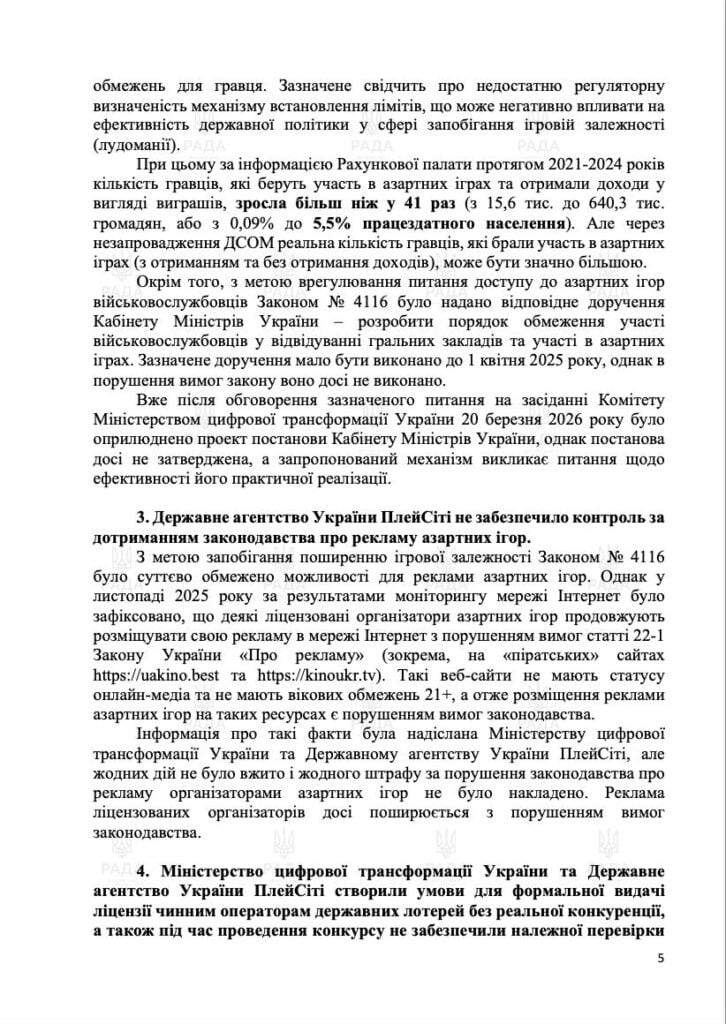
In addition to the delay in launching the DSOM, the materials regarding the committee’s decision also mention the failure to establish effective limits on player spending per game and inadequate oversight of compliance with gambling advertising laws.
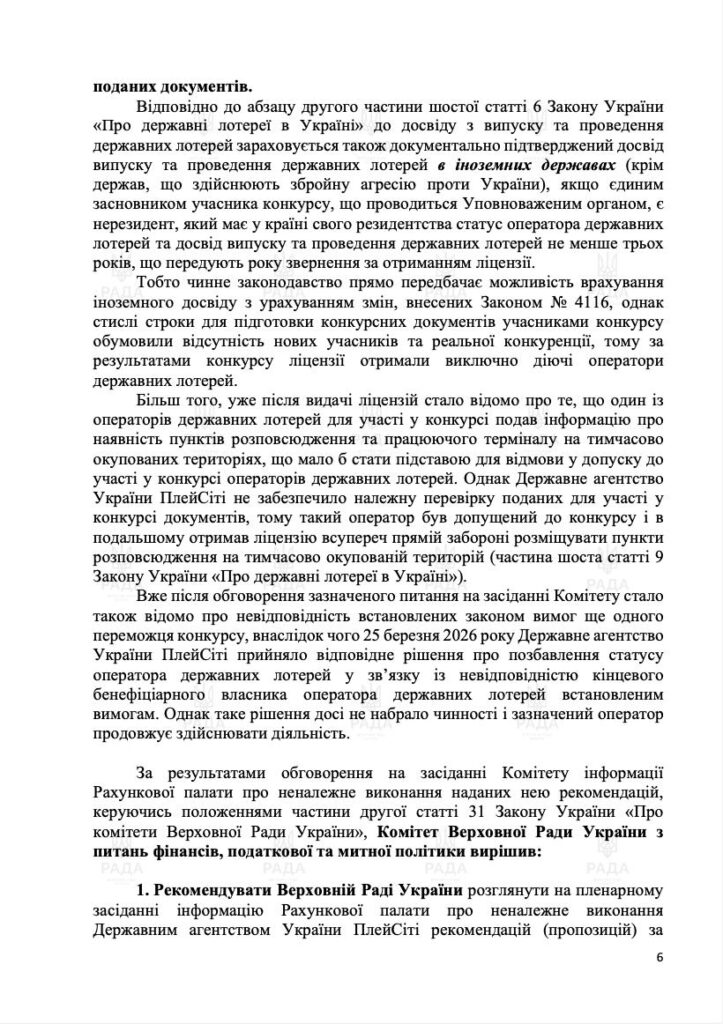
The committee determined that PlayCity had admitted to the operator licensing competition an applicant who listed lottery distribution points in temporarily occupied territories in their documents—a direct grounds for rejection under the law. The operator not only passed the selection process but also received a license. On March 25, 2026, PlayCity finally revoked this operator’s license—but the decision has not yet taken effect, and the operator continues to operate.
A separate issue is casino advertising on pirate websites. In November 2025, monitoring revealed that licensed gambling operators were placing ads on websites without online media status and without an age restriction of 21, specifically on uakino.best and kinoukr.tv. The information was forwarded to the Ministry of Digital Transformation and PlayCity. No fines were imposed. The advertisements continue to be distributed in violation of the law.
At the same time, the Committee found that the Ministry of Digital Transformation had not fulfilled the Cabinet of Ministers’ directive to develop procedures for restricting military personnel’s access to gambling. The deadline for implementation was April 1, 2025. On March 20, 2026, the ministry published only a draft resolution, which has not yet been approved.
Why is the topic of gambling so sensitive right now?
In its audit, the Accounting Chamber noted that between 2021 and 2024, the number of people who received winnings rose from 15,600 to 640,300.
The audit also emphasizes that shadow transactions, financial losses to the state, and social risks associated with gambling remain relevant.
Against this backdrop, the launch of a state-run online monitoring system should become one of the key safeguards.
What the committee’s recommendation means
The decision of the relevant committee does not in itself mean automatic dismissal or immediate resignation. It signifies a political and institutional assessment of the situation and an official recommendation to the government to consider personnel-related conclusions. Concurrently, the committee recommended that the information from the Accounting Chamber be submitted to parliament for consideration.
In other words, we are now seeing a shift from audit findings to potential management decisions. This is precisely what makes the story not merely technical, but politically significant.
What this means for the gambling market
For the market, this situation means that the issues of transparency, digital oversight, advertising, mitigating risks for players, and ensuring full budget revenue have once again taken center stage.
If these personnel decisions are indeed made, it could affect both the pace of the DSOM’s launch and the overall framework for future government oversight of gambling.
Read us on Telegram: important topics – without censorship