Compensation from orbit: Ukraine simplifies proof of housing destruction
10 November 2025 15:35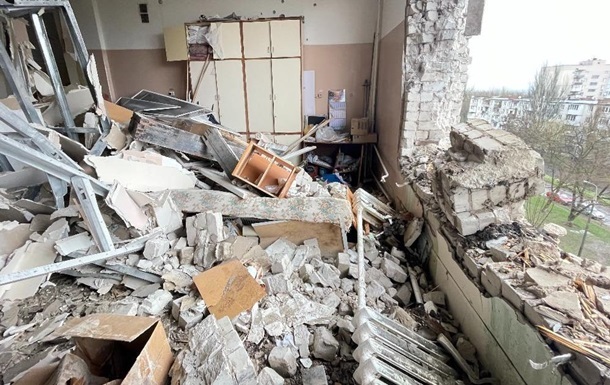
The Government of Ukraine has decided to simplify the process of confirming the destruction or damage to housing during the hostilities. It is planned to launch the process of remote inspection of housing with the help of the State Space Agency of Ukraine to obtain satellite images confirming the destruction. Units of the Armed Forces of Ukraine may also be involved in data collection, which will allow them to work even in difficult areas with limited access. IDPs, especially those from the occupied territories, have been waiting for years for at least some compensation for their forever lost homes. Is it possible to say that the light in the window has dimmed for them?
It so happens that one of the main requirements for confirming the fact of destroyed or damaged housing is an inspection report drawn up by local authorities, the State Emergency Service, the military administration or a property inspection commission. It is this act that must confirm the degree of damage to the dwelling, its suitability or unsuitability for living, or the fact of destruction. If the dwelling is located in a combat zone, the report may be drawn up on the basis of photo or video evidence if access to the property is not possible. The photos should be taken with the date and geolocation, and the video should be commented on. It is also advisable to add testimony from neighbors or eyewitnesses.
As it turned out, it is unrealistic to fulfill these requirements in the TOT or in areas of active hostilities. In some occupied cities, towns, and villages, even the remaining locals are forbidden by the new government to film anything. And in some places, there is nothing to film and no one to film – everything is in ruins, people don’t live or even visit. So it is impossible to get not only photo or video evidence, but also the testimony of neighbors. This has become one of the main stumbling blocks for IDPs, which has led to immediate refusals to register for compensation.
And now the Cabinet of Ministers has decided to change this provision. In particular, the requirement to have at least three angles during photo fixation has been canceled – now one general photo is enough, and additional ones are required if necessary. The requirement to take photos from above with a deviation of no more than 20° has also been canceled, which takes into account the actual conditions of shelling. The permissible geolocation error has been increased from 4 to 10 meters to take into account the restrictions on shooting in the areas of hostilities.
Now the satellite will do everything. And if the photo, video or satellite materials do not fully meet the technical requirements, but in the aggregate allow to establish the fact of destruction, they can still be used to make a decision on compensation.
“Thanks to these changes, the eRestoration program will be able to collect evidence faster and more accurately, which means that more people will be able to receive compensation for damaged housing,” the government said.
Only a few IDPs received housing
During the 3.5 years of war in Ukraine, only 63 internally displaced persons have been provided with housing, although 528.9 thousand requests have been submitted during this time, and their number is growing every day. This is reported in the Unified Database of Internally Displaced Persons.
As of August 2025, the register contains almost 220 thousand active applications marked “housing needs”. At the same time, the Ministry of Development cites other figures – 23.1 thousand IDPs are on the waiting list for temporary housing as of December 31, 2024, while 4.2 thousand people were actually provided with housing in 2022-2024, as noted by MP Oleksiy Honcharenko. However, this is a drop in the bucket.
Many IDPs faced problems even at the stage of submitting documents or even registering with Diia, says Vasyl Ryasnyi, a legal consultant.
“There is a photo of a destroyed house, but the registration is denied because the house is located in the occupied territory. Many IDPs from the TOT are told when filling out an application in the register: “The register is closed or the service is temporarily unavailable”. Or, for example, an IDP from Mariupol. His apartment and the house burned to the ground in March 2022 – he was even able to take pictures of it. In 2023, the house was demolished, and this was also recorded. There are even satellite images of his house on Google Maps and Google Earth, which show that the house is gone. But the resident of Mariupol still cannot apply for compensation for his destroyed home. Currently, there is a situation where, if the housing remains in the occupied territory, people cannot even register in the registry. This function is available only to those whose housing was damaged by the hostilities on the territory controlled by Ukraine,” says[Kommersant] .
Not all IDPs will be lucky
According to the lawyer, today the state compensation program for damaged or destroyed housing is not designed for millions of refugees.
“For example, in Bucha district, local residents have received or are receiving compensation for the repair, restoration or purchase of damaged or destroyed housing. Similarly, the eRestoration program works in other regions where people were left homeless after the fall of drones or missiles. However, this initiative with images from space and the involvement of the military does not apply to the TOT. That is, the current IDPs may be lucky with compensation only if all the documents are in order,” the lawyer emphasizes.
In fact, according to Vasyl Ryasnyi, the situation looks quite paradoxical: it is impossible to receive compensation for lost housing in the TOT, but it is quite possible to receive a utility bill or property tax from the tax office for the “extra” square meters of an apartment or house in the occupied part of Donetsk or Luhansk regions where Russians already live.
The author: Alla Dunina