The Vyazemsk SIZO-2 death camp. Three stories of Ukrainian prisoners
2 July 2024 15:12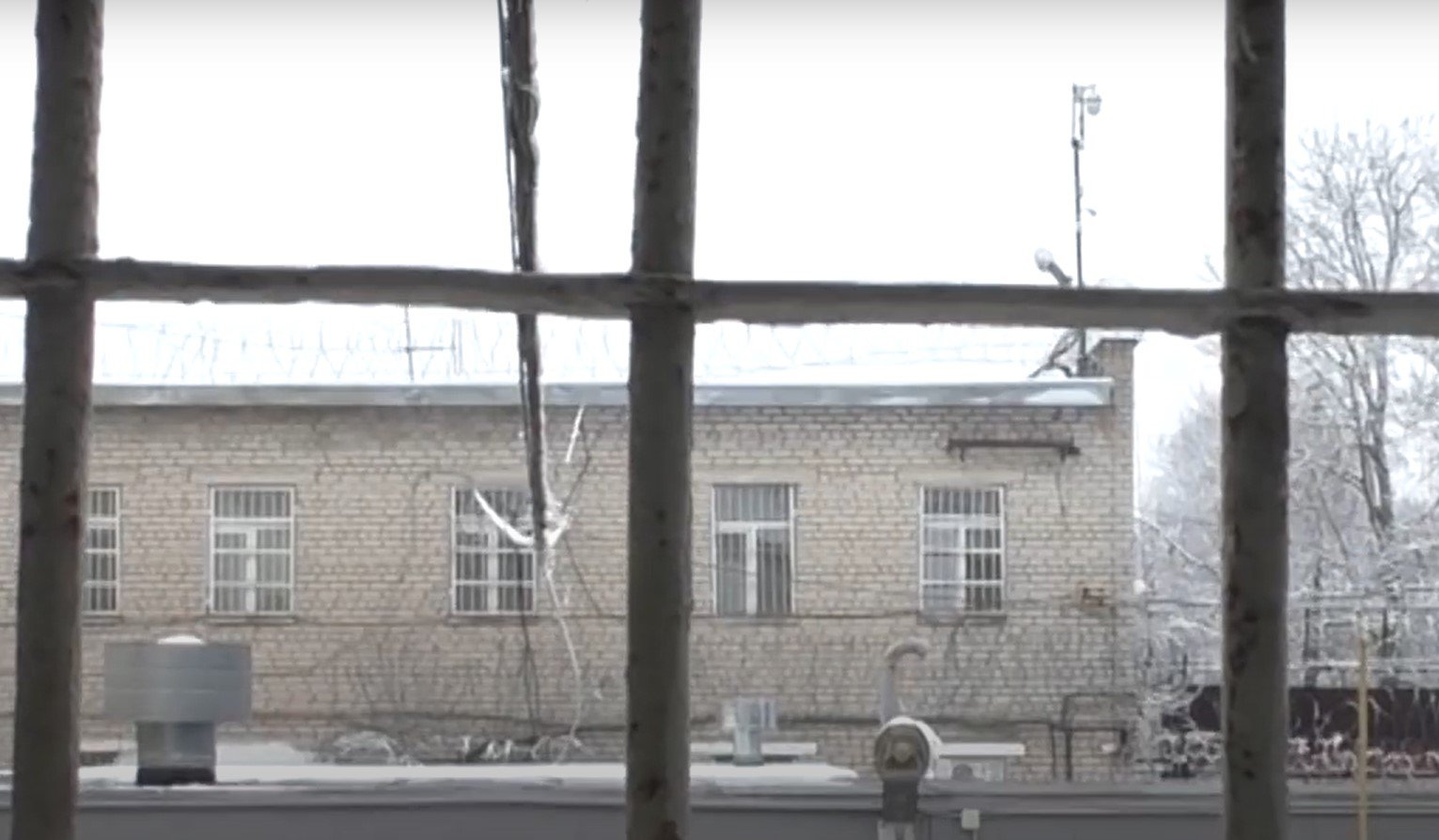
How Ukrainian prisoners are tortured and killed – stories from one Russian detention centre.
Material by Texty.org.ua. The original is available here.
At first glance, the Vyazemsky Detention Centre No. 2 looks like an ordinary institution of the Russian penitentiary system. However, in reality, this place can be safely called a death camp.
The Russians proved to be much more cunning and clever than the Nazis during World War II, who built special facilities to exterminate their enemies.
Officially, Russia has no specialised facilities for holding Ukrainian prisoners. It is as if no one is in Russian captivity. They simply “dispersed” Ukrainian prisoners to their prison facilities, where they physically and morally break and destroy them away from human eyes.
Texty.org.ua decided to investigate one particular place where Ukrainian prisoners are tortured. This is Vyazemsky SIZO No. 2, an unremarkable institution that has become a place of torture for Ukrainian prisoners.
While working on this material, we discovered another problem – the unwillingness of the Ukrainian state to clearly emphasise that we are actually dealing with mass crimes against humanity.
A paradoxical situation has arisen: due to bureaucracy, Ukrainian officials simply copy the falsified diagnosis made by Russian doctors, instead of making their own determination of what caused the person’s death and finally calling the crime a crime.
UKRAINIAN OFFICIALS SIMPLY COPY THE FALSIFIED DIAGNOSIS MADE BY RUSSIAN DOCTORS
It is very unfortunate that Ukrainian officials are actually confirming the Russian lie that another Ukrainian prisoner simply died of “tuberculosis”.
At the same time, the official Ukrainian forensic examination ignores the fact that the Russians have done everything possible to kill people and that tuberculosis is a consequence of the torture and abuse that Ukrainian prisoners suffer every day.
We hope that our material will contribute to solving these problems.
Oleksandr Hrytsiuk
Kivertsi, Volyn region, was taken prisoner in April 2022. In January 2024, his family was informed that Oleksandr’s body had been returned from captivity.
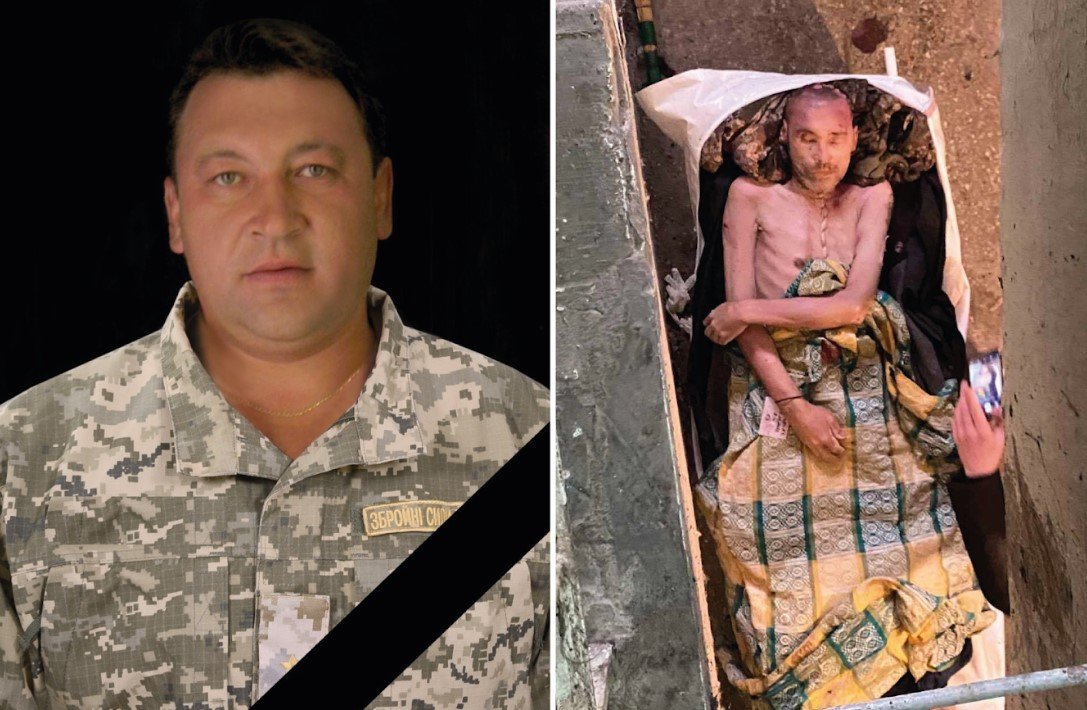
Oksana Hrytsiuk, the wife of the deceased, tells:
We live in the Volyn region in the town of Kivertsi. My husband Oleksandr worked as a builder. From the first days of the full-scale war, he said: “Who else but me?”. And he volunteered. He fought in the 110th Brigade named after Marko Bezruchko.
Unfortunately, on 10 April 2022, he and a group of his comrades were captured near Novobakhmutivka.
I learned about his captivity from racist websites. First, I found one video, then another where he was wounded and his head was being rewound.
In the autumn of 2022, I received confirmation from the International Committee of the Red Cross. In September 2022, I received the only letter from my husband ever. It was written in Russian:
“Hello, my wife. I am a prisoner of war in the Russian Federation. I was wounded. I am being fed, dressed and shod. They provide all the necessary medical care. I’mwaiting for the exchange and a speedy return home.”
Without a doubt, the letter was written under dictation. But it was also a great joy for me. I received confirmation that my husband was alive.
I knocked on all the doors, wrote to the Coordination Centre, the President, the Security Service of Ukraine, the National Information Bureau. I went to Kyiv all the time. I wasn’t just waiting for him to be released from captivity, I was constantly doing something.
In February 2023, my husband’s cellmate, who was released from captivity, told me that he was fine, treated more or less normally, they don’t beat him now, he can survive.
Now I understand that he said that to avoid upsetting me. Then it was just silence, no news about my husband.
However, in December 2023, a representative of Lubinets (Dmytro Lubinets, Ukrainian Parliamentary Commissioner for Human Rights – Texty.org.ua) called me and said that it was possible to send my husband’s belongings and a letter. I wrote a letter, attached some photos and sent it to the National Information Bureau. It was just before the New Year. At that time, my husband was already dead, but I didn’t know it yet.
In early January 2024, I received information from another of my husband’s cellmates. This time I heard that my husband was being abused. On 24 January, an investigator from Kyiv called me and said that there had been a body exchange in December 2023 and that they had my husband’s body.
I COULDN’T BELIEVE IT, I SAID THEY HAD MIXED UP SOMETHING AND HUNG UP
I could not believe it, I said they had mixed up something and hung up. Later, the investigator sent me a photo of the tattoo, and I recognised him from the tattoo.
It was the most terrifying day of my life.
When we arrived in Kyiv on 25 January to identify the body, I was shocked by what I saw. It was a very scary picture. I was particularly struck by how thin the body was. The pathologist said that he was under fifty kilograms.
Sasha was tall – 180 cm. Before captivity, he weighed 110 kg and was physically healthy. All that was left of him was bones and skin. His head was all blue, his nose was on the side, his index fingers had no nails. I don’t know whether they were pulled out or beaten off. Traces of torture all over his body.
His cellmates later told me how they were abused. They were beaten every day. They beat me either in the cell or took me outside. They beat very severely, especially my husband. Because he was tall and handsome, because he was from Western Ukraine and did not want to speak Russian.
HE WAS BEATEN, AMONG OTHER THINGS, BECAUSE HE DID NOT WANT TO SPEAK RUSSIAN
“They said to him, ‘You are a Banderite, you should be killed and cut up. He was beaten very severely. So much so that he lost consciousness. Between beatings, he was forced to stand still for hours. Sometimes with their arms raised.
They were hardly fed. Once there was a holiday, and dogs were running in the SIZO yard, so the warders collected dog scraps, threw dog hair in it and gave it to them as food.
I wrote five letters to my husband, and, as I was told, he received these letters in the summer of 2023. In one of the letters, I wrote that he had a grandson. When he read it, he was very touched. He told the boys, and on that day they gave him all their food, and it turned out to be a small pot.
His date of death was 16 November 2023. The conclusion of our Ukrainian pathologist was “tuberculosis”. We will appeal this conclusion. I know that in March, many bodies of the guys were returned from captivity. And all of them were diagnosed with tuberculosis or coronary heart disease as if under a copy.
For a month I could not bury my husband because we did not agree with this medical certificate. And wherever I applied to the Coordination Headquarters for the Treatment of Prisoners of War about this medical expert’s opinion, I was told that they could not influence the decision of the medical expert.
When we took the medical certificate of death, it simply said tuberculosis. It is the same with the conclusions about the cause of death. The Russian conclusion says that he died in hospital, the cause of death was pneumonia. Ours says tuberculosis and lung failure.
AFTER ALL THE TORTURE IN RUSSIA, UKRAINE GAVE US A DOCUMENT THAT HE DIED OF TUBERCULOSIS, AS WRITTEN BY RUSSIAN DOCTORS
I just don’t understand why our side is actually taking the position of the Russians, attributing the causes of death to the disease. You just need to look at him to understand that he was tortured. There are only bones and skin. In view of all this, we said that we disagreed and would not accept such a death certificate.
For you to understand: he also had Russian documents with him. The cause of death was listed as pneumonia. It says that he died in the Vyazemsky Central District Hospital. And the most interesting thing is that when the Lutsk registry office issued us a death certificate, they wrote: place of death – the city of Vyazma, Vyazemsky Central District Hospital.
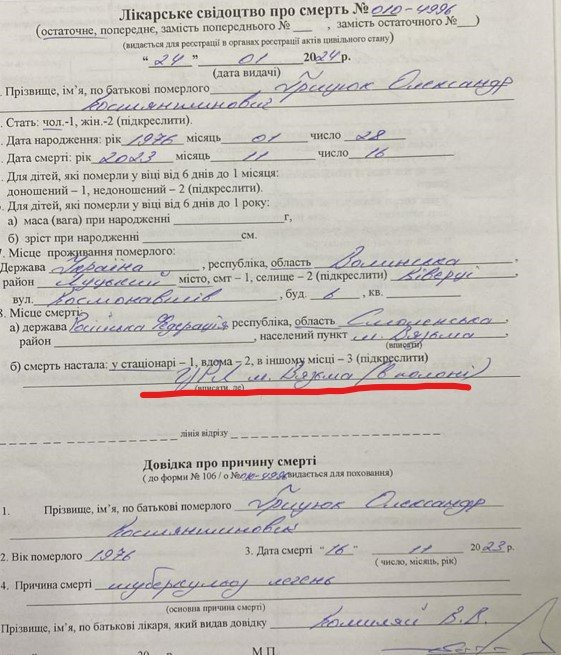
There is not a single word about him being in captivity. So it turns out that the Russian side is so humane that they took him, a sick man, to their hospital for treatment? And the registry office answered me: “What would we do if he had such documents with him?”
“WHAT WILL WE DO IF HE HAD SUCH DOCUMENTS ON HIM?”
Now the criminal case file has been sent to the prosecutor’s office. They seem to have changed the qualification to Article 438, paragraph 1 of the Criminal Code (cruel treatment of prisoners of war or civilians – Texty.org.ua). Hopefully, the proper conclusions will be drawn.
In Kivertsi, they wanted to put up a memorial plaque and said: “We will write that your husband died in captivity”. I told them: “It’s better not to put anything at all. My husband did not die, he died defending his homeland.”
Vitalii Klochenko
Voznesensk, Mykolaiv region, was taken prisoner in April 2022. In April this year, his family was informed that Vitaliy was returned from captivity dead.
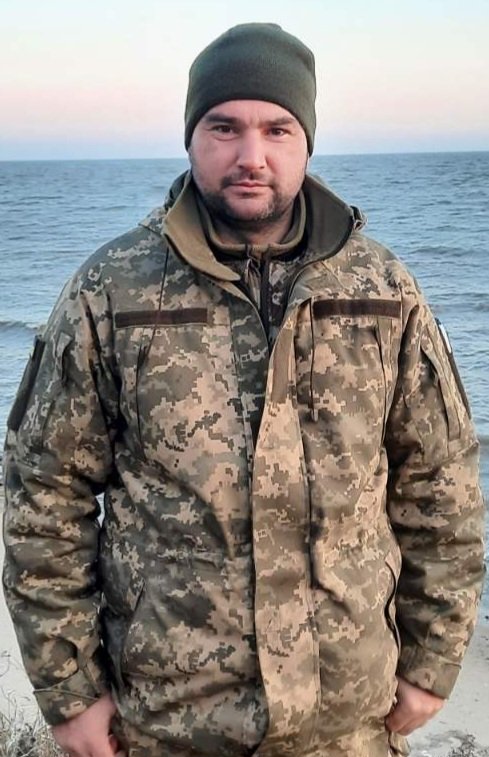
The wife of the deceased, Oksana Klochenko, tells:
“My husband signed a contract with the 36th Marine Brigade on 9 June 2020.
At first, everything was fine: he served as a reconnaissance machine gunner, fulfilling all his duties. This was not his first military experience. When everything started in the East in 2014, he received a call-up. He didn’t hesitate and went straight away, even though I told him that you don’t have to go, because we have a small child.
From 2014 to 2015, he was in the 28th Mechanised Brigade and had the status of a combatant. He joined without hesitation in 2020, even though we already had three children at that time.
He really wanted to join the Marines, he wanted to get a beret, which he never had time to pass. They had some training, he passed everything, was very happy, he liked everything very much.
Then a full-scale war broke out. In March 2022, I found out that they were in Mariupol. My husband did not say where they were, he just said that they were in Mariupol. Later we found out that they were at the Ilyich plant, where they were captured. It happened on 12 April.
He called me then, and we had a long conversation. At the same time, I could hear other voices around him, it seems that everyone was calling their relatives. In fact, it was their last chance to talk to their families. He did not say that they were being taken prisoner. He said that they would try to break through, maybe something would happen and he would call again. But it was impossible to get through. I found out later that Vitaliy was captured. A friend sent me a video that clearly showed that he was in captivity.
We probably didn’t even know where he was for eight months. We monitored telegram channels, websites, looked at information about everyone who had been released, but no one had seen him, no one could tell us where he was. And on 1 January 2023, we learned from one of the released prisoners that Vitaliy was alive, in the city of Vyazma, Smolensk Region, in Detention Centre No. 2.
Then it was silence again, no one saw anything, no one heard anything. We knew nothing for a whole year, we went to the rallies, to the Coordination Centre. But there was no information about him. The only thing was that Vitaliy was officially confirmed as a prisoner of war by the Red Cross. He was confirmed back in 2022.
Then there was an exchange in 2024. Two prisoners who returned said that he was sick but alive. One of these men was in the same cell with him in 2022-2023, and the other saw Vitaliy alive two weeks before his exchange, which took place on 3 January this year.
Back then, Vitaliy already had tuberculosis, was very thin, and had a broken nose. But he was talking, worried about us. In general, I noticed that those who are released from captivity do not want to talk much about all this torture.
As they told me, there was nothing good there. They lived in the basement. They were fed with the same food as pigs, and they were given two spoons. They beat them a lot. If a person fell down and fainted, they would put a taser to his ear to make him come to his senses. And they would continue again. How could you not get sick after that? The guys also told us that a person with TB could be put in a cell on purpose to infect others.
We appealed to the Coordination Headquarters and the SBU, asking that Vitaliy be included in the lists as a seriously ill person.
on 17 April this year, an investigator called and offered to look at the photo. He said that maybe I wouldn’t have to go, maybe I would recognise him that way.
The photos were really scary. On the one hand, the body was already half-decomposed. On the other hand, even in this state, it was clear that he had been abused and beaten. And then there was his terrible thinness. Before he was captured, he was 185 cm tall, of normal build. And now it was just a horror how thin he was.
We still went for identification, because the photo did not show everything. I had to see his feet: he had a deformity in his toenail, and I had to look at it. Only then could I be sure that it was him.
His sister and I went to the morgue in Poltava, and everything was very bad there. Two days had passed since the investigator’s call – the bodies were not in the refrigerators, they were just lying in the morgue in the bags they had been brought in. When we opened the bag, it was partly just a soup. The smell was terrible.
THE BODIES WERE NOT IN REFRIGERATORS, THEY WERE LYING RIGHT IN THE MORGUE IN THE BAGS THEY WERE BROUGHT IN
And then the investigator told me that there is no such word as torture in medical terminology. There are other terms, but not torture. He also said that the forensic expert found no traces of torture.
But before that, he told us that even not letting me sleep is considered torture. To which I replied: look at him. There are just relics of a person, even the bones have dried up. How can you not call it torture? His nose was broken. There are signs of injuries on his body. Everything points to the fact that he was beaten and tortured.
One more thing – it turns out that Vitaliy’s body was returned to Ukraine on 15 March, and I was not informed until 17 April. Although his name and surname were written on the body bag. I asked why they didn’t call the family immediately when the body arrived in Ukraine, but called back only a month later. I was told that a lot of bodies had arrived. That’s how we were informed when it was our turn.
But couldn’t they have put the body in normal storage? So that the family could come and pick up the person properly.
Then there was a burial, we took him from the morgue. And some people, even the driver of our hearse, did not want to be filmed. They closed the door in front of us so that no one could see how they were putting him in the coffin. It was the first time in our town that a person died in captivity.
And now we have another problem. The forensic expert did not write where Vitaliy died. It turns out that he died in an unknown country and in an unknown city. He also wrote that he died of a simple disease. There was no mention of the fact that he had been in captivity for two years and that he had been tortured there.
And now, based on this conclusion, I cannot issue a death certificate because the place of death is not indicated. A month has passed since the funeral, and there is no death certificate. The registry office says that they do not know in which country and where Vitaliy died. Although the same investigator confirmed to me that he was brought from Vyazma, Russia.
And no matter what, my husband didn’t just die in captivity, as they wrote in the conclusion, from tuberculosis. He bravely defended his country and died for it.
Oleksii Kretsu
Mykolaiv region, met a full-scale invasion in Luhansk region, where he was captured. First, he was taken to SIZO No. 17 in Luhansk, and from there to the Vyazemsk SIZO, where he stayed for almost two years. He returned from captivity and is currently undergoing treatment for tuberculosis and hepatitis B, which he acquired in captivity.
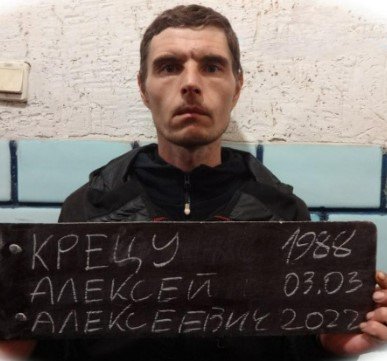
Soldier Oleksiy Kretsu says:
“We were held for two months: first in the Luhansk SIZO, then there was a long journey, including a flight by transport plane, until finally we were brought to the Vyazemsk SIZO. At first, we were held for two days with our hands tied and eyes closed.
From what we managed to hear, a total of 256 of our prisoners were brought to this detention centre. As one of the warders said, “256 snouts”.
As soon as they took off the handcuffs and blindfolds, they arranged for us to be “registered” – they beat us with tasers, batons, arms, legs, whatever they could find. And after they had beaten us up, they cut our hair and washed us – it took about 15 seconds for each of us. At the same time, the first ones got water like boiling water, and the last ones got very cold water. After that, we were settled in our cells.
From the moment we got to the detention centre, there was complete information isolation, absolutely complete. However, as soon as we were brought there, they said that we would all be shot. Because, you see, there was nothing to feed us and no place to keep us. A month later, they said that we would not kill you, but you would not return home in one piece. And not everyone will return, and it is unknown when.
About the regime in the Vyazemsky SIZO
The treatment was terrible, the conditions were terrible, just unbearable.
Every single day, during the morning check, they beat and humiliated me. The same shocker – they did not spare us.
In the mornings, when we got up at 6:00 to 10:10, we stood still in the cell. You have to face the door: you can’t even put your head down, because they think you’re sleeping. Each cell was under video surveillance. Usually two cameras, rarely just one. And your every move was monitored.
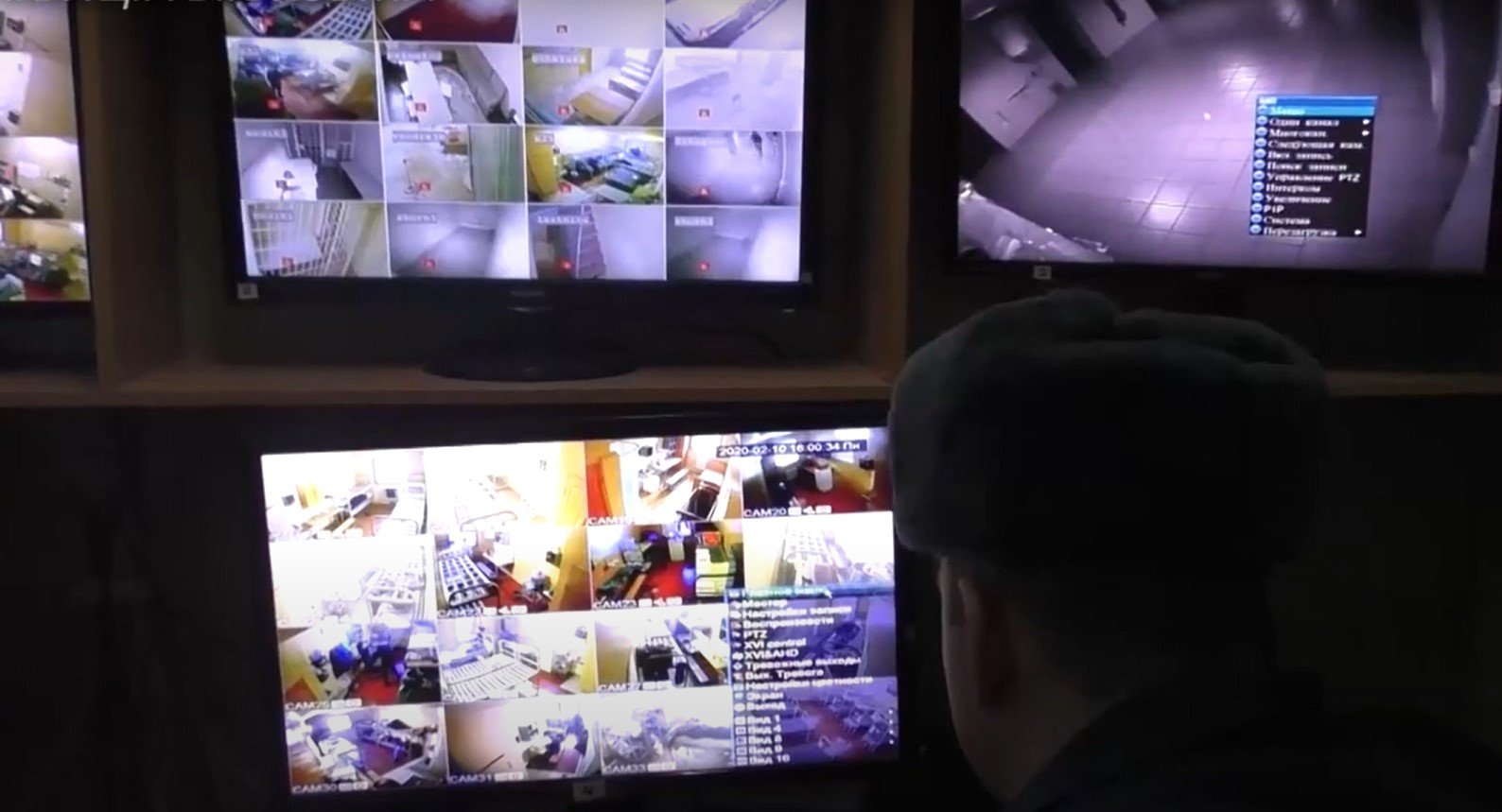
You turned your head, leaned on the bed – that’s it, you’re in trouble. Only the crippled and seriously ill who could not stand at all had the right to sit.
If it was winter and it was minus 10 outside, then in the cell, God willing, it was plus 10-12 degrees. Because the cells, although small, were mostly unheated in winter. And so you stand there for hours in your thin prisoner’s clothes, not moving, stupidly without any movement.
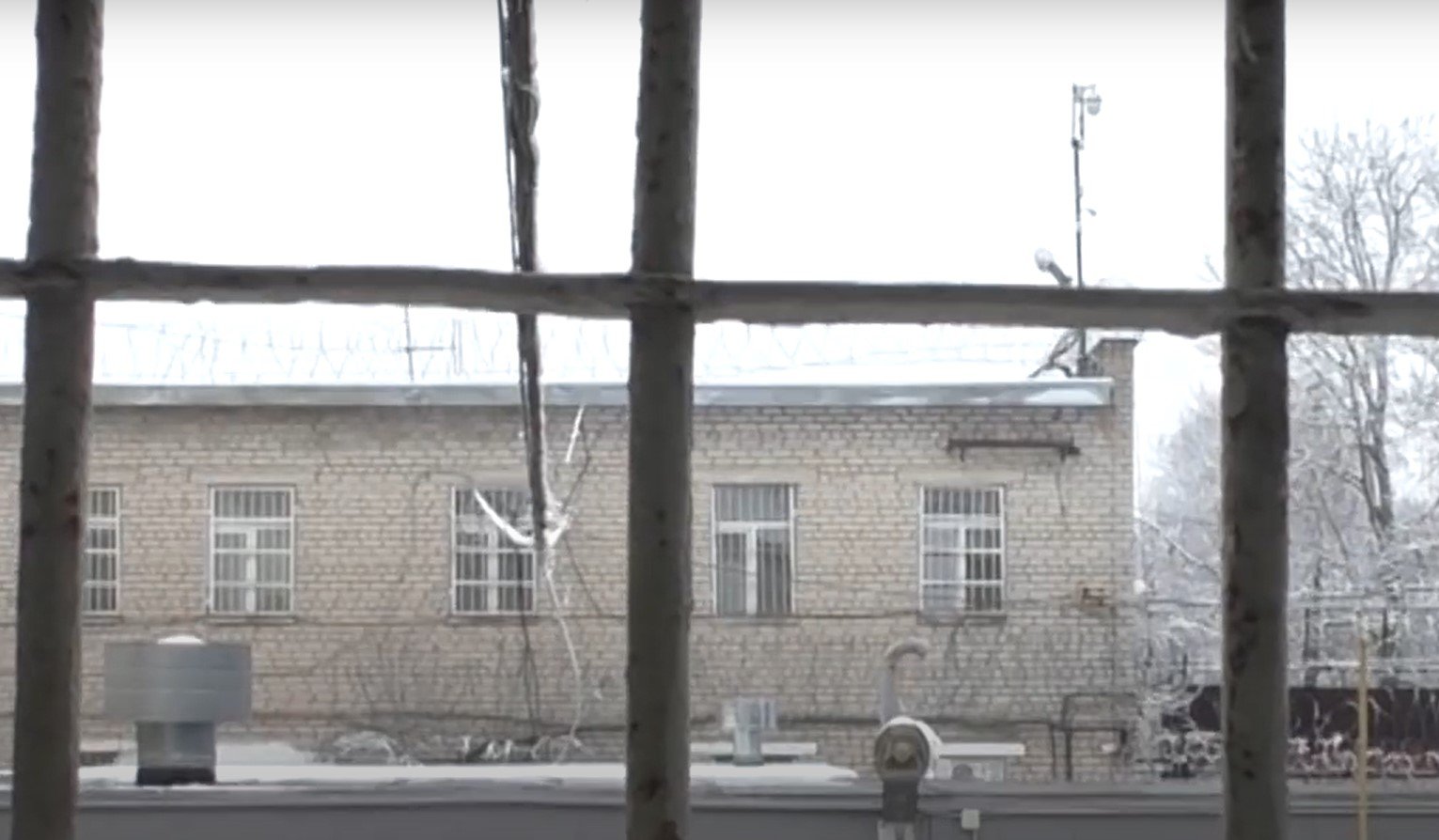
And when it was summer and hot, the window was closed tightly, the radiators were heated to the maximum. We literally caught each other during the line-up, as the guys were starting to faint.
We were fed with cereal poured over boiling water. And often with cold water. The only thing that tasted good was when they gave us jelly with a piece of white bread. They also gave us mashed green potatoes, which were light green in colour. And fish with it.
We had the right to stay in the toilet for no more than three minutes. It didn’t matter what you were doing there, you had only three minutes to do everything.
Every few weeks there was a bathhouse. How we were taken to the bathhouse was in a column, arms behind our backs, half-bent. And God forbid that anyone looked to the right, left or at them. They would beat us to death. We arrive at the bathhouse, and a command is given: “Undress!”.
We take off all our clothes, the ones our mother gave birth in. We stand in a pose, as they say, with our legs apart, head tilted, hands behind our backs (“dolphin”). And they had women in the bathhouse. And they were very fond of beating us on the genitals with boots, shockers, anything.
They also beat us during interrogations. I am a simple border guard, not an assault rifleman, not a marine, not a machine gunner. I lost half of my teeth during these interrogations. I can only imagine what they did to machine gunners and snipers during interrogations.
From time to time, we were rotated from other cells. So the guys who were transferred told me that there was an assault marine in their cell, and he was also a sniper. He was beaten with a lock wrapped in an army towel, hitting anything. Above our cell, there was a cell of prisoners who served in the SIZO. They played music very loudly, and the building where interrogations were conducted was about 70 metres away from our cell. So this guy was being beaten so loudly that he was shouting over the speakers.
Treatment in the punishment cell
The seriously ill were transferred to the punishment cell, where the conditions were even worse. There was one guy who spent almost a year in solitary confinement. He did not see people at all. There weren’t even any mirrors. I asked him: “How did you not go crazy there?”. He said: “I found some planks and imagined that it was a wolf from ‘Well, Wait’. And I talked to him”. He was transferred to the punishment cell because he allegedly had tuberculosis.
From what I know, the Russians don’t keep raiders in punishment cells, but mostly mentally ill and seriously ill people. Anyone with tuberculosis, pneumonia, or rotting – they keep them all in the punishment cell.
“Sailor Zelensky”
One day, an investigator came and said: “The Russian Federation is giving you a chance to declare that you are alive. This is like your hope for an exchange, write a letter home.” And they gave us a template to write the letter on. It read:
“I, senior sailor Zelensky Vladimir Alexandrovich, name, patronymic, am a prisoner of the Russian Federation, I am being fed, treated, I miss you, I am waiting for an exchange”.
No date, signature or location was allowed. One guy decided to cheat and circled the letters V, I, Z, b, M, A. He did it very carefully, but the censors of the detention centre caught wind of it.
I thought they would kill him. But they really crippled him. After that, the guy limped and spoke as if his nose had been broken several times.
In 2023, we asked him to write another letter. We were taken for a walk on the prison grounds, and one of us decided to ask if we could write another letter to our families. The thing is that we were always guarded by three lines of guards.
The green one was probably the Rosgvardia, the black one was some kind of special forces, and the purple one was the wardens of the detention centre. The latter always beat us mercilessly, the special forces – occasionally, but those in green did not touch us. That’s why we asked them if we could ask the SIZO administration to give us the opportunity to write a letter.
And they were like: “Where the fuck do you want to write a letter?”. I told them that I was from Mykolaiv region. They were like: “Where from? Speak correctly… Learn Russian, it will be useful for you.” Then they asked me which village I was from. I say it, and they are like: “There is no such thing, we let Topol there!”.
Then a guy from Odesa asks, and they answer him in the same style: “There’s no Odesa anymore, just ruins. You have to understand that everything is now Russia – Odesa, Vinnytsia, Chernivtsi regions.”
They also asked if there was anyone from Lviv. One guy came forward. They told him: “It’s not Russia yet, but it will be soon. So learn the language.”
“IT’S NOT RUSSIA YET, BUT IT WILL BE SOON. SO LEARN THE LANGUAGE”
After these ten minutes of walking, we came to the cell, and you can imagine the state of mind we were in. We were in complete information isolation at the time. But we were saved by the fact that they are stupid by nature. A week or two later, they turned on the radio, and it was reported that a Ukrainian subversive group had used a Grad system to shoot at the Kakhovka hydroelectric power station.
And I know the geography well. I told the guys in the cell that they probably didn’t even take Kherson. Because Grads work from a distance of 25-30 kilometres at most. So our Grads couldn’t work in such a tough rear area.
“A game of chance”
Once an investigator came to us and said that he needed evidence of the atrocities committed by the Ukrainian Armed Forces. He asked if any of us had heard or seen any atrocities committed by the Ukrainian military against civilians. They were talking about looting, murder, rape. They were primarily interested in Mariupol.
When I told him that I was a border guard from Luhansk region, he just shouted at me to shut up. There were marines among us, and they were very interested in them. But none of us knew about such cases, because they didn’t really happen.
AN INVESTIGATOR CAME AND SAID THAT HE NEEDED TESTIMONIES ABOUT THE ATROCITIES COMMITTED BY THE ARMY IN MARIUPOL
The investigator seemed to leave, but in the evening he came back again asking if we remembered anything. When he realised that he would not get anything out of us, he said that he would “play a game of chance”. For three nights.
What’s a “counting game”? It’s when you stand in the same position from morning to evening. They beat you whenever they want. They feed you in a hurry: to eat, wash the dishes, and hand them in – all this should take 120-130 seconds.
But the main thing is that no one sleeps at night. The main light is turned off, the backup light is switched on, everyone goes to bed and starts calling their bed number in turn. And so on all night. Three nights in a row. We had one guy from New Odesa, and he went crazy.
He started shouting: “We are on a TV programme, it’s all a joke. Let me out of here, I’m in Kyiv, I understood everything, it’s all a joke.”
A chopper came running and he was taken away. A week later, this guy was brought back to our cell. Apparently, they started giving him injections and pills. He was literally a vegetable in our cell. They gave him some pills every night, and he became a real vegetable after them. Plus, he was covered in scars, beaten.
His face was one continuous bruise, his eyebrow was broken. There were bruises on his head with blisters. He moved his hands like a robot. It took him a minute and a half to make a fist. We even started spoon-feeding him. During our daily standing in the cell, he was allowed to sit.
But the warden said that if he even lowered his head, we would all be dead. So we kept telling him: “Don’t sleep”. He couldn’t even answer us, he was so drugged.
The Red Cross and Russian citizenship
On the eighth or ninth month, a representative of the Red Cross came to visit us. At least that’s how he was introduced to us. In my memory, it was the only time he came to us. Although the guys said he came again later, I personally saw him only once.
And this Red Cross representative initially asked us if we wanted to get Russian citizenship. And then we decided to cheat, we started telling him that we should somehow contact our families to consult them, that such cases do not solve themselves. Everyone has a family, mum and dad.
AT FIRST, THE RED CROSS REPRESENTATIVE ASKED IF WE WANTED TO GET RF CITIZENSHIP
And then this Red Cross representative turns to us and says: “I don’t understand, did they not give you a chance to contact us?”. And he addresses the administration of the SIZO: “Didn’t you give them the opportunity to contact the families? During the day, tomorrow at the latest, all the prisoners should call home. Did you hear me?” They answered: “Yes, we did”.
The Red Cross representative left, and half an hour later I heard the cells being opened and all the prisoners being tortured for about 10-15 minutes, roughly speaking, not even beaten, but simply killed. All of them, even the masked tuberculosis patients.
Texty.org.ua asked the International Committee of the Red Cross whether their representative had actually met with Ukrainian prisoners in SIZO No. 2 in Vyazma and whether he had offered the prisoners Russian citizenship. The International Committee of the Red Cross responded to Texts’ questions and made it clear in its answer that the organisation never offers prisoners to change their citizenship. “This is not our task, nor is it done by anyone associated with the International Red Cross in any way,” the response received by the editorial office reads.
“The Volyn Massacre and Mikhalkov
“From the first days of our imprisonment until our release, we were taught some Russian poetry, we were brainwashed into believing that we were descendants of the traitor Hetman Mazepa, that we were descendants of Bandera, who organised a massacre and killed women and children. All this was written in detail on A4 sheets that we were given to study.
One of them was a story about the Volyn massacre. In particular, there was a story about how Bandera thugs brought five severed Polish heads to their boss as a gift. There was also a leaflet called “Odesa Khatyn” about the burning of pro-Russian militants in the Trade Union Building.
WE WERE BRAINWASHED INTO BELIEVING THAT WE WERE DESCENDANTS OF THE TRAITOR HETMAN MAZEPA
They also turned on the radio. The programme Besogon (by Russian director Nikita Mikhalkov) was very popular among the guards. Thus, once we learnt from it that all the Jews in Kyiv were shot by Ukrainians during the Second World War. And in general, Ukrainians were Hitler’s henchmen and are descendants of policemen.
And then there’s the Russian national anthem in the morning, the Russian national anthem before breakfast, and the Russian national anthem after breakfast. It’s the same with lunch and dinner. And before we went to bed, we sang the national anthem.
We also had physical education. At first, it lasted an hour and a half, but in conditions of limited food and after constant beatings, the guys fainted during the classes. At some point, the exercise time was reduced to half an hour. But it was still another kind of abuse. The supervisor can walk down the common corridor and then give everyone a command to do fifty push-ups, counting loudly.
And the strength is no longer the same: someone is faking push-ups, someone is trying to hide in a blind spot from the camera. But if the warders noticed this, they would take them out of the cell, beat them with a taser, or kick them. They would also mockingly sentence them: “Are you so cunning? You’re marines, you’re the b…, the elite…”. They mocked us as much as they could.
Every night, when I went to bed, I dreamed that I would wake up somewhere in a sanatorium or not wake up at all.
Testimony about Oleksandr Hrytsiuk
The first death I witnessed happened in December. It was Hrytsiuk from Volyn (we started the article with the story of Oleksandr’s wife). Somewhere in December, in the middle of the night, the cell door opened and we heard a dialogue by accident.
One of the convicts who worked in the household department said to the warden: “Warden, I … can’t go in there, I’m afraid of them”.
The warden replied: “You should be afraid of the living, there’s nothing to be afraid of the dead”.
5-6 hours earlier, we had seen one of the wardens anxiously approach the punishment cell where Hrytsiuk was being held, saying that they would bring him some normal food. It was clear from his tone that Hrytsiuk was already in critical condition.
There was no question of staying in a hospital in Vyazeme.
In the morning, we heard the paramedic say, “Write down the name Hrytsiuk or Hrytsiv.
Texty.org.ua: From what Oleksiy Kretsu described, we can assume that Gritsyuk died in SIZO No. 2, not in the inpatient department of the Vyazemsky Central Hospital. It is very unfortunate that the Ukrainian side, without any critical reflection, apparently simply duplicated the information of the Russians that Hrytsyuk was allegedly admitted to the inpatient department of the Vyazemsky Central Hospital while still alive. In this way, they tried to conceal the fact that he was not provided with medical care even in a critical condition. According to Kretsu, the pre-trial detention centre nurse inquired about Hrytsiuk’s fate only in the morning. The physical condition of Hrytsiuk’s body strongly suggests that the prisoner was deliberately starved and, as other prisoners have noted, systematically beaten.
Testimony about Vitaliy Klochenko
Vitaliy Klochenko was a man of character. He had his own opinion on everything, and he stood by it. And all this rot in the detention centre did not like such people. They killed and tortured them. Especially machine gunners, grenade launchers, man-portable air defence systems operators. To blame them for the murders and rapes, the atrocities in Mariupol. And there were those who surrendered.
This man could not be broken morally. So they killed him physically.
I spent approximately, I’ll tell you now, not even approximately, but exactly, from April 2022 to 27 January 2023 in a cell with him. He was a healthy man, physically developed, aggressive towards everything, with his own unwavering point of view.
About three months later, when we were transferred to the first floor to the coldest cell, as tuberculosis patients, we heard him being led to the baths and limping. Because they kept telling him: “Klochenko, you’re f…ked up, hobble along”. I understand that this was the result of interrogations.
They could not break him morally so that he would commit murders or atrocities. So they killed him physically.
They overdid it a little bit, you know? Because there are sods there. Evil spirits and non-humans.
Things that don’t let go
Now I am being treated for tuberculosis. It’s been three months since I started treatment. I am being treated with experimental drugs. But it’s not tuberculosis that worries me more, it’s something else. I still can’t recover from all this. Sometimes it comes back to me. Plus, I often have dreams that I fall asleep here and wake up there. And it’s so scary that I wake up in a cold sweat. It doesn’t let me go.
SIZO no. 2 in faces
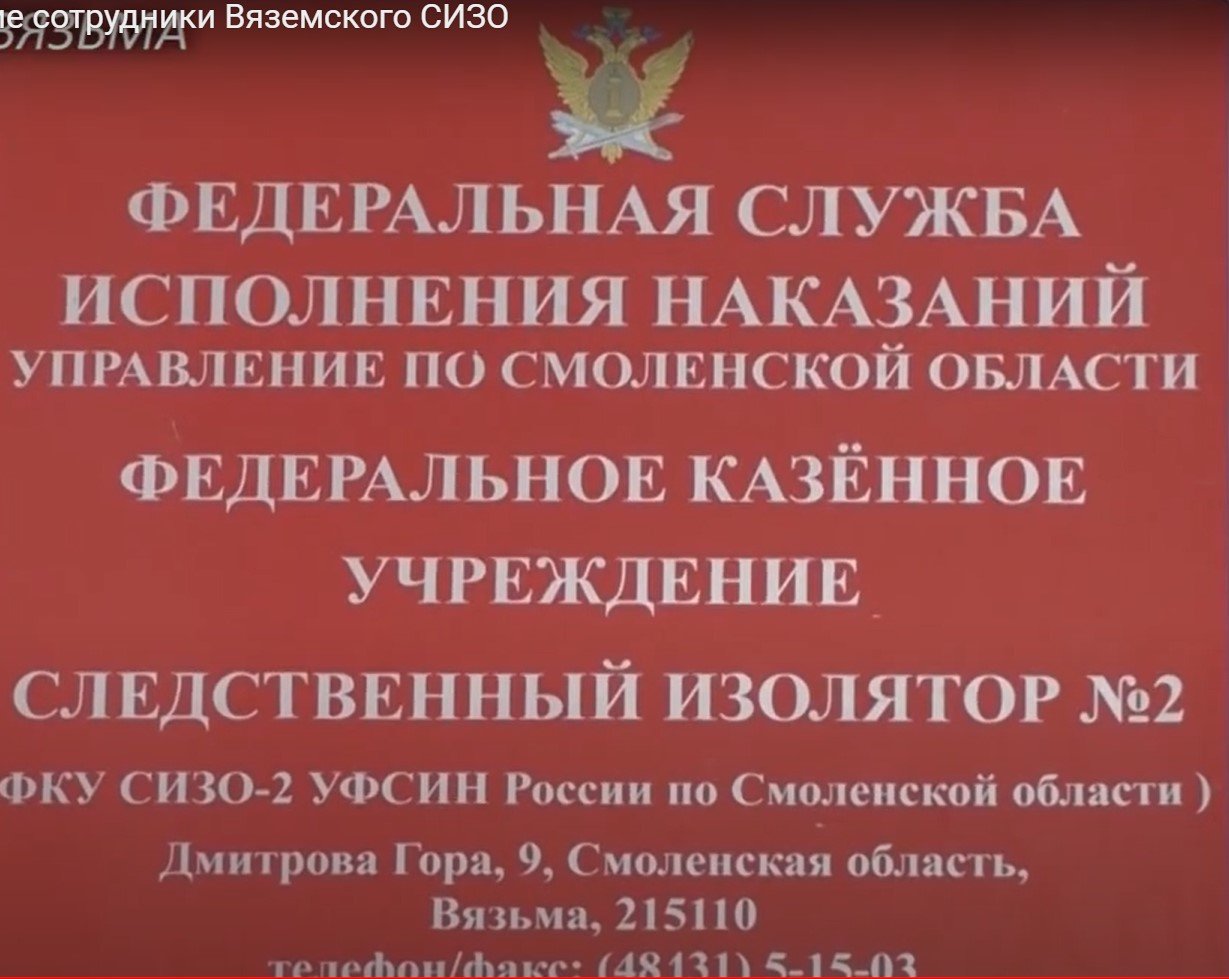
According to media reports and social media profiles, before the full-scale invasion, Vyazemsk SIZO No. 2 lived its usual Russian-gulag life. Of course, there was almost nothing written about the life, health, or conditions of the prisoners.
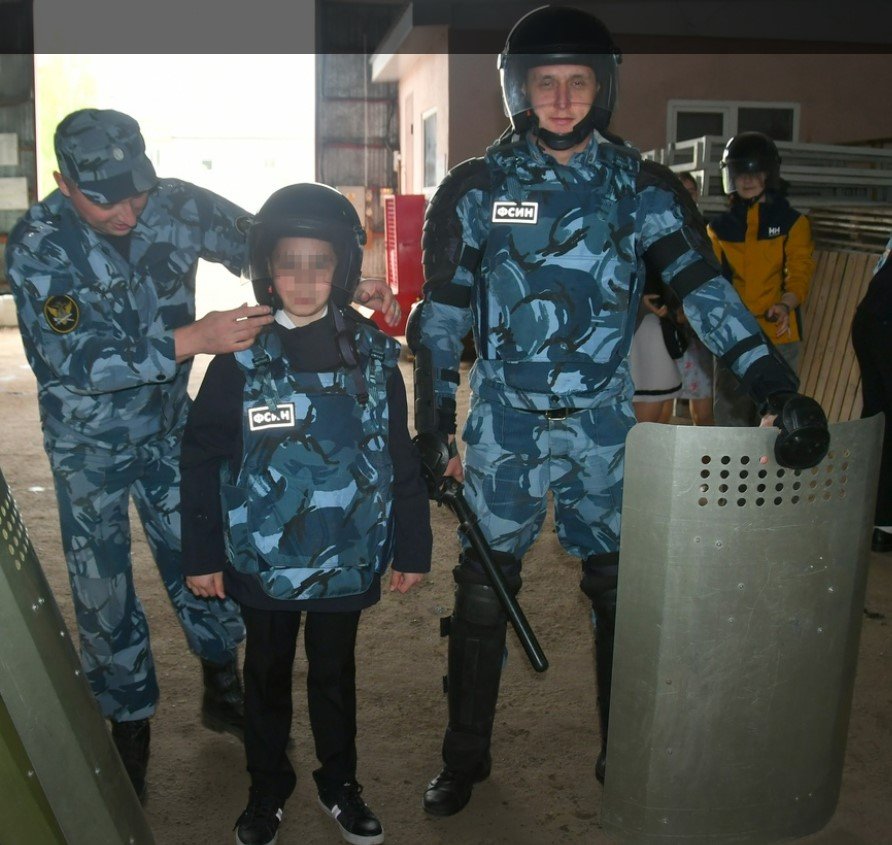
But the lives of ordinary employees were covered in some detail. The ceremonial reception of new employees near some significant monuments of the Second World War, participation in sporting events, and the celebration of some strange anniversaries. However, it was not possible to find such usual excursions of schoolchildren to penitentiary institutions, but they are more likely to be sent to penal colonies for familiarisation.
However, this institution did have one peculiarity. Immediately before the full-scale invasion, a new prison for more than 200 people was built there.
Since the beginning of the full-scale invasion, the information activity around SiZO no. 2 has been declining very quickly. There is almost no public information about it. It seems that its leaders are changing, but it is not even clear when and at what time they are removed.
We can say with almost certainty that in 2022, the head of this detention centre was a certain Viktor Naumenko.
Then several deputies took his place, until, in particular, a representative of the SIZO administration, Oleksiy Zakharov, took over. We will write more about him below.
In recent years, Andrii Martynov has been holding senior positions in the SIZO. In particular, at the beginning of 2024, he was the deputy head of the SIZO.
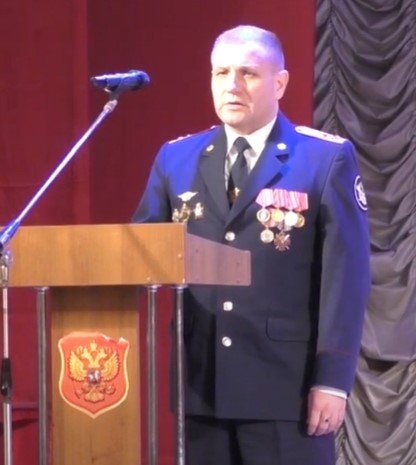
It is also worth mentioning the immediate head of all pre-trial detention centres in the Smolensk region. We are talking about the head of the USFSIN (Federal Penitentiary Service – Texty.org.ua) in the Smolensk region, Alexander Trachuk. Here he is in his “ceremonial” photo with badges and order bars for his “heroic” service.
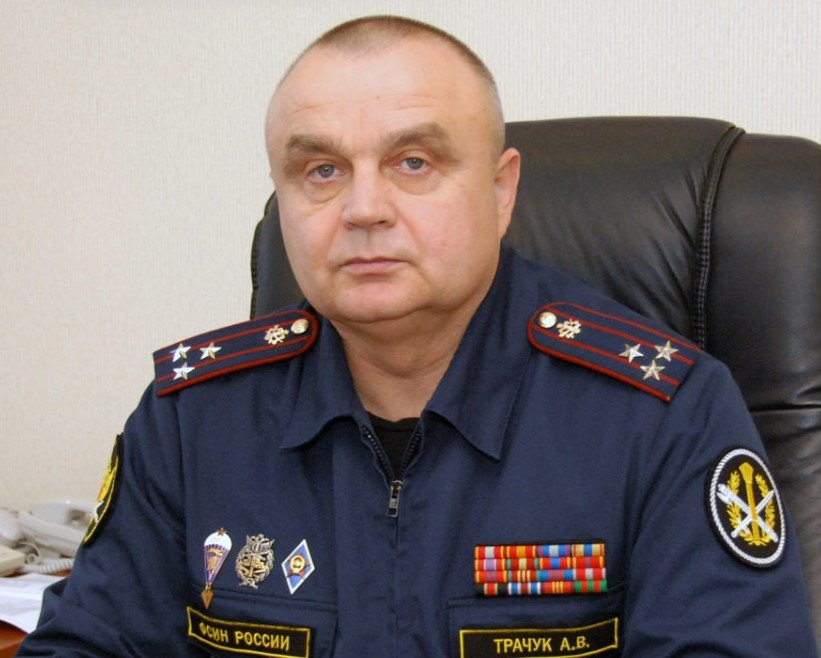
Oleksandr Trachuk has an interesting nuance. According to the Russian media, he was born in Ukraine, namely in the Odesa region. However, this does not prevent him from “fruitfully” working within the system that destroys and breaks Ukrainian prisoners.
Now it is worth returning to the personality of Oleksiy Zakharov, the current acting head of the Vyazemsky SIZO.
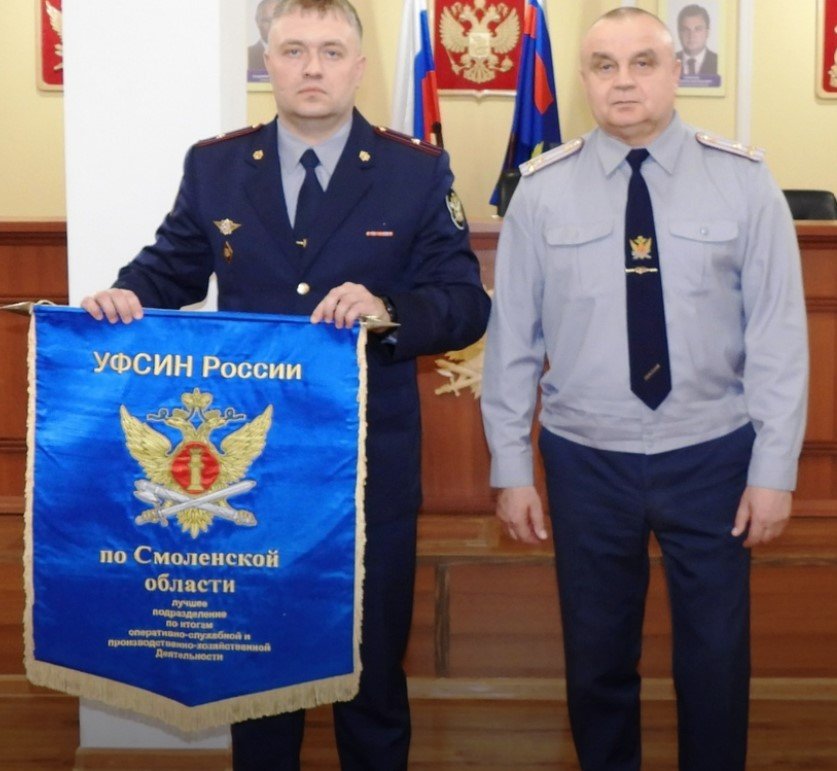
According to Oleksiy Kretsu, it was Zakharov who was present during the admission of Ukrainian prisoners to the SIZO. And, most likely, it was he who was one of the leaders of the shameful procedure of beating and humiliation of Ukrainian prisoners.
Here is what Kretsu recalls: “They dragged me to some basement and started beating me. Then they removed the puffs from my hands, cut the tape from my eyes, and then took me to a white corridor. There were already two masked men standing there and this ‘cabinet’ (Oleksiy Zakharov – Texty.org.ua) without a mask.
He was the only one without a mask and balaclava. And it was he who asked me: “Who are you?” I told him that I was a border guard, and he said: “I see, s…t, Nazi, lead the way”. After that, they took me to a place where they beat me and demanded that I sign something. I saw only one word from the text: “guilty”. At the same time, they continued to beat me.”
As for the perpetrators of the beating, they are so “grey” and devoid of any interests (except, of course, a tendency to sadism) that it is difficult to find any interesting and valuable information about them. Perhaps, except for obituaries. Here is an obituary of one of them.
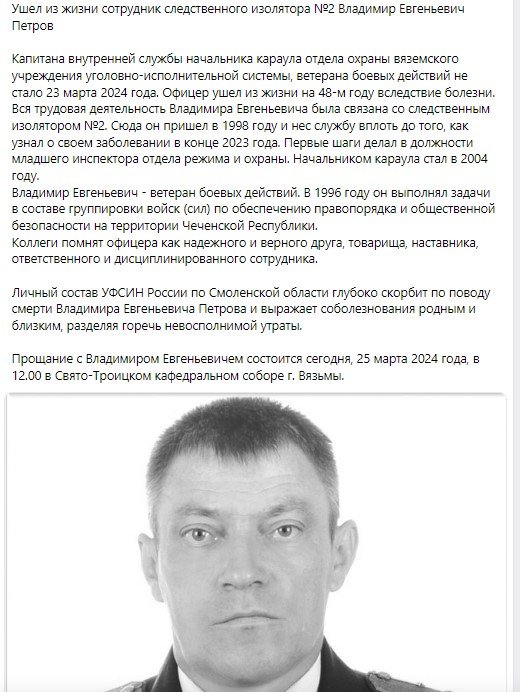
As you can see, Vladimir Petrov’s life story is quite typical for an employee of the Russian punitive prison system. Service in Chechnya, where numerous cases of human rights violations were recorded, and then endless service in the Vyazemsky Detention Centre.
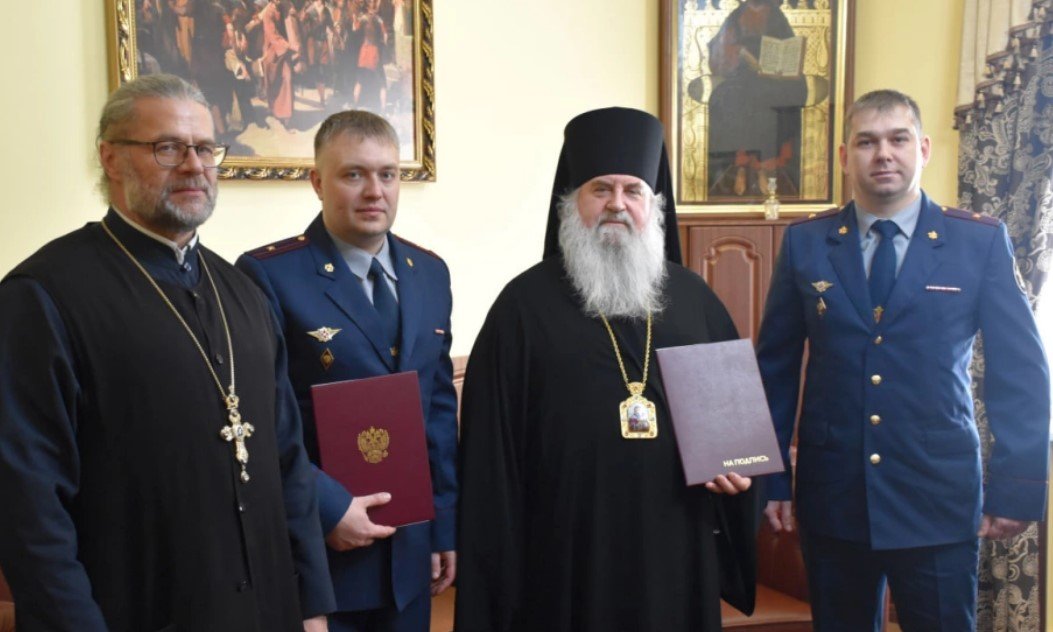
I would like to make a separate mention of the representatives of the Russian civil service who call themselves “church ministers of the Russian Orthodox Church”. On the pages of the Vyazemsky media, one can find many references to the signing of some kind of cooperation agreements between the Diocese of Vyazemsky and SIZO No. 2.
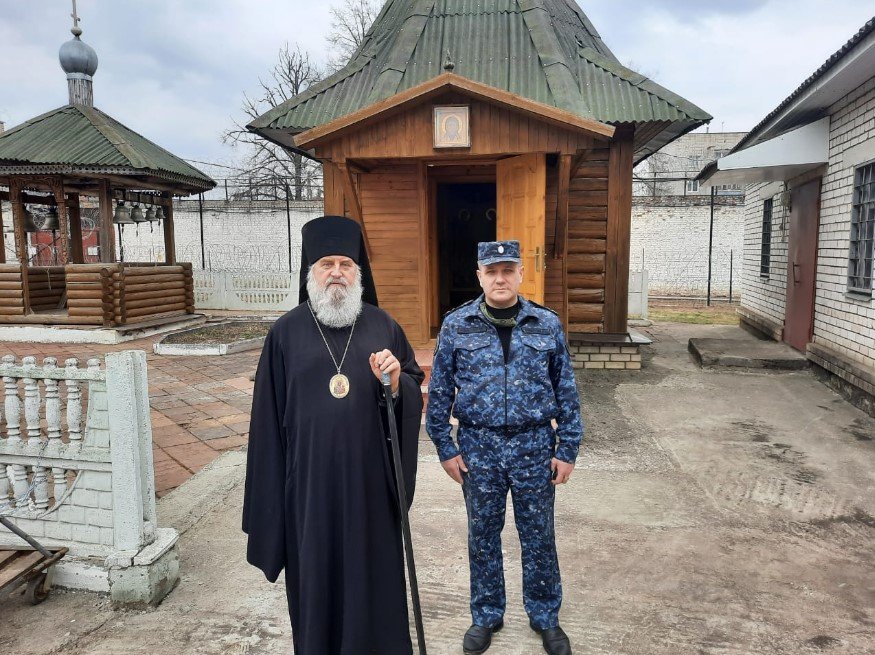
However, the “pastoral” cooperation between the ROC ministers and representatives of the administration of SIZO No. 2 did not affect the quality of life of Ukrainian prisoners. They are still beaten, denied food and abused. According to Oleksiy Kretsu, the only thing that was distributed to the prisoners was crosses, and there were supposed to be two or three Bibles in the detention centre, which had to be signed up for in order to read.
In all detention centres in Russia
One may get the impression that Vyazemsky SIZO No. 2 plays an exclusive role in the torture of Ukrainian prisoners, but this is not the case. This is probably the case in every Russian detention centre where Ukrainian prisoners are held. According to the Media Initiative for Human Rights, Ukrainian prisoners are currently being held in 42 pre-trial detention centres and penal colonies in Russia. They are held both in the regions bordering Ukraine and in the interior of the country. On the eve of the full-scale invasion or after 24 February 2022, they were released from Russian citizens. Russian detainees remained in the detention facilities as staff.
To understand how widespread this practice is and how typical it is for other places where Ukrainian prisoners are held, Texty.org.ua spoke to the parents of another Ukrainian soldier who died in Russian captivity. Svyatoslav Saltikov, a 22-year-old saxophonist with the military band of the 36th Separate Marine Brigade, was captured in Mariupol in the first half of 2022.
Just before the war, the orchestra went on tour to Mariupol, where they were caught up in the war. Despite being musicians, the members of the orchestra, especially Sviatoslav, took an active part in the defence of the city. Unfortunately, they were captured and eventually ended up in a detention centre in the Russian city of Kineshma.
The boy’s mother, Maryna Saltykova, tells us:
“We learnt about what was happening in the detention centre from the boy who was released from captivity himself and was undergoing rehabilitation because he was in a bad condition. They were fed very poorly. They were forced to stand on their feet all day, beaten with tasers and truncheons. For any reason and for no reason. You looked the wrong way or raised your head, said something. They have video surveillance cameras everywhere. If something was wrong, they immediately ran into the cell and beat me. They beat me while I was walking. They made me do squats and push-ups.
We know that the warders forced our son to sing. He has a good ear, memory, and voice. He did not sing at home, but he knew many songs.
In his death certificate, it was written that he allegedly had a heart problem. But at home, he was a regular sportsman, riding a bicycle.
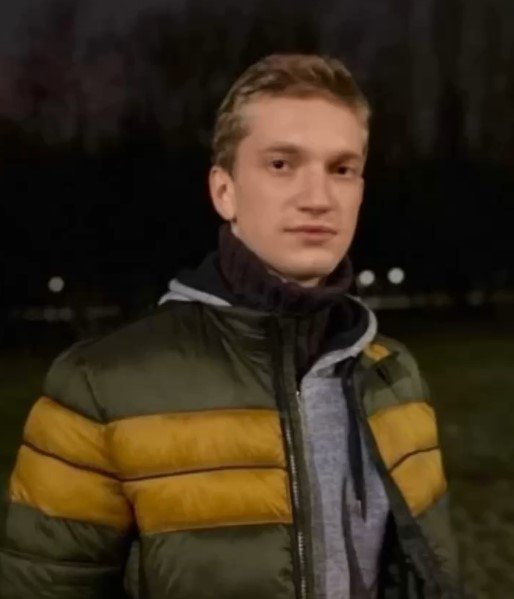
Svyatoslav had some problems with blood vessels in his nose, and sometimes bled at home. And those who were in the cell with him said that his head hurt from time to time. Perhaps, he had problems with his blood pressure. The Russians did not really spare anyone. They were hitting on the back, neck, legs. This guy who was brought back from captivity and gave us information could not walk when he returned.
If a person had any health problems, it was immediately exacerbated there. And regardless of whether they were sick or had any problems, they were still beaten.
From what we were told, in the autumn, my son was already weak, he had constant nosebleeds. However, they continued to force them to squat, stand, and do other things. One day they came and there was a pool of blood near my son’s bed. And then they took him somewhere to a separate cell. They say he was so weak that he couldn’t even carry his belongings with him.
The boys also allegedly heard the guards talking to each other: “I hit him and he fell, I thought he was pretending, but he died”.
He was transferred to solitary confinement, most likely to die there.
The guys spoke very well of him. Both when they were in Mariupol and when they were in captivity. He supported the others morally, saying that everything would be fine, that everyone would be released from captivity.
Texty.org.ua: Given all the horrific facts outlined, given that such things are happening in different parts of Russia, it is quite obvious that this is not an “excess of the performer”, but a clear state policy of Russia to destroy both Ukrainian defenders and civilians. The goal of this policy is clear and obvious – to physically destroy Ukrainians and break them morally. All this clearly fits into the policy of the Russian state and has a specific name – “genocide”.